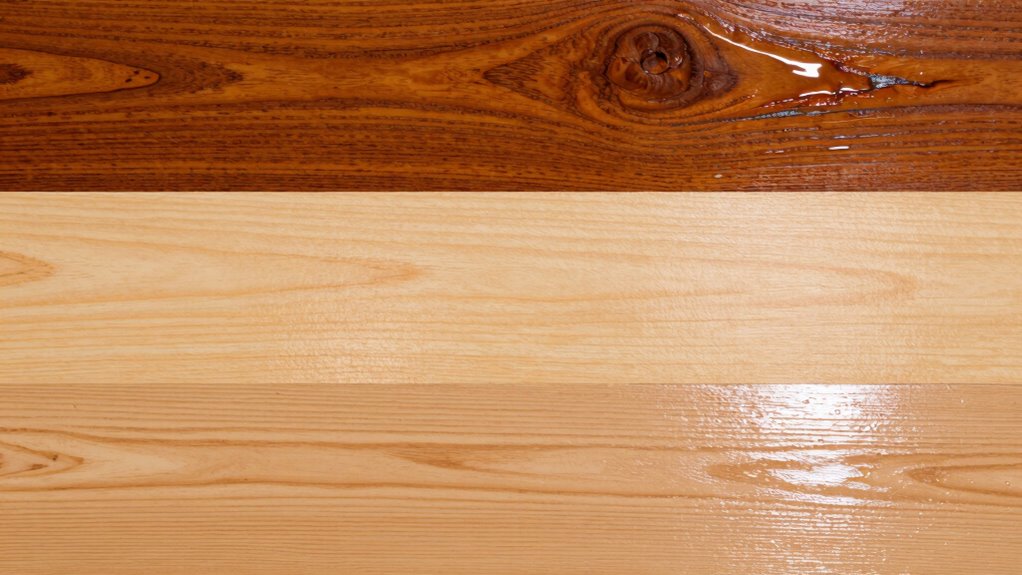

Oil penetrates deeply, enhancing wood’s color and grain while providing a natural, soft feel but offers moderate protection and needs regular reapplication. Wax forms a thin, protective film that adds a subtle sheen and is easy to touch up but isn’t very resistant to water or scratches. Varnish creates a hard, durable surface that shields well from environmental damage but can alter the natural look. Understanding these differences helps you choose the right finish—discover more about their features below.
Key Takeaways
- Oil penetrates wood fibers, enriching color and grain, while wax and varnish form surface layers.
- Varnish creates a hard, protective film offering high durability; oil and wax provide moderate protection.
- Oil is easy to reapply and maintain, whereas varnish and wax require more effort to repair or refresh.
- Wax offers a soft, matte finish with a natural look but less water resistance than oil or varnish.
- Varnish provides the most durable, waterproof finish, suitable for high-traffic or outdoor projects.
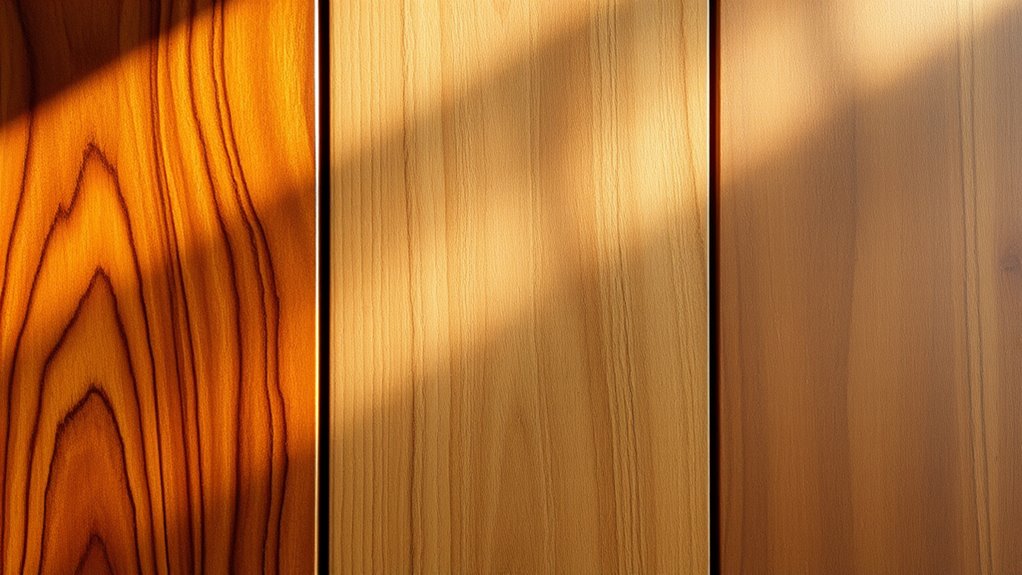
When choosing how to finish your wood project, understanding the differences between oil, wax, and varnish is essential. Each offers unique benefits and challenges, especially when it comes to durability comparison and application techniques. Knowing how these finishes behave will help you select the right one for your specific needs. For example, energy-efficient cloud servers are designed to optimize performance while minimizing environmental impact, paralleling how different wood finishes balance protection and appearance. Oil finishes penetrate deeply into the wood, enriching its color and highlighting the grain. They create a natural look and feel, often making the surface smooth and soft. In terms of durability comparison, oils tend to offer moderate protection. They are less resistant to water and scratches compared to varnish but are easy to repair. Reapplication involves simply wiping on more oil, which makes maintenance straightforward. Application techniques are simple: you typically apply oil with a cloth, brush, or sponge, then wipe off excess after a few minutes. Multiple coats build up protection, but it’s important to allow adequate drying time between layers. Keep in mind that oils don’t form a hard film; instead, they rely on absorption, which means they may need regular reapplication to maintain their appearance and protection.
Amazon Product B01LBVYQ6U
As an affiliate, we earn on qualifying purchases.
Frequently Asked Questions
How Long Does Each Finish Typically Last Before Needing Reapplication?
Oil finishes typically last 6 to 12 months before needing reapplication, requiring regular maintenance to keep their look. Wax finishes usually last 3 to 6 months and demand frequent upkeep to maintain their protective layer. Varnish tends to last several years—around 3 to 5—before needing a touch-up, offering a higher durability comparison. Your choice depends on how often you’re willing to perform maintenance and the desired longevity.
Are There Environmental Concerns Associated With Each Type of Finish?
You might wonder if these finishes are eco-friendly. Oil, wax, and varnish each have environmental impacts, but sustainable alternatives and eco-friendly formulations are emerging. Oil finishes often penetrate deeply, reducing surface runoff, while wax offers biodegradable options. Varnishes can contain volatile organic compounds (VOCs), but many brands now produce low-VOC or water-based versions. Choosing eco-conscious products helps protect your environment while enhancing your craftsmanship’s beauty and durability.
Can These Finishes Be Applied Over Previously Finished Surfaces?
You can apply oil, wax,, or varnish over previously finished surfaces if you guarantee proper surface preparation and check for application compatibility. Lightly sand the existing finish to improve adhesion, remove dust, and follow the manufacturer’s instructions. This process helps the new finish bond properly, preventing peeling or uneven results. Always test a small area first to confirm compatibility and achieve a smooth, durable finish.
Which Finish Offers the Best Protection Against Water Damage?
Did you know that varnish provides up to 85% water resistance, making it the best for water damage protection? If you want maximum finish durability against moisture, varnish is your go-to. Oil and wax offer some water resistance but aren’t as effective long-term. Choosing varnish guarantees your surface stays protected from water, maintaining its integrity and appearance over time.
Are There Specific Tools Recommended for Applying Each Finish?
You should use specific tools like brushes suited for each finish, such as natural bristle brushes for oils, foam brushes for wax, and synthetic brushes for varnish. Apply each finish with proper techniques—oil with a cloth or brush in thin coats, wax by rubbing in small circles, and varnish with smooth, even strokes. Choosing the right brush types and application techniques guarantees a smooth, professional-looking finish and maximum protection.
Amazon Product B085JG9187
As an affiliate, we earn on qualifying purchases.
Conclusion
Understanding the differences between oil, wax, and varnish helps you select the right finish for your project. Did you know that, on average, a well-applied oil finish can penetrate wood up to 3 millimeters, enhancing durability? Whether you prefer the natural look of oil, the soft sheen of wax, or the protective barrier of varnish, knowing what each does guarantees your piece not only looks great but lasts longer. Make your choice wisely and enjoy your beautifully finished project!
Amazon Product B0CW2J3D6V
As an affiliate, we earn on qualifying purchases.
Amazon Product B0CS4V7YPK
As an affiliate, we earn on qualifying purchases.