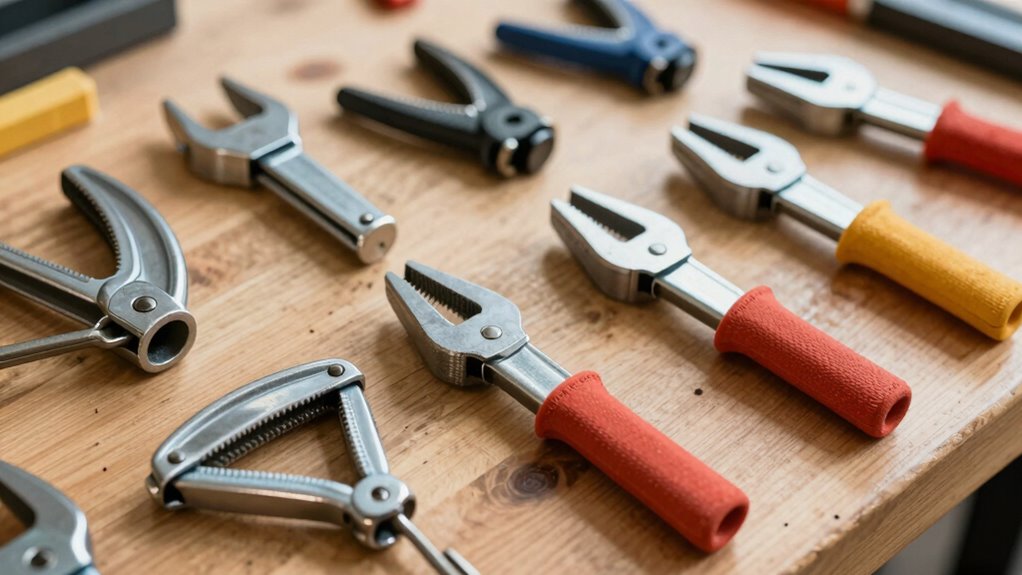
To buy the right clamps without ending up with the wrong mix, first identify your project’s needs—woodworking, metalworking, or plumbing—and choose clamps suited to those tasks. Measure your workpieces accurately and select sizes that grip securely without causing damage. Pay attention to design features like quick-release or padded jaws for precision and protection. Always choose clamps made of appropriate materials, and guarantee they meet industry standards for safety and quality. If you continue, you’ll learn even more tips for making perfect selections.

Get business pricing on tools and workshop supplies
- Business-only prices and quantity discounts
- Tax-exempt purchasing
- Multiple users, one account, clear invoices
Key Takeaways
- Assess your specific project needs to choose the right clamp type and material accordingly.
- Measure workpieces accurately to select appropriately sized and adjustable clamps.
- Prioritize clamps with features like padded jaws and quick-release levers for better control.
- Ensure clamps meet industry safety and quality standards for reliability.
- Consider versatility by selecting multi-purpose clamps to handle various applications effectively.

When you’re ready to purchase clamps, understanding your specific needs is essential. The first step is to carefully consider what you’ll be using the clamps for, whether it’s woodworking, metalworking, or plumbing. This will guide you in selecting the right clamp material, as different materials offer distinct advantages. For instance, if you’re working with delicate materials or finishes, plastic or rubber-coated clamps might be best to prevent damage. Conversely, metal clamps, such as steel or aluminum, provide greater strength and durability for heavy-duty applications. By evaluating the nature of your projects, you ensure that you choose a clamp material that aligns with your requirements, avoiding issues like damage or insufficient grip.
Next, proper clamp sizing plays a critical role in your buying decision. Clamps come in various sizes, and selecting the right size ensures a secure hold without risking damage or slippage. Measure the objects you’ll be clamping carefully, considering both the width and thickness. If the clamp is too small, it won’t provide enough holding force, and if it’s too large, it may not fit properly or exert uneven pressure. Proper clamp sizing allows for even distribution of force, which is essential for maintaining the integrity of your workpiece. Always check the manufacturer’s guidelines for size specifications and consider adjustable clamps if you’re dealing with different-sized objects. This flexibility can save you from purchasing multiple clamps of different sizes and streamline your workflow.
It’s also important to consider the clamp’s design features, such as screw mechanisms, quick-release levers, or padded jaws, depending on your specific needs. These features can make your work easier and more precise. For example, quick-release clamps are ideal for situations where you need to frequently reposition or adjust your workpiece, saving time and effort. Padded jaws protect delicate surfaces and prevent marring, which is essential when working with finished wood or fragile materials. Understanding these features and clamp materials and their properties can help you select a clamp that not only fits your size and material requirements but also enhances your efficiency. Additionally, being aware of the various clamp styles and their specific applications can help you choose the most versatile tools for your projects. Recognizing the industry standards for clamps can also ensure you select tools that meet safety and quality benchmarks, reducing the risk of failure during use.
woodworking clamps with quick-release
As an affiliate, we earn on qualifying purchases.
As an affiliate, we earn on qualifying purchases.
Frequently Asked Questions
What Are the Different Types of Clamps Available?
You’ll find various types of clamps designed for different clamp materials and applications. For woodworking, use C-clamps or bar clamps; for plumbing, consider pipe clamps or spring clamps. Metalworking often requires locking or toggle clamps, while plastic or lightweight tasks benefit from spring or hand clamps. Always match the clamp type to your specific clamp applications, ensuring it provides enough pressure and stability without damaging your materials.
How Do I Choose the Right Clamp Size?
Choosing the right clamp size is like finding the perfect fit; too small, and it won’t hold, too large, and it’s unwieldy. Consider the clamp material for durability, and prioritize ergonomic design for comfort during use. Measure your workpiece accurately and assess the maximum pressure needed. This guarantees your clamp size matches your project, providing stability and ease, so you stay confident and in control every step of the way.
Are There Specific Clamps for Certain Materials?
Yes, there are specific clamps for certain materials. You should consider clamp materials to guarantee compatibility with your project. For example, rubber clamps work well with delicate surfaces, while metal clamps provide strength for heavy-duty tasks. Always check clamp compatibility with your material to prevent damage or slipping. Matching the right clamp material to your project ensures a secure hold without risking damage, making your work safer and more efficient.
What Safety Precautions Should I Take With Clamps?
Think of clamp safety as walking a tightrope—you need balance and caution. Always wear safety gear, like gloves and goggles, to protect yourself. Inspect clamps for damage before use, and guarantee they’re properly secured during handling. Proper handling involves not over-tightening, which can cause slips or breakage. Keep your workspace tidy, and never leave clamps unattended while under pressure. Staying vigilant helps prevent accidents and keeps your work safe.
How Do I Maintain and Store Clamps Properly?
To maintain your clamps, regularly inspect them for rust, wear, or damage, and clean them with a dry cloth after use. Proper storage solutions include keeping clamps in a dry, organized toolbox or hanging them on hooks to prevent deformation. Proper clamp maintenance guarantees longevity, while smart storage solutions keep your workspace tidy and clamps easily accessible, reducing the risk of damage or loss.
metalworking C-clamps adjustable
As an affiliate, we earn on qualifying purchases.
As an affiliate, we earn on qualifying purchases.
Conclusion
Remember, choosing the right clamps is like finding the key to a locked door—you need the right fit to open new possibilities. By doing your homework and understanding your needs, you guarantee you’re not just buying clamps, but securing a tool that will serve you well. Don’t let haste be your undoing; instead, be patient and deliberate. As the wise say, “A stitch in time saves nine,” so invest wisely now to avoid regrets later.
plumbing pipe clamps padded jaws
As an affiliate, we earn on qualifying purchases.
As an affiliate, we earn on qualifying purchases.
As an affiliate, we earn on qualifying purchases.
Fall yard work Picks
leaf blowers
As an affiliate, we earn on qualifying purchases.