
To stop reaching for the wrong tools, organize them by how often you use them, keeping frequently used items at eye level or within easy reach. Use visual cues like color coding or icons to quickly identify tools, and assign specific spots for each item to encourage returning them after use. Store sharp or heavy tools securely and guarantee proper lighting to improve visibility. For more practical tips on creating an efficient workspace, keep exploring helpful organization strategies.

Get business pricing on tools and workshop supplies
- Business-only prices and quantity discounts
- Tax-exempt purchasing
- Multiple users, one account, clear invoices
Key Takeaways
- Group similar tools together by function for quick identification and access.
- Use color-coded labels or icons to differentiate tools and reduce confusion.
- Store frequently used tools at eye level or within easy reach to minimize unnecessary reaching.
- Designate specific, labeled spots for each tool to ensure consistent placement after use.
- Keep less-used tools in separate, organized storage to avoid clutter and accidental grabs.

Ever wonder how to keep your tools organized and easily accessible? The key is creating a system that promotes efficiency and safety while guaranteeing your tools are within easy reach. When you arrange your tools thoughtfully, you reduce the risk of injury and save time hunting for the right one. Start by focusing on how each tool is used and how often. Frequently used tools should be stored at eye level or within arm’s reach, so you don’t have to bend, stretch, or dig through clutter. This not only speeds up your workflow but also keeps your workspace safer.
Organize tools by usage for quick access, enhancing safety and efficiency in your workspace.
Pay attention to the ergonomic grip of your tools. Tools with an ergonomic grip are designed to fit comfortably in your hand, reducing fatigue and improving control. When arranging tools, place the ones with ergonomic handles in accessible spots, so you naturally grab the right tool without fumbling. Proper placement minimizes the need to grip tightly or twist awkwardly, which helps prevent strain injuries over time. You should also keep tools with less comfortable handles stored separately, perhaps in a toolbox or a drawer, so you’re aware of which tools require a bit more effort to use.
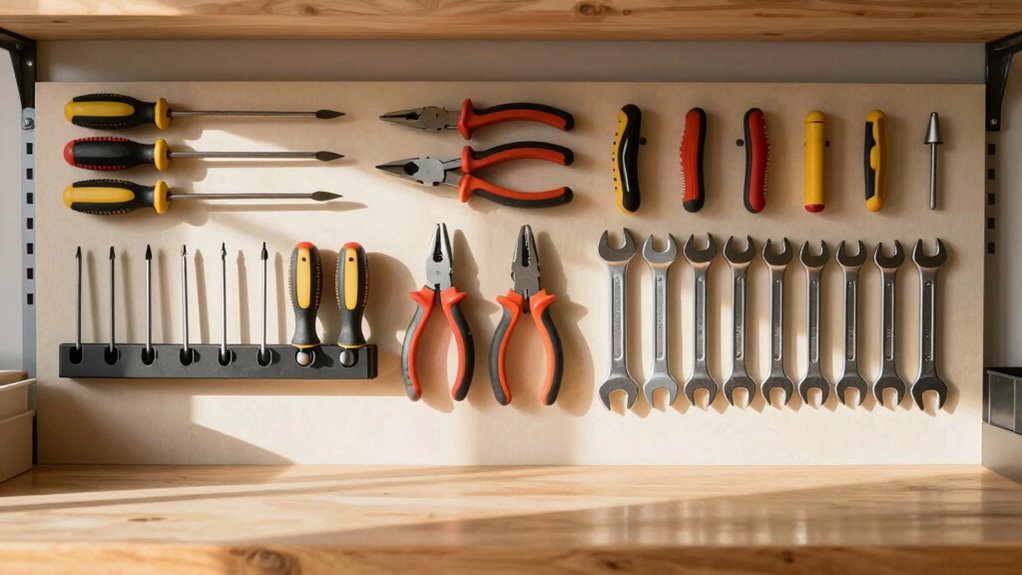
Storage safety is another vital aspect. Avoid stacking sharp or heavy tools haphazardly, as they can fall and cause injuries. Use wall-mounted racks, pegboards, or magnetic strips to keep metal tools upright and visible. This setup not only prevents accidental cuts or punctures but also keeps your tools from getting damaged. Additionally, organizing your tools with proper storage techniques ensures they stay in good condition and are easy to locate when needed. Incorporating visual cues such as color coding or icons can further enhance quick identification and organization. Using appropriate lighting in your workspace can also help you see tools clearly, reducing the chance of accidents when selecting or returning tools. Make sure each tool has a designated spot, and return it there after each use. This habit ensures your workspace stays tidy and reduces the risk of accidents caused by misplaced tools.
Labeling storage areas can further streamline your tool organization. Clear labels help you quickly identify where each tool belongs, avoiding the temptation to toss items into random spots. When arranging tools, consider their size and shape—grouping similar items together makes it easier to find what you need instantly. Avoid overcrowding storage spaces; leaving room around tools prevents damage and makes it safer to retrieve them. For power tools, ensure cords are neatly coiled and stored separately to avoid tripping hazards. Additionally, understanding tool safety practices can help prevent accidents and injuries in your workspace. Paying attention to safety guidelines promotes a safer environment and prolongs the lifespan of your tools.
Ultimately, effective tool arrangement combines accessibility, ergonomic design, and safety. By placing frequently used tools within easy reach, organizing them by function and size, and prioritizing storage safety, you create a workspace that enhances your productivity. A well-thought-out system minimizes reaching for the wrong thing, reduces strain, and keeps your tools in top condition. With a little planning, your workspace becomes more efficient, safer, and more enjoyable to work in.
As an affiliate, we earn on qualifying purchases.
Frequently Asked Questions
How Often Should I Reorganize My Tool Storage?
You should reorganize your tool storage every few months to maintain ideal storage optimization and reinforce good organizational habits. Regular updates help you identify clutter, misplaced tools, or inefficiencies, ensuring your setup stays functional and efficient. If you notice tools are consistently hard to find or your workspace feels cluttered, it’s time for a quick reorganization. Staying proactive keeps your tools accessible and your workflow smooth.
What Is the Best Lighting for a Tool Area?
Think of your tool area as a stage needing perfect lighting. For ideal brightness, you want a mix of task-specific lighting and ambient light, ensuring every tool shines clearly. Bright, focused LED lights work best, illuminating details without shadows. This setup prevents you from squinting or reaching for the wrong tool, helping you work efficiently. Proper lighting turns your workspace into a well-lit stage where every tool is ready for action.
Should Tools Be Labeled for Quicker Access?
Yes, labeling tools can considerably improve your workflow. Tool labeling enhances visual organization, allowing you to quickly identify the right tool without hesitation. When you assign clear labels, you reduce time spent searching, keeping your workspace efficient. This simple step supports better organization, minimizes frustration, and helps you maintain focus on your projects. Overall, tool labeling is a practical way to streamline your tool access and boost productivity.
How Can I Prevent Tools From Falling or Slipping?
Think of your tools as delicate dancers on a stage—they need secure footing to perform flawlessly. To prevent tools from falling or slipping, prioritize tool safety by using sturdy storage solutions like pegboards, magnetic strips, or cushioned drawers. Regularly check for wear, keep tools dry, and make sure they’re properly seated. This way, your tools stay put, reducing accidents and keeping your workspace safe and efficient.
Which Tools Should Be Kept Within Easy Reach Regularly?
You should keep your most-used tools within easy reach through smart tool organization and effective storage solutions. Prioritize items like screwdrivers, pliers, hammers, and measuring tapes, placing them in accessible drawers, pegboards, or tool trays. Regularly used tools should be stored at eye level or in designated containers near your work area. This way, you save time, reduce frustration, and prevent unnecessary reaching or searching during projects.
As an affiliate, we earn on qualifying purchases.
Conclusion
By arranging your tools thoughtfully, you create a symphony of efficiency where your hands dance effortlessly from one instrument to the next. When everything is in its perfect place, you’ll stop chasing after the wrong tools like a bird chasing fleeting shadows. Instead, you’ll glide smoothly through your tasks, each tool within arm’s reach, ready to sing its part. A well-organized workspace is your rhythm—steady, reliable, and in harmony with your work.
As an affiliate, we earn on qualifying purchases.
As an affiliate, we earn on qualifying purchases.
Fall yard work Picks
leaf blowers
As an affiliate, we earn on qualifying purchases.