
This checklist is for woodworkers setting up a bench for everyday projects, whether you are building a dedicated station or adding a few useful workholding options. It covers a vise, clamps, a portable work surface, holdfasts, a planing stop, and drawer organization. Start with your work: the best setup depends on what you make and how you secure it.

Get business pricing on tools and workshop supplies
- Business-only prices and quantity discounts
- Tax-exempt purchasing
- Multiple users, one account, clear invoices
The sections follow the bench setup from holding work to keeping tools at hand. Product picks appear where one was provided; the other sections offer selection guidance. Advice-only slots are useful places to compare styles and compatibility before choosing a specific item.
Use the look-for lists to narrow your options, then check the product’s dimensions and mounting requirements against your bench and projects. Think through board thickness, clamping reach, available clearance, and whether the bench needs to move. Measure before buying so each addition fits the workspace you have.
Woodworking Bench Vise
A bench vise gives you a way to hold work securely while you saw, shape, assemble, or adjust it. For this slot, the pick is the Yost HD650-C Heavy Duty 6-1/2 Inch Mechanics Work Bench Vise with Swiv. Its name identifies a 6-1/2-inch vise, but it does not establish how it mounts or whether its jaws suit your woodworking tasks. Check the details before treating it as a fit for a woodworking bench.
A common mistake is choosing by jaw width alone. Compare the vise’s mounting pattern and required hardware with the bench apron or top, and consider whether the vise can be installed without interfering with legs, drawers, or other fixtures. Check jaw opening and depth against the stock you expect to hold, and look for jaw faces or covers appropriate to your work. Protect finished surfaces with suitable jaw protection when needed.
Also consider where the vise will sit relative to your dominant hand and the bench edge. Confirm the swivel function and clearance from the full product specifications, since the supplied name is abbreviated. Verify mounting compatibility and available movement before purchase.
What to look for:
- Mounting pattern and hardware compatible with your bench
- Jaw opening and depth suited to typical workpieces
- Jaw faces or covers that protect the material
- Clearance from bench legs, drawers, and other fixtures
- Full specifications for the vise’s swivel function
Yost HD650-C Heavy Duty 6-1/2 Inch Mechanics Work Bench Vise with Swivel Base an
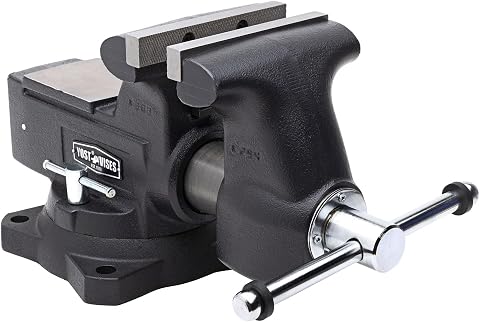
The Yost HD650-C is a heavy-duty mechanics bench vise made from 60,000 PSI ductile iron, featuring a 6-1/2 inch jaw width, a large anvil surface, and a secure swivel base. Designed for professional and heavy-duty use, it provides high clamping force and durability for woodworking and metalworking projects.
Pros:
- Heavy-duty construction with high clamping force
- Durable 60,000 PSI ductile iron material
- Includes replaceable pipe jaws and a secure swivel base
- Large anvil surface for versatile use
Cons:
- Heavy weight may be difficult to move
- Requires proper setup to ensure safety
- No mention of included accessories
Best for: Woodworkers seeking a vise to evaluate for a fixed bench
Not ideal for: Benches without a compatible mounting area
Bottom line: Confirm its mounting, jaw dimensions, and clearance against your bench before choosing this vise.
Bench Dog Clamps
Bench dog clamps work with bench dog holes to help secure stock across the bench, making them a useful option when a vise does not hold a piece in the position you need. This is an advice-only slot, so choose a clamp after checking your bench’s hole layout and the kinds of boards you work with. Consider whether you need to hold narrow pieces, wide panels, or stock at different points along the top.
A frequent buying mistake is assuming bench dogs and clamps use a universal fit. Measure the holes and check the clamp’s stated compatibility, including its reach and how it bears against the work. Match the hole system before ordering. Also check whether the bench top has enough thickness and clearance for the clamp mechanism to engage as intended.
Think about how the clamp will interact with your work surface: projecting hardware can obstruct a plane or other tool, while insufficient reach can leave a workpiece loose. Select a setup that lets you position the hold-down where needed and remove it easily when changing tasks. Plan around tool paths and the finished dimensions of your workpieces.
What to look for:
- Hole diameter and spacing compatibility
- Clamp reach for the stock you plan to secure
- Secure contact that does not mark the workpiece
- Clearance for planing and other bench tasks
- Easy installation and removal between tasks
Portable Workbench
A portable workbench can add a work surface where a permanent bench is unavailable or when a project needs to move between spaces. The pick is the BORA Centipede Folding Work Table 4×6 ft Portable Workbench for Garage. Its name describes a folding table and a 4×6-foot size, but it does not specify every setup detail or how it performs under your particular work. Check the full product information for the support surface and included components.
One common mistake is judging fit by the tabletop footprint alone. Measure the intended space, including room to walk around the table and handle long boards. Confirm the folded dimensions and setup requirements if storage or transport matters. Check the stated load capacity and support arrangement against your tools and typical workpieces. Account for the whole setup, not only the working area.
Portability also affects how you secure stock. Confirm whether the table accepts the clamping accessories you plan to use, and consider whether its surface and legs leave enough access for your chosen workholding methods. Look for information on leveling and stability for the floor where you will use it. Match the table to your tasks and the space available.
What to look for:
- Working dimensions and room for long stock
- Folded size and storage requirements
- Stated load capacity for tools and workpieces
- Compatibility with your intended clamps
- Leveling and stability details for your floor
BORA Centipede Folding Work Table 4×6 ft Portable Workbench for Garage

The BORA Centipede Folding Work Table is a portable, heavy-duty workbench designed for woodworking and garage projects. It features a quick setup, supports up to 4500 pounds, and is compatible with various accessories for customizable workspace solutions.
Pros:
- Supports heavy loads up to 4500 pounds
- Quick and easy to set up and fold down
- Highly versatile with expandable and customizable options
- Protects work surfaces and tools from damage
Cons:
- May be bulky to transport without the carry bag
- Requires space for full setup in smaller areas
Best for: Woodworkers who need a portable work area
Not ideal for: Spaces that cannot accommodate its working footprint
Bottom line: Verify the setup, storage, capacity, and clamping details against your workspace.
Woodworking Holdfasts
Holdfasts secure work through a bench hole and can make it easier to hold a piece down while keeping much of the bench surface accessible. This is an advice-only slot; select holdfasts that match the bench rather than assuming a standard fit. Check the bench top’s hole diameter, thickness, and spacing, then compare those measurements with the manufacturer’s requirements.
A common mistake is buying holdfasts before confirming that the bench can accept them. Hole size and bench thickness affect whether a holdfast can seat and grip as designed. Measure the bench first, and account for any liners or sleeves that change the effective opening. Consider where the holes are located relative to the work you intend to hold.
Think about the stock thickness and the access you need around it. A holdfast must reach the work while leaving room for your hands and tools; an awkward position can obstruct sawing or planing. Check the product guidance for installation and release, and choose a layout that supports the jobs you do most. Keep tool clearance in mind when planning hole placement or selecting a compatible pattern.
What to look for:
- Holdfast compatibility with hole diameter
- Bench thickness requirements
- Reach suited to your workpiece thickness
- Hole placement that leaves tool clearance
- Clear instructions for setting and releasing
Bench Planing Stop
A planing stop gives a board an edge to bear against while you work, helping keep it positioned on the bench. The listed pick is Woodworking Bench Vise, Portable Hard Wood Vise for Workbench. That name does not make clear whether the item functions as a planing stop, what dimensions it has, or how it attaches. Confirm the product’s actual design before considering it for this slot.
A common mistake is relying on a product title to establish fit or use. Look for clear instructions and diagrams showing how the item mounts and how a board contacts it. Compare its height and position with the plane and stock you use; a stop that sits too high or too low may not support the intended work. Check the working height and the range of stock thicknesses it can accommodate.
Also check the attachment method against your bench, including any required holes, hardware, or opening. Make sure the stop can be adjusted or removed if your setup needs that flexibility, and consider whether its shape could interfere with other workholding. Confirm bench compatibility and the product’s stated purpose before buying.
What to look for:
- Product documentation confirming it is a planing stop
- Mounting method compatible with the bench
- Stop height suited to planes and workpiece thickness
- Adjustability or removal options for changing tasks
- Clearance from other bench fixtures
Woodworking Bench Vise, Portable Hard Wood Vise for Workbench

This portable woodworking vise is made from high-quality, impact-resistant beech wood with a non-toxic finish, providing a gentle clamping surface that protects workpieces. Compact and lightweight, it measures 18.5 x 11 x 2.7 inches and weighs 13 lbs, making it easy to carry and suitable for various workspaces.
Pros:
- Made from durable, impact-resistant beech wood
- Compact and lightweight for portability
- Protects workpieces with wooden clamping surface
- Includes versatile accessories for various projects
Cons:
- Limited jaw opening size for larger workpieces
- Wooden construction may be less durable than metal vises over time
- Not suitable for heavy-duty industrial use
Best for: Shoppers who can confirm the item’s purpose and mounting
Not ideal for: Anyone relying on the name alone to establish function
Bottom line: Confirm that the product is a planing stop and check its mounting and working height.
Workbench Drawer Organizers
Drawer organizers help make small tools and supplies easier to find and put away. This is an advice-only slot, so begin by listing what you want to store: measuring tools, fasteners, sharpening accessories, or other bench items. The right layout depends on drawer dimensions and the contents, so measure the usable interior rather than assuming the outside drawer size tells the whole story.
A common mistake is choosing organizers before checking drawer depth, usable width, and obstructions such as slides or handles. Measure the drawer at several points and account for any hardware that reduces the available space. Measure the interior carefully, then compare those dimensions with the organizer’s footprint and height. Leave room to remove trays or reach items without snagging.
Consider whether fixed compartments or movable dividers better suit your tools and supplies. Keep heavier items supported and place frequently used tools where they are easy to reach. If the drawer contents change often, a flexible layout may be simpler to revise. Organize around actual use and leave a little room for items you expect to add.
What to look for:
- Usable drawer width, depth, and height
- Clearance around slides and other hardware
- Compartments sized for the tools and supplies you own
- Removable or adjustable dividers if needs change
- Easy access to frequently used items
Build the setup in a practical order: start with the workholding you use most, then add compatible clamping options, a suitable work surface, and storage. Before purchasing, prioritize fit and function by checking bench dimensions, mounting requirements, hole patterns, and available clearance. This keeps each addition tied to the work you actually do.
You do not need to complete every slot at once. Choose one improvement, try it with your usual projects, and adjust the setup as you learn what helps. A well-planned bench grows around your habits, tools, and workspace. Use this checklist as a starting point and make it your own.
Halloween Picks
halloween
As an affiliate, we earn on qualifying purchases.