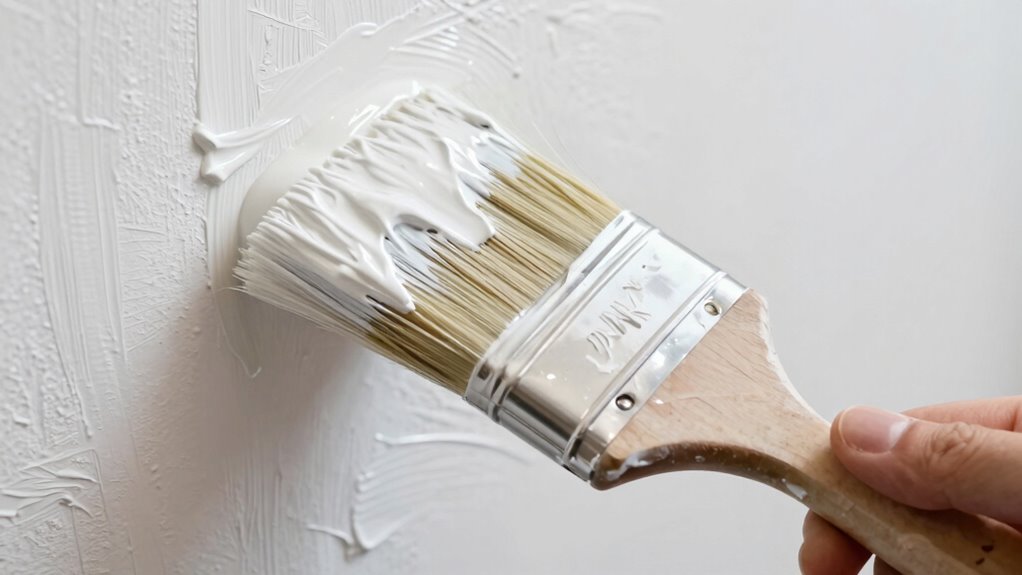
The key to achieving even coats is avoiding overloading your brush with too much product. When you load the brush heavily, it causes drips, streaks, and uneven patches because the excess product struggles to spread smoothly. Instead, dip only the tip and tap off any extra before applying. Using light, even strokes with minimal product helps create a flawless finish. Keep these tips in mind, and you’ll discover more techniques for perfection as you continue.
Key Takeaways
- Overloading the brush causes uneven application, drips, and streaks, making coats appear patchy.
- Use minimal product on the brush, focusing on the tip and wiping off excess before applying.
- Thick or gloopy products are harder to spread evenly; thinning improves glide and smoothness.
- Applying forceful strokes or working with too much product increases the risk of uneven patches.
- Mastering proper technique and controlling product amount ensures a smooth, even, and professional-looking coat.
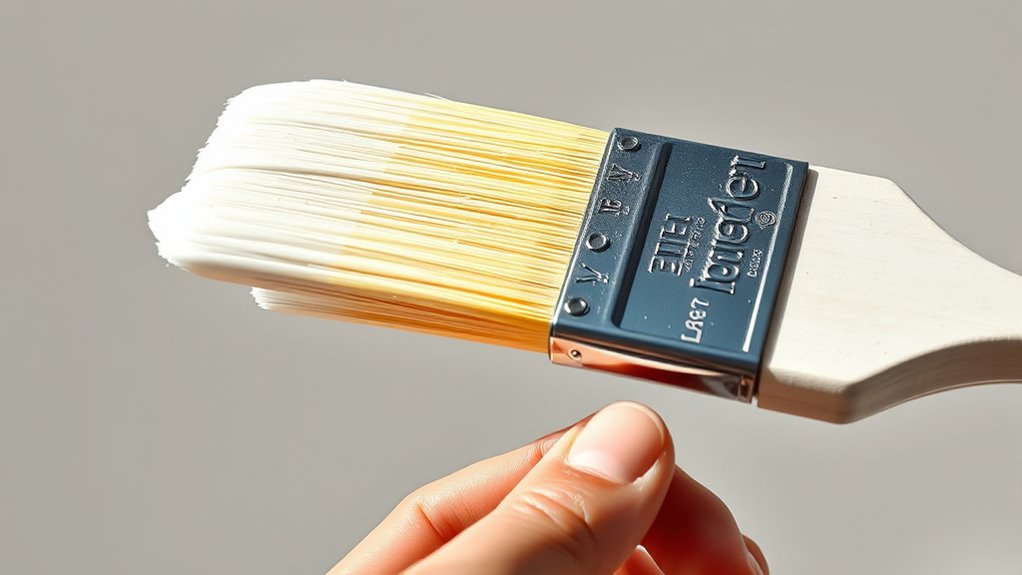
Achieving a flawless, even coat of paint or makeup might seem straightforward, but without proper technique, uneven patches can easily appear. One of the most common mistakes is overloading your brush. When you load your brush excessively, it’s tempting to think more product will give you better coverage, but it often results in drips, streaks, and uneven application. To avoid this, mastering the right brush techniques is essential. You should start by dipping just the tip of your brush into the paint or makeup, then gently tapping or wiping off excess on the edge of the container. This ensures you’re not applying too much at once, which can lead to uneven patches.
Overloading your brush causes uneven patches; use minimal product and proper technique for smooth application.
Another key factor is the paint or makeup consistency. Thick, gloopy products are harder to spread evenly, especially if you don’t adjust your brush techniques accordingly. If your paint or foundation is too thick, it will cling to your brush and create blobs or streaks. To achieve a smooth, even application, always aim for a paint or makeup consistency that’s fluid but not runny. If it’s too thick, consider thinning it slightly with a compatible medium or water, following the manufacturer’s instructions. Proper consistency allows the product to glide effortlessly over the surface or skin, reducing the chances of uneven patches.
When applying, use light, even strokes rather than heavy, forceful ones. This distributes the product more uniformly and minimizes streaking. Don’t press too hard; instead, let the brush do the work. As you work, periodically reload your brush with a small amount of product rather than trying to stretch a small amount over a large area. This helps maintain control and ensures each stroke deposits just enough product, avoiding build-up in certain areas.
It’s also important to work in manageable sections. Applying too much product at once can be overwhelming, and rushing can cause uneven coverage. Instead, work gradually, blending each section before moving on to the next. Pay attention to your brush techniques: feathering the edges and using consistent pressure will help you achieve a seamless, even coat. Be mindful of your paint or makeup’s consistency throughout the process, adjusting as needed. If you notice patches or streaks, it’s a sign you might be overloading your brush or working with a product that’s too thick.
Additionally, understanding how passive voice detection can improve clarity is a useful skill in technical writing, helping to make instructions clearer and more direct. In the end, patience and attention to detail are your allies. Proper brush techniques combined with the right paint consistency will make all the difference. When you control these elements, you’ll find it much easier to create smooth, uniform coats—whether you’re painting walls or applying makeup—without the frustration of uneven patches.
Frequently Asked Questions
How Often Should I Clean My Makeup Brush?
You should clean your makeup brush at least once a week to maintain brush sterilization and extend its longevity. Regular cleaning removes product buildup, oils, and bacteria, ensuring your skin stays healthy. Neglecting this can cause breakouts and uneven makeup application. Use gentle cleansers or brush cleaners, and make it part of your routine. Proper cleaning not only keeps your brushes hygienic but also helps them last longer, saving you money in the long run.
Can Different Brush Shapes Affect Application?
Yes, different brush shapes markedly affect your application. For example, dense, flat brushes made from synthetic fibers are perfect for cream or liquid products, providing full coverage. Fan brushes help blend and soften, while tapered or angled brushes give precise application. Your choice of brush shape and material influences how evenly your makeup applies, so select the right combination based on the look you’re aiming for and the product you’re using.
What’s the Best Way to Store Makeup Brushes?
Think of your brushes as loyal friends needing respect. Store them upright in a clean, dry container to safeguard their integrity. Use a brush holder or a dedicated makeup brush stand to keep them organized and prevent damage. Regular brush maintenance is essential; clean and dry your brushes thoroughly before storage. This not only prolongs their life but also ensures flawless application every time. Proper storage keeps your brushes ready for your next masterpiece.
Are Synthetic Brushes Better Than Natural Ones?
Synthetic brushes are generally better for you because their brush material is more versatile, especially with liquid or cream products. They tend to be more durable than natural brushes, resisting shedding and damage over time. Plus, they’re easier to clean and maintain. If you want a long-lasting, low-maintenance option, synthetic brushes are your best bet. They offer great performance without sacrificing durability, making them a smarter choice overall.
How Do I Choose the Right Brush for My Skin Type?
Think of your brush as a trusted friend; choose one with brush material suited to your skin type. If your skin’s sensitive, go for soft synthetic bristles that gently caress, and opt for an ergonomic handle for precise control. For oily skin, a denser natural brush helps absorb excess oil. Picking the right combination guarantees your application feels natural and comfortable, making your makeup routine truly personalized.
Conclusion
Now that you know the secret to even coats, it’s like wielding a magic brush that transforms your painting. Remember, overload the brush, and the masterpiece becomes a muddled mess. Keep your strokes light and consistent, and watch your work come alive with flawless coverage. Think of each stroke as a gentle whisper—when you master this, your finished project will shine brighter than you ever imagined, a true demonstration of your skill.