To remove sticky residue from your desk safely, start by gently scraping off loose adhesive with a plastic scraper or an old credit card, avoiding scratches. Then, apply a household solution like white vinegar or a baking soda paste to loosen the glue, letting it sit a few minutes before wiping away. Use gentle tools and always test on a small area first. For more tips on safe removal, keep exploring helpful methods you can try.
Key Takeaways
- Gently scrape excess residue with a plastic scraper or credit card to avoid surface damage.
- Apply adhesive-specific removers or household solutions like vinegar or baking soda paste, following instructions carefully.
- Test solutions on small, inconspicuous areas to prevent potential surface damage.
- Wipe the area with a damp cloth after treatment to remove leftover residue, then dry thoroughly.
- Avoid harsh chemicals and abrasive tools to protect the desk’s finish and maintain its appearance.
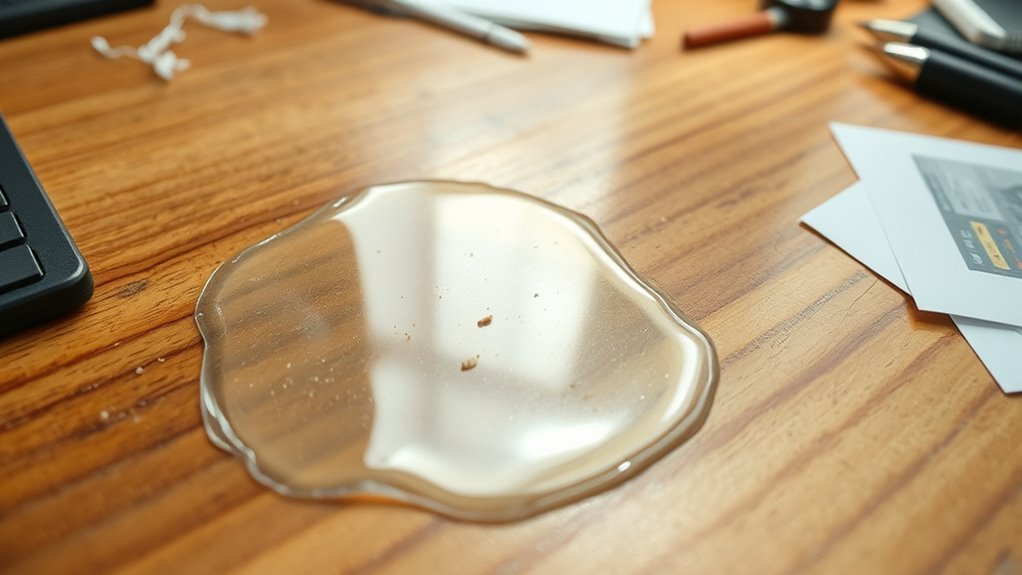
If your desk has sticky residue left from adhesive or spilled liquids, it’s important to remove it safely to avoid damaging your surface. The key is to choose the right method and use suitable products that won’t harm the finish of your desk. Adhesive removers are a popular option, but you can also try household solutions that are gentle yet effective. Before applying any product, test it on a small, inconspicuous area to ensure it won’t cause discoloration or damage.
Start by gently scraping off any loose residue using a plastic scraper or an old credit card. Be careful not to scratch the surface. Once you’ve removed the bulk of the sticky material, you can use adhesive removers designed specifically for this purpose. These products are formulated to dissolve adhesives without damaging most surfaces. Follow the instructions on the label, applying a small amount to a cloth or cotton swab and gently rubbing it onto the sticky area. Let it sit for a few minutes to break down the adhesive, then wipe away with a clean cloth. If you prefer natural or household solutions, options like white vinegar or baking soda mixed with water can work well. Dampen a cloth with vinegar and gently rub the residue. For stubborn spots, make a paste of baking soda and water, apply it to the sticky area, and let it sit for a few minutes before wiping clean.
Gently scrape residue, then use adhesive removers or household solutions like vinegar or baking soda paste.
Always avoid harsh chemicals like acetone or nail polish remover unless you’re certain they won’t damage your desk’s finish. These can be effective but potentially damaging, especially on painted or varnished surfaces. Using appropriate cleaning products that are safe for your specific surface type is essential for preventing damage. When using household solutions, ensure you don’t oversaturate the area, as excess moisture can seep into the material beneath and cause warping or discoloration. After removing the residue, wipe the surface with a clean, damp cloth to remove any leftover product and dry it thoroughly with a soft towel.
Maintaining your desk’s appearance requires patience and gentle handling. Using the right adhesive removers or household solutions helps you remove sticky residue effectively without risking damage. Remember, always start with the least aggressive method and proceed cautiously. Protect your workspace by avoiding abrasive tools or excessive scrubbing, which can scratch or dull the surface. With these tips, you can keep your desk clean, smooth, and free of unwanted residue, ensuring it stays in top condition for longer.
adhesive residue remover for desks
As an affiliate, we earn on qualifying purchases.
As an affiliate, we earn on qualifying purchases.
Frequently Asked Questions
Can I Use Household Vinegar to Remove Sticky Residue?
Yes, you can use household vinegar for cleaning sticky residue. Vinegar’s acetic acid helps break down adhesive, making it easier to remove. Dab a cloth with vinegar, then gently rub the sticky area. It’s a safe, natural household solution that’s effective on most surfaces. Just be sure to test on a small, hidden spot first to prevent any damage, and wipe with clean water afterward to remove any vinegar residue.
Is It Safe to Use Abrasive Tools on My Desk?
Think of your desk as a delicate dance partner, and abrasive tools as rough dance steps that could scratch its finish. Using abrasive tools on your desk isn’t safe, as they can gouge and dull the surface. Instead, opt for gentle solutions like a soft cloth or mild cleaner. Protect your desk’s beauty by avoiding harsh scrapes, ensuring it remains a smooth partner in your workspace for years to come.
How Long Should I Wait Before Trying to Remove Residue?
You should wait until the adhesive residue has dried completely before attempting removal, usually about 10 to 15 minutes, depending on the adhesive type. Timing considerations are important because trying to remove wet or semi-dried residue can make the process messier and less effective. Ensuring the residue is fully dry allows you to use safer, more effective methods like rubbing alcohol or gentle scraping without damaging your desk surface.
Will Removing Adhesive Damage the Desk’s Finish?
Removing adhesive won’t damage your desk’s finish if you proceed carefully, like walking on a tightrope. Use gentle methods to prevent chemical reactions that could harm the finish protection. Avoid harsh chemicals, and test any cleaner on a small, hidden area first. When done properly, you preserve your desk’s appearance, ensuring it stays beautiful and intact while safely removing the sticky residue.
Are There Eco-Friendly Options for Adhesive Removal?
Yes, you can opt for eco-friendly options like biodegradable solvents and natural remedies to remove adhesive residue. You might try vinegar, lemon juice, or baking soda mixed with water for effective, chemical-free cleaning. These natural remedies are safe for your environment and gentle on your desk’s finish. Just apply them carefully, let them sit briefly, then wipe away the residue with a soft cloth for a clean, eco-conscious solution.
plastic scraper for sticky residue
As an affiliate, we earn on qualifying purchases.
As an affiliate, we earn on qualifying purchases.
Conclusion
Now that you know how to tackle sticky desk residue safely, you’re like a skilled artist cleaning their canvas. With patience and the right methods, you can erase adhesive marks without causing damage. Think of it as untangling a knot—gentle effort wins the day. So, keep these tips handy and transform your cluttered desk into a smooth, clean workspace, proving that even stubborn stickiness can be swept away with a little know-how.
natural adhesive remover vinegar baking soda
As an affiliate, we earn on qualifying purchases.
As an affiliate, we earn on qualifying purchases.
desk surface safe cleaning products
As an affiliate, we earn on qualifying purchases.
As an affiliate, we earn on qualifying purchases.