
Cutting straight is hard because it depends on your edge control and wrist flexibility, which many beginners haven’t developed yet. If your grip is too tight or your wrist stiff, it’s tough to keep the tool steady and follow a straight line. Using a relaxed hand position and fluid wrist movements allows tiny adjustments that help you stay on course. Keep practicing these techniques, and you’ll find it easier to make clean, straight cuts every time.
Key Takeaways
- Poor edge control and wrist flexibility cause hand drift, making it difficult to cut straight.
- A relaxed grip and loose fingers improve wrist mobility for better alignment and precision.
- Maintaining steady pressure along the blade’s edge prevents wobbling and deviation during cuts.
- Fluid wrist movements allow tiny adjustments, helping to follow a straight line consistently.
- Proper hand positioning with relaxed grip enhances control, reducing frustration and improving straight cutting accuracy.

Ever wonder why cutting straight with scissors or a knife often feels so difficult? It’s a challenge many face, and the core issue usually boils down to control—specifically, edge control and wrist flexibility. When you’re trying to cut a straight line, you need to maintain a steady, consistent pressure along the edge of your tool while keeping your wrist fluid enough to guide the cut smoothly. Without proper control and flexibility, your hand tends to drift or wobble, resulting in uneven or crooked cuts. That’s because cutting isn’t just about applying pressure; it’s about managing the angle, the force, and the movement all at once. Additionally, free floating techniques can help stabilize your hand during cuts, making straight lines easier to achieve.
Control and wrist flexibility are key for straight, smooth cuts with scissors or a knife.
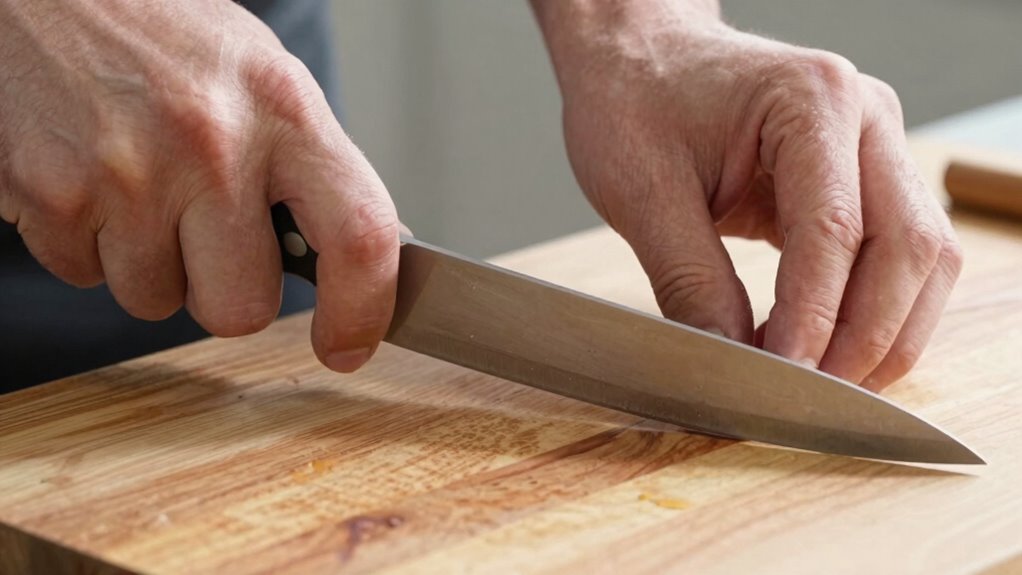
Edge control plays a significant role here. If you’re not able to keep the blades or the knife aligned properly, your cut will veer off course. When your grip is too tight or too loose, or if your hand isn’t steady, your edge control diminishes. The key is to develop a sense of how your hand and fingers should hold the tool, allowing you to guide it confidently without forcing it through the material. A steady edge on your scissors or knife ensures that the blades stay aligned and don’t slip or wobble, so your cut remains straight. Practicing controlled, deliberate movements helps build this steadiness over time.
Wrist flexibility is equally essential. If your wrist is stiff or rigid, your movements become limited, making it harder to follow a straight line. When your wrist moves freely, you can adjust the angle of your cut on the fly, making tiny corrections that keep your line straight. Flexibility allows you to pivot your hand smoothly without exerting unnecessary pressure or causing wobbling. To improve wrist flexibility, simple stretching exercises and mindful practice can make a big difference. When your wrist is relaxed and mobile, you can pivot, tilt, and adjust your hand with ease, which results in cleaner, straighter cuts.
The hand position that fixes this problem involves holding the tool comfortably with a relaxed grip, allowing your wrist to move naturally. Instead of gripping tightly and trying to force the cut, keep your fingers loose and your wrist flexible. Position your hand so that your wrist can rotate slightly, helping you follow the line precisely. This approach gives you greater control over the edge of your cut, enabling you to make smooth, straight lines more consistently. Remember, a relaxed grip combined with wrist flexibility is the foundation for better edge control and more accurate cuts. With time and practice, mastering this hand position makes cutting straight feel effortless rather than frustrating.
Amazon Product B0D5YN9RB4
As an affiliate, we earn on qualifying purchases.
Frequently Asked Questions
How Does Hand Position Influence Cutting Accuracy?
Your hand position directly influences cutting accuracy by affecting hand stability and control. A proper grip technique provides a firm, comfortable hold, reducing shaky movements and improving precision. When you keep your hand steady and maintain a consistent grip, you can guide the blade smoothly along your intended line. This stability makes it easier to cut straight, ensuring cleaner, more accurate results every time.
What Are Common Mistakes Beginners Make When Cutting Straight?
Did you know that nearly 60% of beginners struggle with straight cuts? Common mistakes include rushing the process, neglecting saw blade maintenance, and choosing inappropriate material. You might also ignore proper hand positioning, which vitally affects accuracy. To improve, focus on maintaining steady pressure, make certain your saw blade is sharp and clean, and select the right material for your project. These steps help you cut straight with confidence and precision.
Can Adjusting Grip Pressure Improve Cut Straightness?
Yes, adjusting your grip pressure can improve cut straightness. When you maintain a firm yet relaxed grip, your hand control becomes more precise, reducing wobbling or uneven cuts. Too tight a grip causes tension, making your hand stiff and less responsive. By finding the right grip pressure, you gain better control over your tool, allowing you to follow a straight line more accurately and confidently.
Does Arm Length Affect the Ability to Cut Straight?
Your arm length can influence how easily you cut straight, as it affects your cutting posture. Longer arms might create more leverage but can also cause awkward angles, making control harder. Shorter arms may offer better precision but limit reach. Adjust your stance and grip to optimize your posture, ensuring your arm length works with your technique. Practice consistently to develop muscle memory and improve your straight cuts.
Are There Exercises to Develop Better Hand Control for Cutting?
Think of your hand as a steady conductor guiding the blade’s symphony. To develop better hand control, practice exercises like slow, deliberate cuts focusing on maintaining perfect blade alignment and consistent cutting angles. Use a mirror to observe your movements, and try cutting through different materials to refine your precision. These exercises sharpen your sense of control, helping you master the rhythm needed for straight, confident cuts every time.
Amazon Product B0DXTP5GYB
As an affiliate, we earn on qualifying purchases.
Conclusion
Mastering straight cuts isn’t just about technique; it’s about consistency, focus, and the right hand position. When you keep your hand steady, your eyes aligned, and your grip firm, you create a rhythm that guides your blade straight. Remember, practice builds muscle memory, patience overcomes frustration, and proper hand placement releases your potential. So stay dedicated, stay focused, and keep cutting straight—because every perfect cut starts with the right hand position and a confident mindset.
Amazon Product B0FDQ8CV25
As an affiliate, we earn on qualifying purchases.
Amazon Product B0CQ87K7RL
As an affiliate, we earn on qualifying purchases.