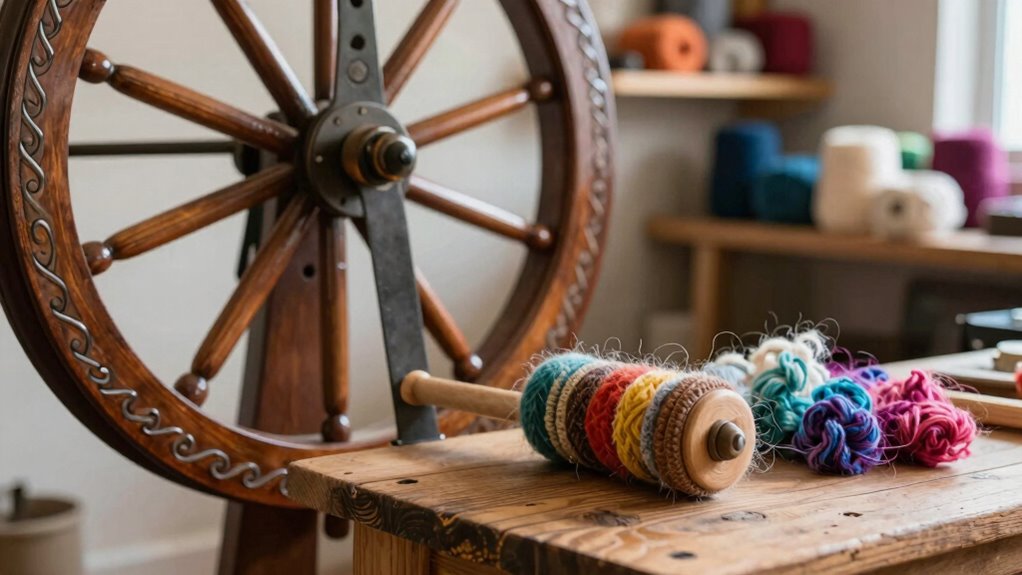

When starting your fiber art journey, focus on purchasing a reliable spinning wheel and drum carder. A good spinning wheel lets you control yarn thickness and explore different fibers, while a drum carder helps you blend colors and textures for unique effects. Prioritize quality and your space constraints, aiming for tools that will last and support your growth. If you continue exploring, you’ll discover even more ways to expand your skills and creativity.

Get business pricing on tools and workshop supplies
- Business-only prices and quantity discounts
- Tax-exempt purchasing
- Multiple users, one account, clear invoices
Key Takeaways
- Start with a reliable, adjustable spinning wheel suitable for beginners to develop control and technique.
- Choose a drum carder that allows fiber blending and preparation for versatile creative exploration.
- Prioritize quality tools to ensure durability and long-term craft enhancement.
- Consider your budget, space, and future goals when selecting your first tools.
- Focus on foundational tools that support experimentation, learning, and developing a personal style.
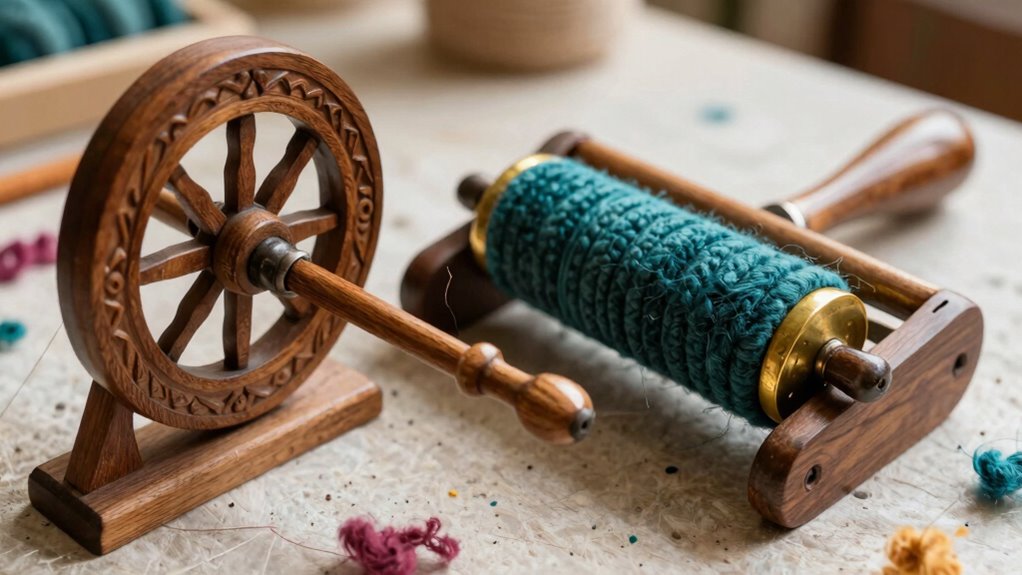
Getting started with fiber art can be exciting, but choosing the right supplies is essential for beginners. When you’re just starting out, investing in a spinning wheel and a drum carder can make a big difference in your creative process. These tools aren’t just equipment; they’re your gateway to exploring different fiber textures and colors, and they set the foundation for your craft. Before diving in, it’s helpful to contemplate your goals and how you want to develop your skills, especially when it comes to dyeing techniques and fiber blending options.
Starting fiber art? Focus on essential tools like a spinning wheel and drum carder to unlock your creative potential.
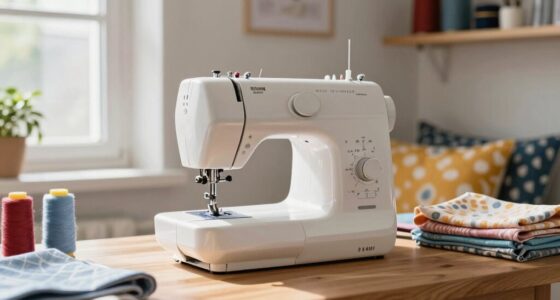
A spinning wheel is a versatile tool that allows you to turn raw fiber into yarn, giving you control over the thickness and texture of your finished product. For beginners, a simple, reliable wheel with adjustable tension will serve you well. As you become more confident, you can experiment with different fiber types and spinning styles. The wheel also lets you explore dyeing techniques by creating yarns in various colors, which you can later use in your projects. You might choose natural fibers like wool or alpaca initially, then dye them with eco-friendly dyes or traditional methods, expanding your skill set.
Next, a drum carder is invaluable for fiber blending options. It’s the tool that helps you prepare fiber for spinning by blending different colors, fibers, or textures seamlessly. With a drum carder, you can create custom battings that combine dyed and undyed fibers, or blend fibers to achieve unique effects and textures. This capability opens up a world of creative possibilities, letting you incorporate dyeing techniques directly into your fiber preparation process. You can blend fibers of varying colors to produce gradient effects or marbled patterns, adding visual interest to your yarns.
When choosing your first spinning wheel and drum carder, keep in mind your budget, space, and future goals. Look for quality, as these tools will last and improve your craft over time. Remember that your initial investment is an essential step toward mastering dyeing techniques and fiber blending options. These tools will help you experiment, learn, and develop your style, making your fiber art journey both enjoyable and rewarding. Understanding the importance of fiber preparation can enhance your ability to create complex and beautiful textures. As you grow more skilled, you’ll find that these foundational supplies open up endless creative possibilities, allowing you to craft unique, beautiful projects that reflect your personal touch.
beginner spinning wheel with adjustable tension
As an affiliate, we earn on qualifying purchases.
As an affiliate, we earn on qualifying purchases.
Frequently Asked Questions
What Is the Average Cost of a Beginner Spinning Wheel?
A beginner spinning wheel usually costs between $200 and $500, depending on the brand and features. You’ll find options suitable for various fiber types, like wool or alpaca, and different spinning techniques, such as traditional or portable wheels. Consider your budget and your interest in specific fibers and techniques. Starting with an affordable wheel allows you to explore your preferences before investing in more advanced equipment.
How Do I Choose the Right Drum Carder for My Needs?
To choose the right drum carder, consider your fiber blending needs and how often you’ll use it. Look for a model with adjustable speed and blade settings to customize your blends. Also, check for easy carder maintenance features like accessible parts and durable construction. Think about the types of fiber you’ll work with most, ensuring the carder can handle them smoothly. This way, you’ll find a tool that fits your creative flow.
Are There Specific Fibers Better Suited for Beginners?
As a beginner, you’ll find wool and alpaca are the best suited for fiber preparation and beginner fiber types. They’re soft, easy to work with, and forgiving if you make mistakes. These fibers card easily and spin smoothly, helping you learn the basics without frustration. Starting with these options allows you to practice fiber prep and spinning techniques, building confidence before exploring more complex fibers like silk or specialty blends.
What Safety Precautions Should I Take When Using These Tools?
When using spinning wheels and drum carders, prioritize workspace safety by wearing protective gear like eye protection and gloves. Always keep your workspace clean and well-lit to prevent accidents. Follow the manufacturer’s instructions carefully, especially when handling sharp parts. Make certain to turn off and unplug tools when not in use. Regularly inspect equipment for damage, and keep children or pets away to guarantee a safe, enjoyable fiber art experience.
Can I Use a Spinning Wheel and Drum Carder Together?
Yes, you can use a spinning wheel and drum carder together for fiber blending. Start by preparing your fibers on the carder, blending colors and textures as desired. Then, transfer the blended fiber to your spinning wheel. Remember to perform regular tool maintenance on both to guarantee smooth operation and safety. Combining these tools allows you to create unique, customized yarns with vibrant color blends and varied textures.
As an affiliate, we earn on qualifying purchases.
Conclusion
Starting with a spinning wheel or drum carder can transform your fiber art journey. Did you know that beginners who invest in quality tools early on are 30% more likely to stick with their craft? Choosing the right equipment boosts confidence and creativity. So, pick your first essential wisely—whether spinning or prepping fibers—to set a solid foundation. With the right tool in hand, you’ll find yourself more inspired and enthusiastic to explore new techniques.
As an affiliate, we earn on qualifying purchases.
electric drum carder for fiber art
As an affiliate, we earn on qualifying purchases.
As an affiliate, we earn on qualifying purchases.
Fall yard work Picks
leaf blowers
As an affiliate, we earn on qualifying purchases.