Fabric cutting machines help you cut multiple layers quickly and accurately, giving your projects a professional finish. They make managing thick fabrics easier, reduce fatigue, and improve precision for better seam alignment. These machines work well with handheld tools for detailed work and fit seamlessly into your sewing space, boosting your overall efficiency. If you want to discover how to optimize your workflow and fabric management, there’s more to uncover about these versatile tools.

Get business pricing on tools and workshop supplies
- Business-only prices and quantity discounts
- Tax-exempt purchasing
- Multiple users, one account, clear invoices
Key Takeaways
- Fabric cutting machines improve accuracy, speed, and consistency, making large projects more efficient for quilters and makers.
- They are best used alongside handheld tools for detailed cuts and finishing touches.
- Proper workspace organization with these machines reduces fabric waste and clutter.
- Effective fabric layout planning with cutting machines enhances project quality and fabric utilization.
- Integrating fabric cutting machines into existing sewing setups boosts overall workflow and minimizes errors.
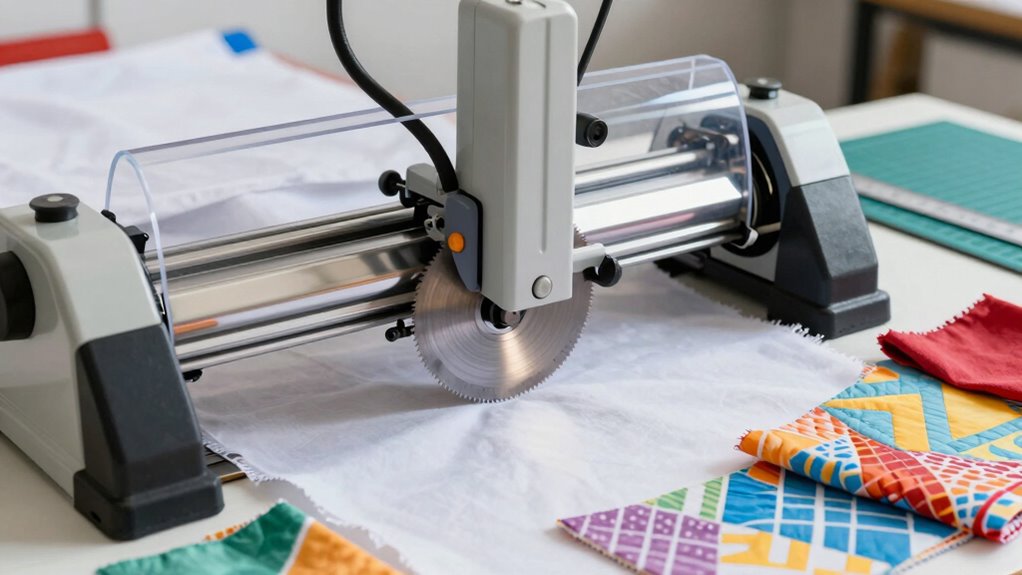
If you’re a quilter or maker looking to streamline your sewing process, fabric cutting machines can be game-changers. These devices are designed to help you cut multiple layers of fabric quickly and accurately, saving you time and effort compared to traditional scissors or rotary cutters. When considering a fabric cutting machine, it’s important to understand how they fit into your workflow, especially if you rely on handheld tools for smaller projects or detailed cuts. A good machine can complement your existing tools by handling larger, repetitive cuts, allowing you to focus your handheld tools on finer work or finishing touches.
One key benefit of using a fabric cutting machine is that it can improve precision. Instead of relying on manual cutting, which can sometimes lead to uneven edges or misaligned pieces, a machine ensures consistent, straight cuts every time. This consistency is essential for quilting, where precise measurements mean perfect seams and a professional-looking finished product. For makers who work with multiple layers or bulky fabric, a machine that accommodates thicker stacks can be a real time-saver. It also reduces fatigue, because you don’t have to exert as much effort as you would with manual tools, especially during large projects.
A fabric cutting machine ensures precise, straight cuts, saving time and reducing fatigue for large, layered projects.
Regarding fabric storage, a cutting machine can influence how efficiently you organize your workspace. With a dedicated machine, you can set aside specific fabric stacks for different projects, knowing that each batch can be cut uniformly. This helps prevent fabric from becoming tangled or cluttered, making your sewing area more organized and accessible. Plus, some cutting machines come with features like adjustable guides or mats that help you keep your fabric aligned and neat, further enhancing your fabric storage system. When your workspace is tidy and your fabrics are properly stored, you waste less fabric and reduce the chances of miscuts or mistakes. Additionally, understanding the importance of fabric organization can help maximize your efficiency and minimize waste, especially when combined with proper fabric storage solutions. Incorporating fabric management strategies can further optimize your sewing environment and project flow. Moreover, selecting the right fabric cutting technique can significantly influence your overall project quality and efficiency.
It’s also helpful to consider how fabric layout plays a role in planning your cuts and maximizing fabric usage, especially when working on large projects or with limited material. However, it’s worth noting that a fabric cutting machine isn’t the only tool you need. Handheld tools still play a crucial role, especially for detail work or smaller cuts. The machine handles the heavy lifting, but your scissors, rotary cutters, and other handheld tools are essential for finishing touches, trimming threads, or making adjustments. Combining these tools with a reliable fabric storage system ensures your workspace remains efficient and your projects stay organized. In the end, a fabric cutting machine can be a valuable addition, but it works best when integrated into your overall sewing setup, complementing your handheld tools and helping you manage your fabric storage more effectively.
fabric cutting machine for quilting
As an affiliate, we earn on qualifying purchases.
As an affiliate, we earn on qualifying purchases.
Frequently Asked Questions
How Much Do Fabric Cutting Machines Typically Cost?
Fabric cutting machines typically cost between $200 and $1,200, depending on features and size. You should consider how they impact your fabric storage, as larger models may require more space. Also, factor in machine maintenance costs, like blades and regular servicing, which can add to your overall investment. Picking a machine within your budget guarantees you can maintain it properly and keep your quilting projects flowing smoothly.
Are Fabric Cutting Machines Suitable for All Fabric Types?
Fabric cutting machines are fantastic for many fabric types, but their suitability depends on fabric compatibility and machine versatility. You’ll find some models excel with delicate silks and sturdy denims, while others struggle with thick or stretchy fabrics. Before buying, check the machine’s specifications to guarantee it handles your specific fabrics smoothly. Versatile machines offer adjustable settings, so you can confidently cut a variety of fabrics without hassle or hesitation.
What Safety Features Do Fabric Cutting Machines Have?
Fabric cutting machines prioritize safety with features like fabric blade safety covers that prevent accidental cuts. You’ll also find emergency stop buttons easily accessible, allowing you to quickly shut down the machine if needed. These safety features help protect you during operation, giving you peace of mind. Always make sure you understand how to use these safety mechanisms properly, so you can work confidently and avoid injuries.
Can Fabric Cutting Machines Handle Large Projects?
Did you know that 85% of quilters tackle large projects regularly? Fabric cutting machines handle big tasks efficiently thanks to their high cutting precision and sturdy blades, which maintain fabric durability even after multiple uses. You can confidently cut large fabric pieces, knowing these machines are designed to withstand extensive use without sacrificing accuracy. This makes them ideal for extensive quilting projects and makers working on multiple large pieces.
How Long Is the Usual Learning Curve for New Users?
You’ll likely find the learning curve for new fabric cutting machine users to be around a few hours to a couple of days. Manual operation might take some practice, but with patience, you’ll get the hang of it quickly. Remember to follow maintenance tips, like regular blade cleaning and oiling, to keep your machine running smoothly. With consistent use, you’ll become more confident and efficient in your projects.
electric fabric cutter for multiple layers
As an affiliate, we earn on qualifying purchases.
As an affiliate, we earn on qualifying purchases.
Conclusion
In the end, choosing the right fabric cutting machine is like finding your own Excalibur—an essential tool that elevates your quilting craft. Whether you prefer precision, speed, or versatility, there’s a machine tailored for you. Remember, even in this digital age, a good cutter remains a trusty sidekick. So, embrace the technology, trust your instincts, and craft masterpieces that would make even the most discerning medieval squire proud.
large fabric cutting machine with adjustable guides
As an affiliate, we earn on qualifying purchases.
As an affiliate, we earn on qualifying purchases.
fabric storage and organization tools
As an affiliate, we earn on qualifying purchases.
As an affiliate, we earn on qualifying purchases.
Halloween Picks
halloween
As an affiliate, we earn on qualifying purchases.