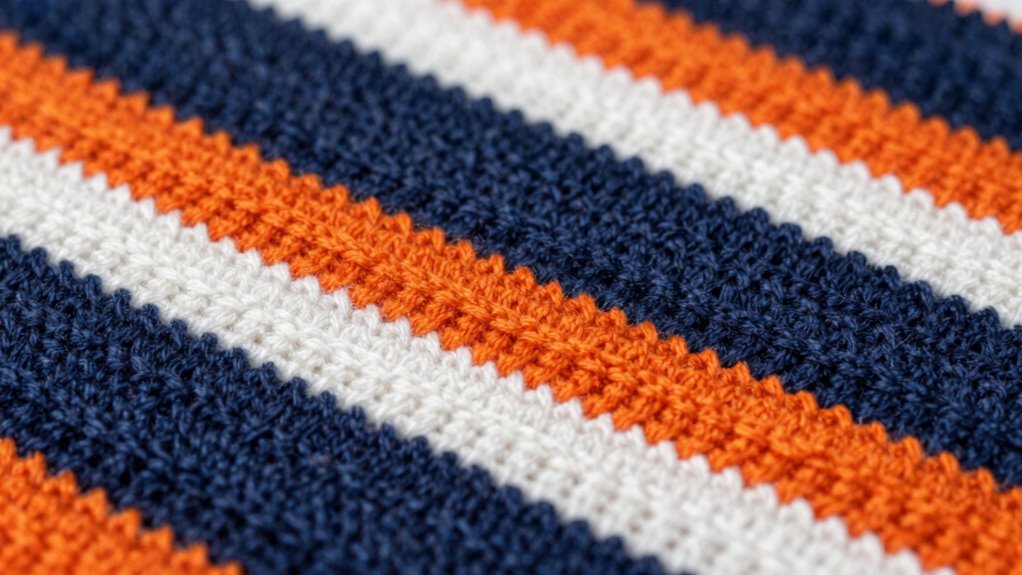

To prevent puckering in colorwork without losing stitch tension, focus on maintaining consistent, relaxed tension with each yarn. Use markers to track pattern sections and ensure even tension during color changes by crossing yarns neatly at the back. Tools like yarn guides can help stabilize tension, and practicing small swatches improves your skill. Keep these techniques in mind, and you’ll create smooth, vibrant patterns—more tips await as you explore how to perfect your colorwork.
Key Takeaways
- Maintain even, moderate tension on all yarns to prevent puckering and avoid pulling too tight, which causes looseness.
- Use markers to keep pattern sections aligned, reducing tension fluctuations during color changes.
- Cross yarns neatly at the back to keep fabric flat and prevent puckering without tightening the tension.
- Utilize yarn guides or tension rings to stabilize yarn flow and ensure consistent tension throughout your project.
- Practice small swatches regularly to develop an even tension that avoids puckering and maintains colorwork crispness.
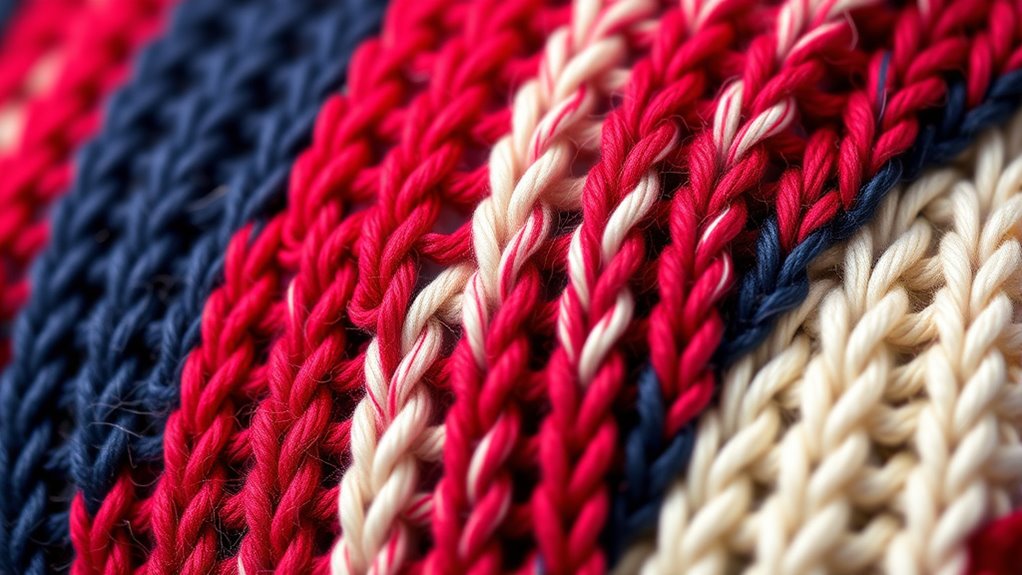
Have you ever wondered how knitters create intricate, colorful patterns that stand out? The secret often lies in managing tension and organization. When working with multiple colors, maintaining consistent yarn tension is essential. If your tension is too tight, your stitches become stiff, and the fabric puckers. Too loose, and the colors can bleed or look sloppy. To prevent puckering, you need to find that perfect balance where your yarns flow smoothly through your fingers without pulling or loosening. Practice makes perfect—try knitting a few small swatches, adjusting your tension until your stitches are even and relaxed. This helps avoid uneven colorwork and puckering in larger projects.
Another critical aspect is marker placement. As you switch colors, it’s easy to get confused about where to carry your yarns or which stitches belong to each color. Using markers helps you keep track of your pattern sections and reduces mistakes that cause puckering. Place markers at the beginning of each color section or repeat pattern point. This way, you’ll know exactly where to switch colors and can maintain even tension across your work. Proper marker placement also prevents accidental yarn pulls or uneven stitches caused by miscounting or losing track of your pattern repeats.
When working with colorwork, pay close attention to how you carry your yarns across the back of your work. Keep your yarns loose enough to prevent tension build-up, but not so loose that they flap around and create loose stitches. When *changing* from one color to another, avoid pulling the yarn too tightly, which can cause puckering around the color change. Instead, maintain a gentle, even tension, and ensure your yarns are crossing each other at the back of your work neatly. This helps keep your fabric flat and even, without puckering or loose stitches.
Using a yarn guide or tension ring can also help stabilize your yarn tension throughout the project. These tools keep your yarns at a consistent tension, reducing the variability that causes puckers. When you approach pattern repeats or color changes, pause briefly to check your tension and adjust if necessary. Consistency is key—small adjustments early on will save you from major puckering issues later. Additionally, selecting high-quality yarns can contribute to more even tension and a smoother finish.
Ultimately, managing yarn tension and strategic marker placement are your best tools for achieving smooth, even colorwork. Practice these techniques, stay attentive as you knit, and your patterns will emerge beautifully without puckering or loose stitches. With patience and mindful tension control, you’ll produce crisp, vibrant colorwork projects that stand out for their precision and artistry.
Frequently Asked Questions
How Do I Choose the Best Yarn for Colorwork Projects?
To select the best yarn for colorwork projects, focus on color selection and consistency. Pick yarns in the same dye lot to guarantee uniform color, preventing noticeable differences. Opt for yarns with similar fiber content and weight, which helps maintain even tension and avoids puckering. Test small samples first, and consider using yarns designed specifically for colorwork, as they’re often more stable and colorfast, making your project look polished.
What Are Common Mistakes That Cause Puckering?
You often cause puckering by maintaining tension inconsistencies, which makes stitches uneven and gathers the fabric. Uneven floats can also pull the fabric tight or leave slack, leading to puckering. To avoid this, keep your tension consistent as you knit, and make certain your floats are neither too tight nor too loose. Regularly check your work and adjust your tension to maintain smooth, even stitches, preventing puckering from forming.
Can Tension Issues Be Fixed After Finishing?
Think of your knitting like a sculpture—you can still shape it after it’s finished. While it’s tricky, tension issues can sometimes be fixed with careful finishing techniques like wet blocking or gentle tension adjustment. You might loosen or tighten stitches to reduce puckering, but prevention is best. Use these finishing techniques to smooth out your work, making it look polished and professional, even if tension wasn’t perfect from the start.
Are Certain Knitting Needles Better for Colorwork?
Yes, certain knitting needles are better for colorwork. Circular needles are ideal because they allow even tension and distribute the weight comfortably, making colorwork easier. Choose a needle size that matches your yarn weight; smaller sizes give tighter stitches, reducing puckering, while larger sizes create a looser fabric. Using the right circular needles and needle size helps prevent puckering and guarantees a smooth, professional finish in your colorwork projects.
How Do I Maintain Consistent Gauge Across Different Yarns?
To maintain consistent gauge across different yarns, focus on controlling your yarn tension and adjusting needle size accordingly. You should knit a swatch with each yarn to determine the right needle size that gives you even stitches. Keep your yarn tension steady and avoid pulling too tightly or loosely. By experimenting with needle sizes and maintaining even tension, you’ll achieve uniform gauge regardless of yarn variations.
Conclusion
Don’t let puckering hold you back from beautiful colorwork. With a little practice, you’ll find the right tension and techniques to keep your stitches even and neat. Some might worry it’s complicated, but once you get the hang of maintaining consistent tension and using proper techniques, it becomes second nature. Keep experimenting and trusting your instincts—your projects will turn out stunning, smooth, and professional-looking. Keep knitting, and enjoy every colorful stitch!