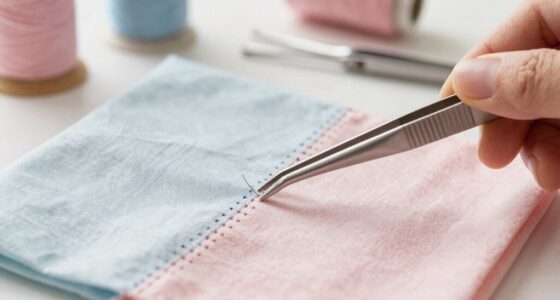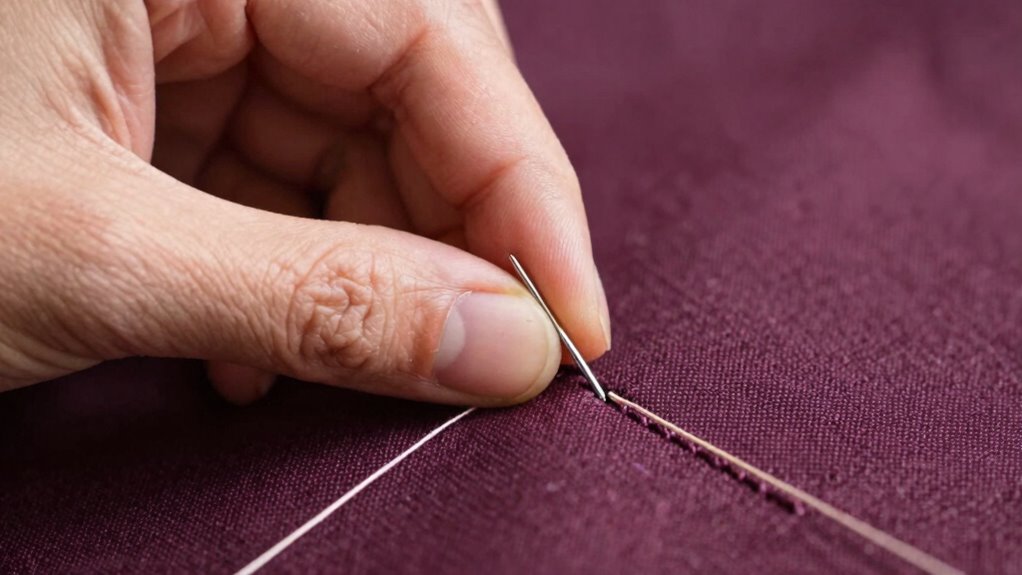
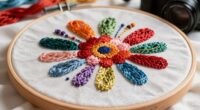
Mastering five key hand stitches—running, backstitch, whipstitch, overcast, and slip—can handle about 90% of your sewing needs. These stitches allow you to sew seams, finish edges, prevent fraying, and close gaps seamlessly. Each stitch serves a specific purpose and, with practice, becomes quick and reliable. If you keep exploring, you’ll discover how to use each stitch effectively, ensuring professional results every time.
Key Takeaways
- Running Stitch is versatile for seams and fabric marking, providing a foundation for other stitches.
- Backstitch offers strong, durable seams ideal for various fabric types and heavy-duty sewing.
- Whipstitch finishes edges securely and decoratively, suitable for seams and layered fabrics.
- Overcast Stitch prevents fraying by securing raw edges on different fabric types.
- Slip Stitch creates invisible closures, perfect for finishing seams discreetly.
hand sewing starter kit
As an affiliate, we earn on qualifying purchases.
As an affiliate, we earn on qualifying purchases.
Running Stitch
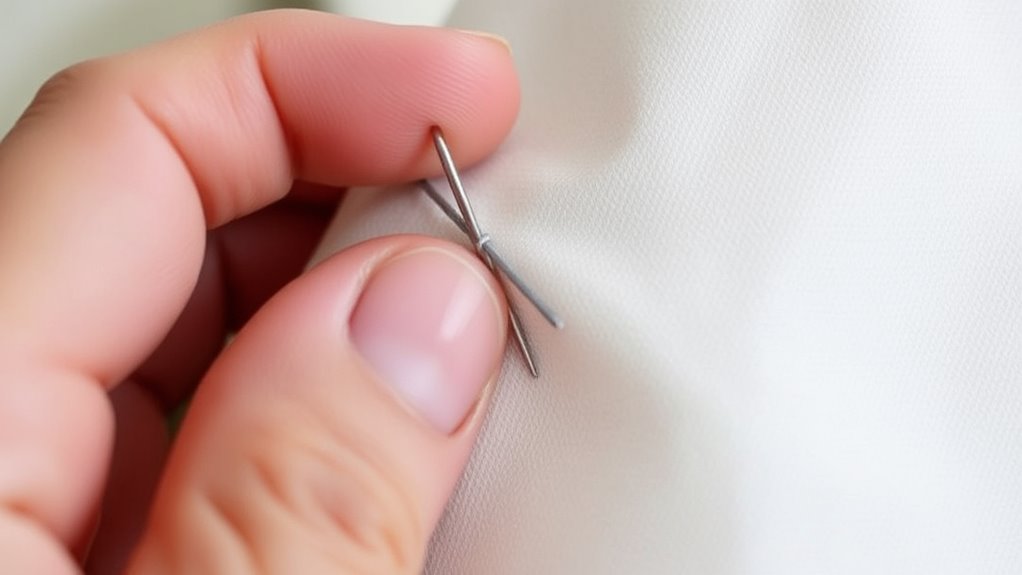
Have you ever wondered how to create a simple, even stitch for your sewing projects? The running stitch is perfect for that. It’s a basic stitch used for sewing seams, gathering fabric, or marking fabric. When choosing fabric, consider its weight and weave, as these factors affect stitch tension and appearance. To vary your stitch variations, keep your stitches evenly spaced and consistent in length. Using a contrasting thread can also help you see your stitches clearly while practicing. The running stitch is quick and versatile, making it a great foundation for more complex stitches. Practice on scrap fabric first to get comfortable with your stitch length and tension. Additionally, understanding the importance of energy-efficient technology can help you choose sustainable tools and materials for your sewing projects. Being aware of pinball machine weights can also aid in safely transporting and storing your equipment, especially if you decide to incorporate pinball-themed decor or collectibles into your sewing space. Considering air purifier maintenance can ensure your workspace remains free of dust and allergens, creating a healthier environment for your sewing activities. Incorporating projector contrast ratio considerations can also enhance the visibility of your stitches on different fabrics and lighting conditions. Once perfected, you’ll find it’s an essential skill for many sewing projects.
best sewing needles for hand stitching
As an affiliate, we earn on qualifying purchases.
As an affiliate, we earn on qualifying purchases.
Backstitch
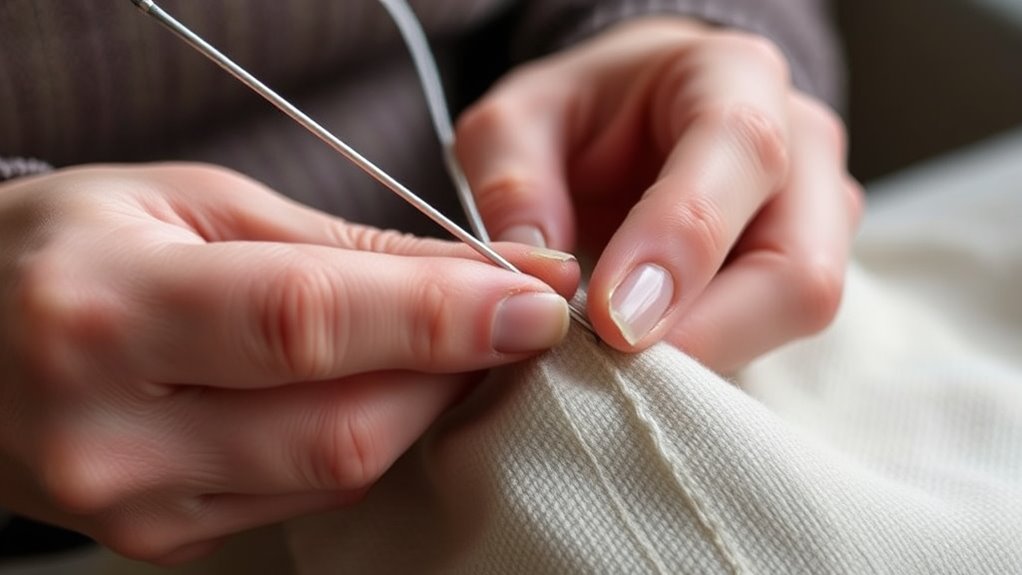
Wondering how to create strong, durable seams? The backstitch is your go-to for sturdy, lasting seams. It works well on various fabric types, from lightweight cotton to heavy denim, providing strength where it matters most. To get the best results, choose your thread carefully—match it to your fabric type and weight. Using a strong, smooth thread like polyester is ideal for most projects, ensuring your stitches hold up over time. The backstitch creates a continuous line of overlapping stitches, making it perfect for seams that need extra durability. Keep your stitches even and tight, and avoid pulling too hard to prevent puckering. Proper tension and consistent stitch length are essential for maintaining the integrity of your work, especially when dealing with performance cookies that analyze your sewing speed and tension. Understanding sewing machine tension settings can help you achieve even stitches and prevent fabric distortion. Additionally, practicing on scrap fabric can improve your technique and help you master stitch consistency before working on your main project.
hand sewing thread set
As an affiliate, we earn on qualifying purchases.
As an affiliate, we earn on qualifying purchases.
Whipstitch
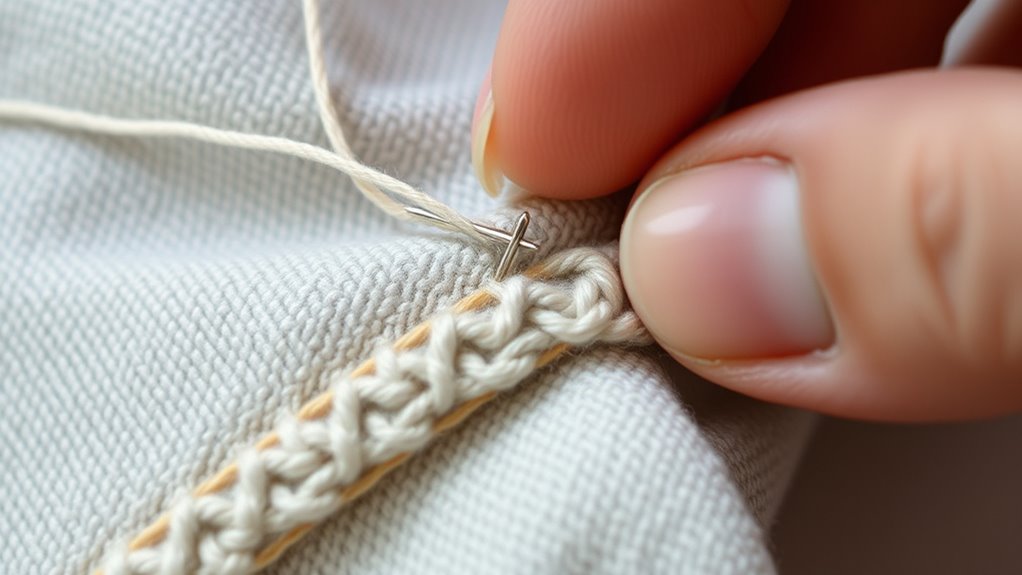
The whipstitch is a simple, versatile hand sewing technique perfect for finishing edges or sewing layers together. Its looped stitches wrap around fabric edges, creating a secure and clean finish. When choosing thread, opt for strong, matching thread to ensure durability and a seamless look. For embellishments for sewing, you can also choose decorative threads to add visual interest. Here’s a quick comparison:
| Thread Type | Best Use | Appearance |
|---|---|---|
| Cotton | General sewing, embellishments | Matte finish |
| Polyester | Heavy fabrics, durability | Slight sheen |
| Embroidery Thread | Decorative accents | Bright, shiny |
The right selection of thread and subtle whipstitches give your project a professional touch. Additionally, understanding sewing techniques can help improve the quality and efficiency of your work. Developing hand sewing skills is essential for achieving precise and durable finishes in your projects. Practicing proper tension and stitch length also contributes to sewing accuracy, making your finished pieces look polished and last longer. Moreover, incorporating creative storytelling into your projects can add a personal touch that resonates with your audience and enhances your craftsmanship.
sewing pin cushion
As an affiliate, we earn on qualifying purchases.
As an affiliate, we earn on qualifying purchases.
Overcast Stitch
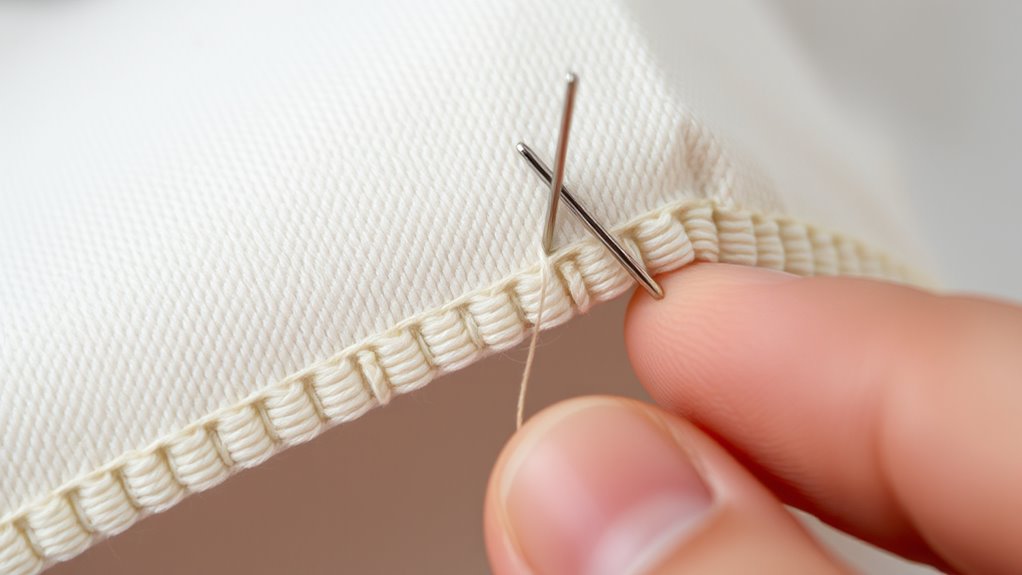
An overcast stitch is a fundamental hand sewing technique used to secure raw edges and prevent fraying. It works well on various fabric types, including lightweight silks, medium-weight cottons, and heavier denim. To achieve a strong, neat finish, consider these key points:
- Adjust your stitch tension to be slightly tighter than usual, ensuring the stitches grip the fabric securely without puckering.
- Use a small, even stitch length to maintain consistency and durability along the raw edge.
- When sewing, keep your needle at a slight angle to follow the fabric’s edge smoothly, especially on delicate or stretchy fabrics.
- Practicing proper tension and stitch consistency is essential for quality finishing, and hand sewing techniques like the overcast stitch can significantly improve your fabric’s longevity and appearance.
- Incorporating period design principles into your stitches can also enhance the overall aesthetic of your sewing projects.
- Additionally, choosing appropriate thread types can further strengthen your stitch and improve the overall durability of your work.
- Understanding the environmental considerations of your workspace, such as avoiding drafts and ensuring proper lighting, can help you achieve more precise stitches.
Mastering these elements helps create a clean, resilient overcast stitch that protects your fabric and enhances your sewing projects.
Slip Stitch
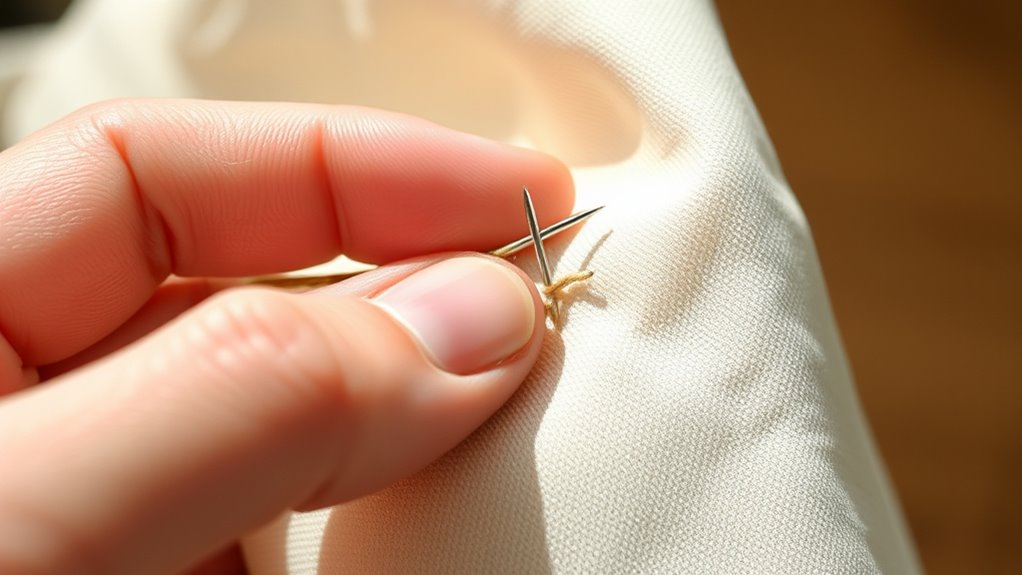
Have you ever needed an invisible, secure stitch to close a seam or hem? The slip stitch is perfect for seam finishing and creating discreet closures. It’s a simple hand stitch that hides inside the fabric, making it ideal for delicate or lightweight materials. You can also use it for decorative accents, adding a subtle touch to your project. To do this, you insert the needle through the fabric’s edge and then into the fold or seam allowance, working small, even stitches that barely show on the outside. Keep your stitches tight and consistent for a clean, professional look. Whether you’re finishing a seam or adding a decorative element, the slip stitch is a versatile tool that gives your hand sewing a polished finish. Additionally, mastering hand sewing techniques can enhance your overall sewing precision and durability. Developing these skills can also improve your ability to perform seam finishing effectively, resulting in a more professional appearance for your projects.
Frequently Asked Questions
What Types of Fabrics Are Best Suited for Hand Stitching?
You’ll find that lightweight fabrics like cotton, linen, and silk are best suited for hand stitching because they’re easy to work with and hold stitches well. Medium-weight fabrics such as denim or canvas work for more durable projects, but may require different sewing techniques. Avoid very thick or stretchy fabrics, as they can be tricky to stitch by hand. Choosing the right fabric types helps make certain your stitches stay neat and secure.
How Do I Choose the Right Needle and Thread?
You might think choosing the right needle and thread doesn’t matter, but it truly does. For best results, match your thread color to your fabric for a seamless look. Use a needle size appropriate for your fabric—smaller for delicate textiles, larger for heavier materials. This careful selection guarantees your stitches hold well and look neat, making your hand stitching both durable and beautiful.
What Common Mistakes Should I Avoid When Hand Stitching?
To avoid common mistakes, pay attention to thread tension and stitch consistency. Don’t pull the thread too tight, which can cause puckering, or too loose, leading to weak stitches. Keep your stitches even and uniform in size for a professional look. Practice regularly to improve control and avoid uneven tension. Remember, patience and attention to detail help you create strong, neat stitches every time.
How Can I Make My Stitches More Durable?
To make your stitches more durable, imagine your thread as a strong, steady river carving through fabric. Use tight, even stitches, and reinforce areas with decorative hand stitches like backstitch or whipstitch for extra strength. If you’re exploring sewing machine alternatives, hand stitching offers control and precision. Keep tension even and choose high-quality thread, ensuring your stitches hold tight through wear and tear, just like a river shaping its course.
Are There Any Tools That Can Speed up Hand Sewing?
You can speed up hand sewing by using sewing machine alternatives like portable handheld stitchers, which are compact and easy to use. Also, investing in a quality hand sewing kit with ergonomic needles and threaders can make the process more efficient. These tools reduce fatigue and help you sew faster without sacrificing stitch quality, making your hand sewing projects quicker and more enjoyable.
Conclusion
Mastering these five stitches is like unfastening a secret garden of sewing. Each one is a key that opens new possibilities, turning rough fabric into something beautiful and strong. Once you get the hang of them, your stitches will flow like a gentle river, steady and sure. With these tools in your hand, you’re ready to craft with confidence, transforming simple threads into works of art—your sewing journey has just begun.