
A grainline twist happens when you cut or sew fabric out of alignment with its natural thread direction, causing your garment to hang unevenly or look distorted. This usually occurs if you don’t verify pattern markings or shift fabric during cutting or sewing. To avoid this, always double-check your grainline arrows and keep fabric stable. Proper alignment ensures your garment drapes smoothly and looks polished. Keep going, and you’ll discover how to prevent these issues for professional-looking results.
Key Takeaways
- A grainline twist occurs when pattern pieces are cut or sewn out of alignment with the fabric’s true grain, causing skewed hang.
- Improper fabric handling or shifting during cutting can introduce twists in the grainline.
- Sewing with misaligned grainlines leads to uneven drape and distorted garment shape.
- Not double-checking pattern markings or ignoring grainline arrows increases the risk of twists.
- Correctly aligning pattern pieces and maintaining fabric orientation during sewing prevents the grainline twist that causes weird hanging.
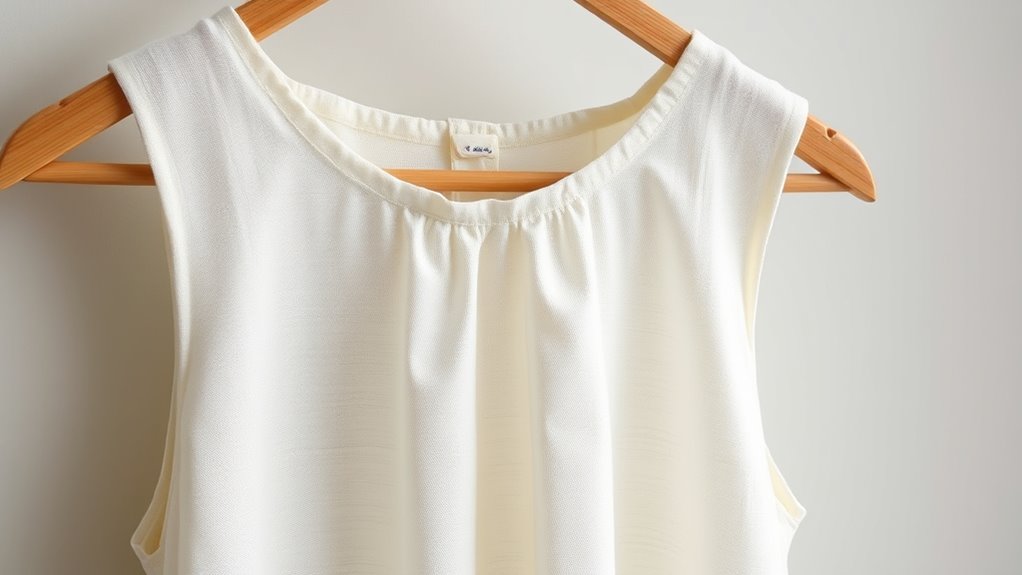
Understanding grainline twists and how garments hang is essential for achieving professional-looking sewing projects. When you’re working with fabric, paying attention to the fabric grain ensures that your finished piece will drape properly and retain its shape over time. The fabric grain refers to the direction of the threads in the woven fabric, typically categorized into the lengthwise (warp), crosswise (weft), and bias. Aligning your pattern pieces correctly with the fabric grain is vital because it directly influences the garment’s drape—the way the fabric falls and moves when worn.
Pay attention to fabric grain to ensure garments drape beautifully and stay in shape over time.
A common problem that causes garments to hang weirdly is a grainline twist. This twist occurs when pattern pieces are cut or sewn out of alignment with the fabric’s grain. For example, if you accidentally cut a sleeve or a bodice piece on the bias when it should be on the lengthwise grain, the resulting garment may look skewed or hang asymmetrically. This is because the fabric’s natural drape is disrupted, and the piece no longer follows the intended line of movement. When garments are sewn with the grainline twisted, you might notice that they don’t hang smoothly or that they cling in odd ways, making the finished project appear unprofessional.
To avoid a grainline twist, always double-check your pattern markings and verify that each piece is aligned with the fabric’s grain before cutting. Use pattern weights rather than pins to keep the pieces steady, and confirm that your pattern lines match the grainline arrows printed on your pattern pieces. After cutting, carefully inspect each piece to confirm it’s aligned properly. During sewing, maintain the fabric’s orientation, and avoid twisting or shifting pieces as you sew. If you notice a twist developing mid-construction, stop and realign the pieces before continuing.
Understanding how your fabric drapes and maintaining proper grain alignment will make a significant difference in how your finished garment looks and feels. When you respect the fabric grain, your garment will hang naturally, emphasizing a clean, professional appearance. It’s also worth noting that certain fabrics, like silk or linen, are more sensitive to grainline twists because of their tendency to shift or stretch. Paying attention to the grainline and ensuring your pieces are cut and sewn correctly not only prevents weird hanging but also prolongs the lifespan of your sewing projects. Mastering this aspect of sewing helps you create garments that look polished, fit well, and move beautifully with the body. Proper fabric alignment is essential for achieving a flawless finish and ensuring your garment’s longevity.
Frequently Asked Questions
How Can I Prevent the Grainline Twist During Sewing?
To prevent the grainline twist during sewing, you should carefully align the fabric’s grainline when cutting. Use fabric cutting techniques that guarantee the grainline is straight and consistent, and pin or weight the fabric properly to avoid shifting. When sewing, follow the grainline carefully, and avoid stretching or pulling fabric as you stitch. These steps help garments hang properly and prevent unwanted twists.
Does Fabric Type Affect the Likelihood of a Grainline Twist?
Imagine you’re in a Victorian sewing room—fabric type definitely influences the likelihood of a grainline twist. Stretch fabrics are more prone, especially if you don’t adjust your sewing machine tension properly. Non-stretch woven fabrics are less likely to twist if you align the grain correctly and handle them gently. So, choose your fabric wisely, and tweak your tension settings to make sure garments hang perfectly without any unwanted twists.
Can Grainline Twists Be Fixed After Garment Completion?
Yes, you can fix grainline twists after completing a garment. To do so, carefully stabilize the fabric along the grainline using fabric stabilization techniques like pressing with steam or applying interfacing. Next, adjust the seam allowances by resewing or trimming and repositioning the fabric to align the grain properly. This process helps correct the twist and guarantees your garment hangs correctly, improving its overall fit and appearance.
Are Certain Pattern Designs More Prone to Grainline Twists?
Yes, certain pattern designs are more prone to grainline twists. If your fabric grain isn’t aligned properly during cutting, it can cause twists and uneven hanging. Patterns with intricate pattern matching or directional prints are especially vulnerable. Always check the fabric grain and carefully match pattern pieces to make certain the grainline runs straight. This helps garments hang smoothly and prevents unwanted twists or distortions.
What Tools Help Ensure Proper Grainline Alignment?
To guarantee proper grainline alignment, you should use tools like a clear ruler or tailor’s chalk for accurate grainline marking. Fabric grain testing helps you identify the true grain direction before cutting, preventing twists. Always align your pattern’s grainline markings with the fabric’s grain, and double-check with a fabric grain tester if unsure. These tools and practices help your garments hang correctly and avoid that annoying twist.
Conclusion
Understanding the grainline twist helps you recognize what makes garments hang right or wrong. It’s about aligning fabric, analyzing grain directions, and adjusting patterns to suit your body. When you focus on the grainline, you make sure your clothes hang smoothly, feel comfortable, and look polished. So, embrace the twist, master the alignment, and transform your sewing experience. Because when you get the grainline right, your garments will hang beautifully, fit perfectly, and reflect your skill and style.