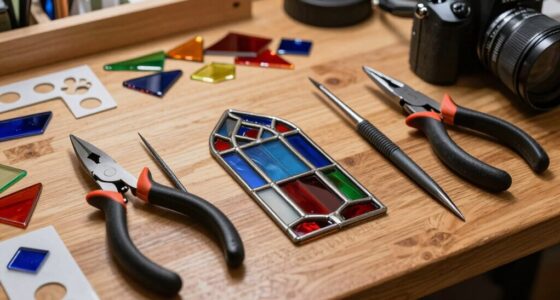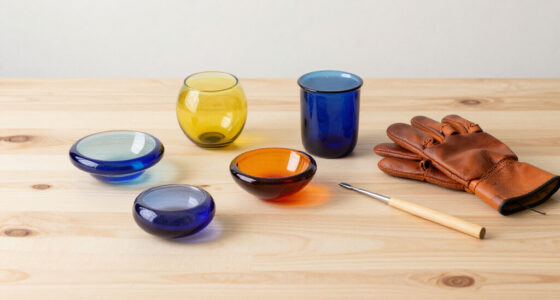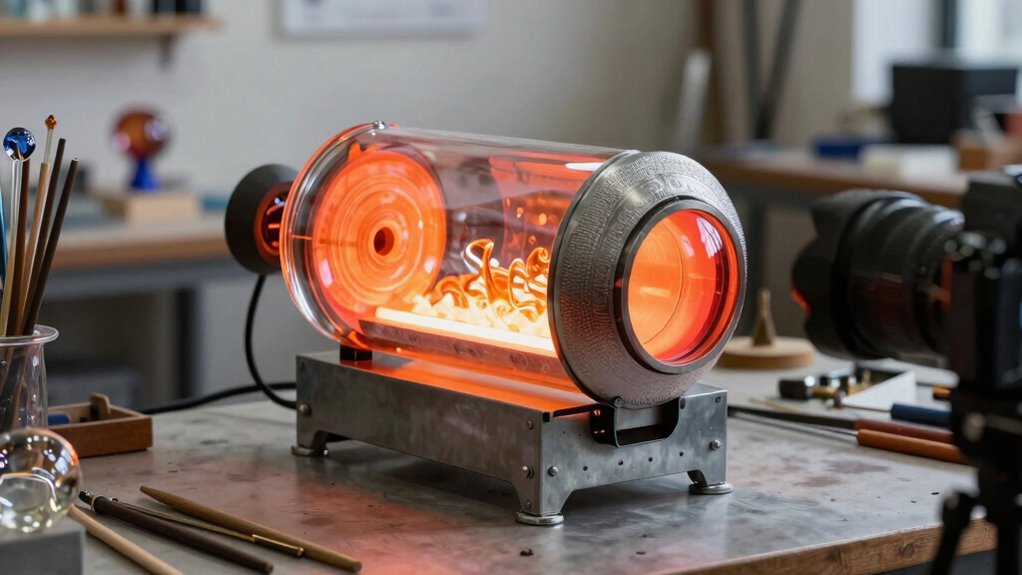

Whether you need a glass kiln depends on the type of work you want to create. If you’re interested in advanced techniques like fusing, slumping, or sculpting, a kiln is essential for precise heat control and achieving professional results. For simpler projects like bead making or stained glass, you might get by without one. To explore which options suit your goals best and make certain of safety, keep going to learn more about kiln use and techniques.

Get tools and workshop supplies delivered free — and shop member deals
- Fast, free delivery on millions of items
- Access to Prime Big Deal Days deals on October 6–7
- Prime Video, Amazon Music and more included
Key Takeaways
- A kiln is essential for advanced techniques like fusing, slumping, and lampworking.
- Safety considerations and proper training are crucial when operating a glass kiln.
- For simple projects like stained glass or beads, a kiln may not be necessary.
- A kiln enables complex, layered, and detailed glass art or sculptures.
- Your skill level and artistic goals determine whether investing in a kiln is appropriate.
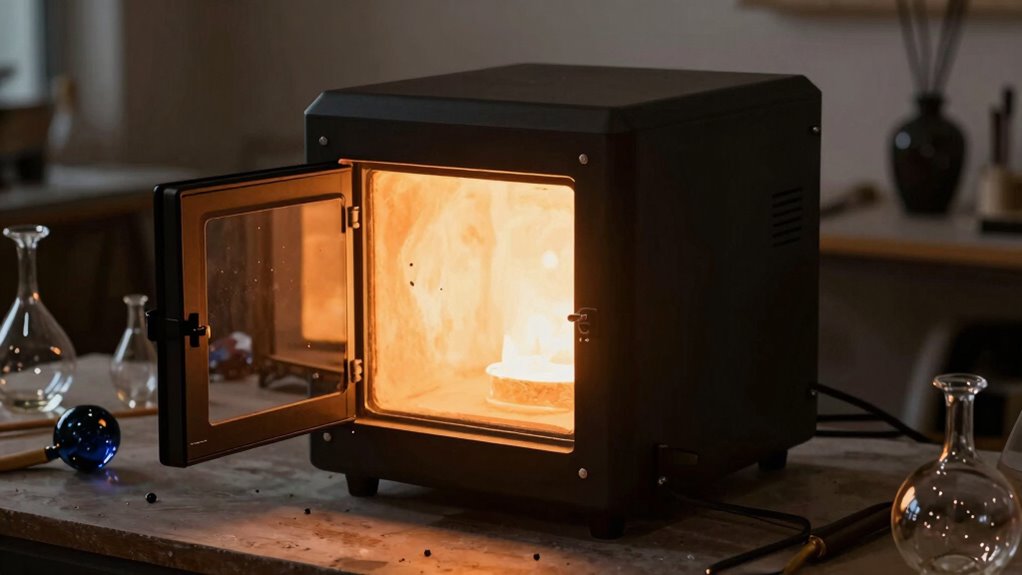
Are you wondering if investing in a glass kiln is necessary for your projects? The answer depends on the kind of work you want to create and how deeply you want to explore glass art. If you’re interested in mastering various artistic techniques—like fusing, slumping, or lampworking—a glass kiln becomes an essential tool. These techniques involve heating glass to specific temperatures, shaping it, or combining different pieces, all of which require precise heat control that only a kiln can provide. Without one, your options for advanced glass work are limited, and you might find yourself unable to achieve the desired effects or quality in your creations.
However, before jumping into the purchase, you should also consider safety considerations. Glass kilns operate at very high temperatures, often exceeding 1500°F, which means you must prioritize safety to avoid accidents or injuries. Proper ventilation, secure placement, and understanding how to handle hot glass are essential. Investing in a kiln that has safety features like automatic shut-off, temperature controls, and sturdy insulation can help mitigate these risks. Additionally, you’ll need to educate yourself on safe kiln operation, including wearing appropriate safety gear, keeping flammable materials away, and understanding emergency procedures in case of a malfunction.
In terms of artistic techniques, a kiln opens up a world of possibilities. You can experiment with layering colors in fusing projects, creating intricate glass sculptures through controlled melting, or designing unique jewelry pieces with precise shaping and texturing. A kiln allows you to push your boundaries creatively, enabling complex designs that are difficult or impossible to achieve with manual tools alone. If your passion lies in creating detailed or layered glass art, owning a kiln not only streamlines your process but also enhances the quality and consistency of your work. Additionally, understanding kiln safety features can help you operate your equipment securely and confidently. Developing a comprehensive understanding of glassworking safety protocols is crucial to ensure safe and successful projects.
Furthermore, acquiring appropriate training or guidance can significantly improve your skills and ensure safe, effective use of the kiln as you progress in your craft.
On the other hand, if your intentions are more casual or beginner-level, you might start with simpler, lower-temperature techniques that don’t require a kiln. Techniques like stained glass assembly or basic bead making can be accomplished with hand tools and still produce beautiful results. But as your skills grow and your projects become more ambitious, a kiln becomes less of a luxury and more of a necessity to fully realize your artistic vision.
Ultimately, whether you need a glass kiln hinges on your goals, your commitment to learning, and your awareness of safety considerations. If you’re passionate to develop advanced artistic techniques and produce professional-quality work, investing in a kiln is a step toward elevating your craft.
glass kiln for fusing and slumping
As an affiliate, we earn on qualifying purchases.
As an affiliate, we earn on qualifying purchases.
Frequently Asked Questions
Can I Use a Ceramic Kiln for Glass Work?
You can use a ceramic kiln for glass work, but it’s not ideal for every project. Ceramic kilns can handle glass melting and color application, but they often don’t reach the high temperatures required for full glass fusing or casting. If your work involves detailed color application or intricate melting, a specialized glass kiln is better. However, for small projects and basic melting, a ceramic kiln can work with proper temperature control.
What Is the Typical Cost of a Glass Kiln?
A glass kiln typically costs between $2,000 and $10,000, depending on its size, features, and temperature capabilities. You’ll need to take into account the glass temperature your projects require and factor in kiln maintenance costs over time. Higher-end models with advanced temperature control and insulation tend to be more expensive but offer better durability and precision. Budget accordingly to make certain your kiln meets your specific glasswork needs.
How Much Space Do I Need for a Glass Kiln?
You’ll need enough space to comfortably place your kiln, guaranteeing proper kiln placement and storage considerations. Typically, allocate at least 3 to 4 feet of clearance around the kiln for ventilation and safety. Measure your kiln’s dimensions carefully and factor in room for handling equipment, work tables, and storage. This setup helps prevent accidents and ensures efficient operation, so plan your workspace accordingly to accommodate your kiln and related tools.
Is a Glass Kiln Energy-Efficient?
A glass kiln can be energy-efficient if you choose models with good insulation and precise temperature control. They often have high energy consumption, but modern kilns incorporate features to minimize environmental impact. By using energy-efficient equipment and practicing responsible usage, you reduce energy costs and lower your environmental impact. Investing in a well-designed kiln helps you create beautiful glass art while being mindful of energy use and sustainability.
How Long Does It Take to Learn Glass Kiln Techniques?
On average, you’ll master basic glass fusing techniques in about 6 to 12 months with consistent practice. It takes time to develop skill with a glass kiln, especially when learning kiln safety and precise temperature control. The key is patience and hands-on experience, as each project teaches new techniques. With dedication, you’ll gain confidence and enjoy creating beautiful, professional-looking glass art that truly reflects your growing expertise.
professional glass kiln with safety features
As an affiliate, we earn on qualifying purchases.
As an affiliate, we earn on qualifying purchases.
Conclusion
So, do you really need a glass kiln to bring your creative visions to life? If you’re just dabbling in small projects or experimenting with glass for fun, a kiln might be overkill. But if you’re serious about shaping, fusing, or kiln-forming glass regularly, investing in one could be a game-changer. After all, isn’t it worth having the right tools to turn your artistic dreams into reality? The choice is yours—what will you create next?
small glass kiln for jewelry making
As an affiliate, we earn on qualifying purchases.
As an affiliate, we earn on qualifying purchases.
high-temperature glass kiln for sculpting
As an affiliate, we earn on qualifying purchases.
As an affiliate, we earn on qualifying purchases.
Halloween Picks
halloween
As an affiliate, we earn on qualifying purchases.