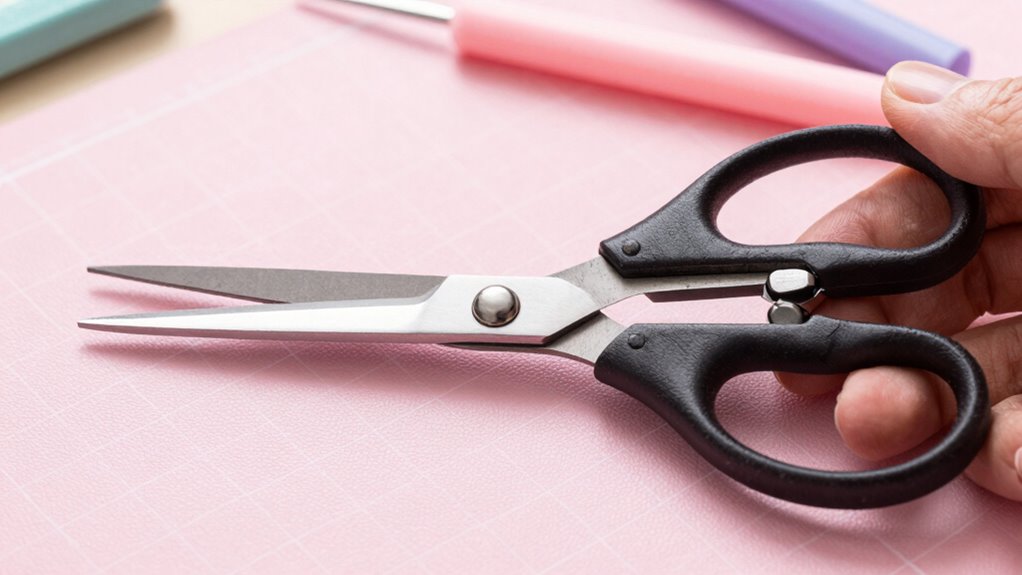

To prevent scissors fatigue, use ergonomic scissors with comfortable handles and keep blades sharp for easy cutting. Focus on proper technique by using your whole hand, keeping your wrist straight, and avoiding twisting. Relax your grip and switch hands if needed. Remember to take regular breaks and choose the right scissors for each task. Keep these tips in mind, and you’ll find cutting becomes less tiring—discover more simple ways to stay comfortable with scissors as you continue.
Key Takeaways
- Use scissors with ergonomic handles that fit comfortably and reduce hand strain during extended use.
- Keep blades sharp to require less force and ensure smooth, effortless cuts.
- Apply cutting force with your whole hand and arm, avoiding wrist twisting or bending.
- Maintain a relaxed grip, switching hands as needed to prevent fatigue.
- Take regular breaks to stretch hands and fingers, minimizing muscle tension and fatigue.
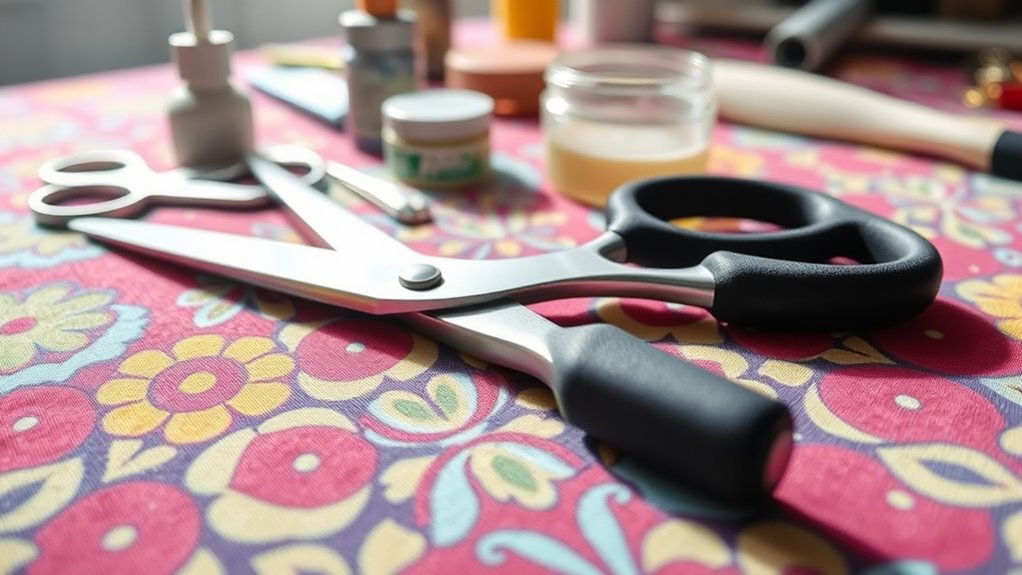
If you frequently use scissors, you might notice your hand getting tired or sore, which is a common sign of scissors fatigue. This discomfort often results from prolonged gripping or improper tool design. To prevent this, look for scissors with ergonomic handles. These are specially shaped to fit comfortably in your hand, reducing strain during extended use. Ergonomic handles help you maintain a natural grip, decreasing the effort needed to operate the scissors and preventing unnecessary muscle tension. When choosing scissors, prioritize those with cushioned or textured grips, which can further improve comfort and control. This simple adjustment can make a noticeable difference in how your hand feels after hours of cutting.
Choose scissors with ergonomic handles for comfortable, strain-free cutting sessions.
Another critical factor in preventing fatigue is maintaining blade sharpness. Dull blades require more force to cut through materials, which increases the strain on your hand and wrist. Over time, blades can become dull due to frequent use or improper storage, so it’s essential to keep them sharp. Regularly sharpening your scissors or replacing dull blades ensures you cut smoothly and effortlessly. Sharp blades cut with precision, reducing the effort needed and minimizing the risk of slips or uneven cuts that can force you to exert more pressure. When blades are sharp, you also reduce the tendency to grip tightly, which helps prevent fatigue and discomfort.
In addition to ergonomic handles and sharp blades, consider your overall cutting technique. Use your whole hand and arm rather than just your fingers to apply pressure. Keep your wrist in a neutral position and avoid twisting or bending it excessively. This reduces strain on your joints and muscles. Also, take frequent breaks during long cutting sessions to stretch your hand and fingers, which helps prevent stiffness and fatigue from setting in. Using the right scissors for the task is equally important; heavy-duty scissors are better for thick or tough materials, while precision scissors work well for detailed cuts without requiring excessive force.
Finally, pay attention to your hand posture and grip. Hold the scissors firmly but not tightly—an overly tight grip can tire out your hand faster. Relax your grip when possible, and switch hands if you notice one side becoming more fatigued. Investing in quality scissors equipped with ergonomic handles and ensuring blades are kept sharp is the best way to protect yourself from scissors fatigue. By making these adjustments, you’ll find cutting more comfortable, efficient, and less tiring, allowing you to work longer without discomfort or risk of injury.
Amazon Product B07KWYR33V
As an affiliate, we earn on qualifying purchases.
Frequently Asked Questions
Can Scissors Fatigue Affect My Overall Hand Health Long-Term?
Yes, scissors fatigue can impact your overall hand health long-term. When you consistently strain your hand grip, it can lead to joint discomfort and even inflammation. Over time, this strain may cause joint issues or reduce your dexterity. To protect your hand health, take breaks, use ergonomic scissors, and avoid gripping too tightly, ensuring your joints stay healthy and your hand remains strong for future tasks.
Are There Specific Exercises to Strengthen Hand Muscles for Scissors Use?
Think of your hand muscles like a muscle car engine—you need to keep it tuned. You can strengthen them with hand grip exercises and finger stretch routines. Regularly squeezing a stress ball or using grip trainers enhances strength, while stretching your fingers wide and holding can improve flexibility. Incorporate these exercises into your routine to prevent fatigue, boost endurance, and keep your hand muscles healthy for long-term scissors use.
How Often Should I Take Breaks During Prolonged Scissors Use?
You should take breaks every 15-20 minutes during prolonged scissors use to prevent fatigue. Use ergonomic handles to reduce strain and maintain good hand grip strength. During breaks, stretch your fingers and hands to promote circulation and relax muscles. This simple routine helps avoid fatigue, keeps your hands comfortable, and guarantees you can work efficiently without discomfort or injury. Regular breaks are key to maintaining ideal hand health.
What Signs Indicate That I Am Experiencing Scissors Fatigue?
You’ll notice signs of fatigue when your hand feels tired, aching, or cramped after cutting for a while. Hand discomfort, like soreness or tingling, also signals you’re overdoing it. If your grip weakens or your fingers cramp, it’s time to take a break. Pay attention to these signs of fatigue, and don’t push through pain; resting helps prevent strain and keeps your hands healthy.
Do Different Scissors Types Require Different Prevention Techniques?
Yes, different scissors types require tailored prevention techniques. For example, scissors made from lightweight materials like titanium or stainless steel reduce strain, while those with ergonomic design help you maintain proper hand posture. You should adjust your grip and take regular breaks based on the scissors material and ergonomic features. This way, you prevent fatigue and discomfort, ensuring you work efficiently without risking injury.
Amazon Product B0F25T39CL
As an affiliate, we earn on qualifying purchases.
Conclusion
To prevent scissors fatigue, it’s essential to listen to your body and take regular breaks. Think of your hands like a car engine—pushing it too hard causes wear and tear. By practicing proper technique and resting, you keep your muscles energized and scissors sharp. Remember, consistent care and awareness help you avoid strain, making your cutting tasks smoother and more enjoyable. Keep these habits in mind, and scissors fatigue won’t stand a chance.
Amazon Product B009YNG21U
As an affiliate, we earn on qualifying purchases.
Amazon Product B0D9NJZHJS
As an affiliate, we earn on qualifying purchases.