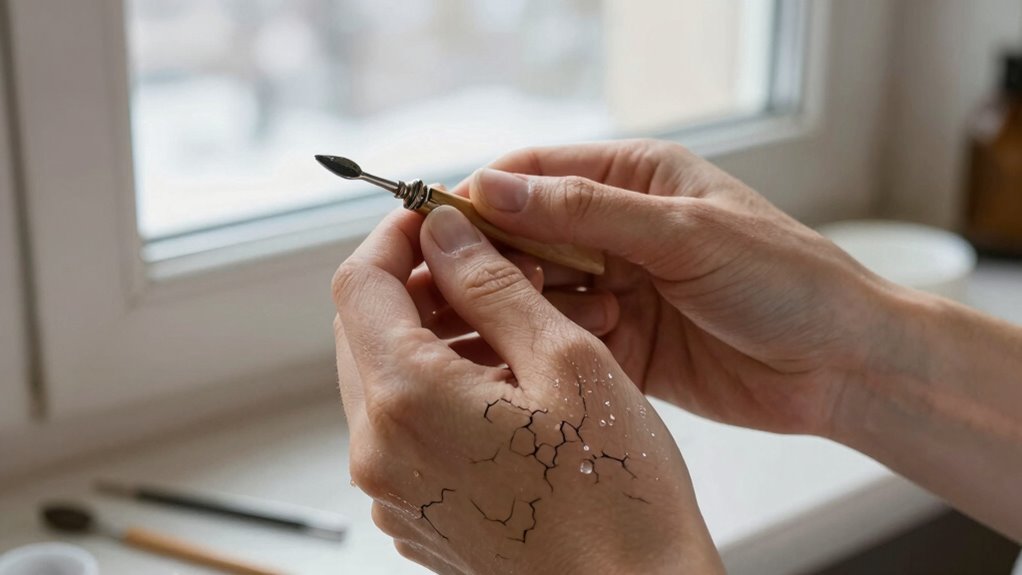

In winter, dry air strips moisture from your skin, making your hands crack and become more vulnerable during crafting. Cold temperatures weaken your skin’s natural barrier, which normally protects against damage and retains hydration. Friction from crafting activities and harsh soaps can worsen cracks if you don’t protect your skin. By improving your hand care routine and creating a moist environment, you can prevent dryness and cracking. Keep exploring for more tips to keep your hands healthy all winter long.
Key Takeaways
- Cold, dry winter air strips natural skin oils, weakening the skin barrier and causing cracks during crafting.
- Repetitive hand movements and friction worsen existing cracks and irritate sensitive, compromised skin.
- Harsh soaps and cleansers remove essential oils, further drying out hands and increasing cracking risk.
- Lack of moisture and protective measures, like gloves or humidifiers, accelerates skin deterioration in winter.
- Regular use of nourishing moisturizers and gentle cleansers helps maintain skin barrier and prevents cracking.

Have you ever wondered why your hands tend to crack more often during winter? The answer lies in the combination of winter dryness and how it affects your skin barrier. During colder months, the air loses moisture, leaving your environment dry and harsh. When you’re crafting, your hands are exposed to this dry air, which strips away the natural oils that keep your skin supple and protected. As a result, your skin barrier becomes compromised, making your hands more vulnerable to cracking, splitting, and even bleeding.
Your skin barrier functions as the first line of defense against external irritants and prevents moisture loss. When it’s weakened by winter dryness, your skin can’t retain hydration effectively. This dryness causes your hands to become rough, flaky, and prone to cracks. The more you work with your hands—whether painting, sculpting, or assembling—the more you expose them to friction and potential irritants, exacerbating the problem. Without proper care, this cycle continues, leading to persistent cracking that makes even simple tasks uncomfortable or painful.
To prevent your hands from cracking while crafting in winter, you need to focus on nourishing and protecting your skin barrier. Start by applying a thick, emollient moisturizer regularly, especially after washing your hands. Look for creams that contain ingredients like ceramides, glycerin, or hyaluronic acid—they help replenish and lock in moisture. Avoid using harsh soaps or cleansers that strip away natural oils; instead, opt for gentle, hydrating cleansers designed for dry skin. When you’re not actively working on your project, consider wearing lightweight gloves or applying a barrier cream to shield your hands from the cold air and dry conditions.
Another effective strategy is to create a humid environment in your workspace. Using a humidifier can add moisture back into the air, reducing overall dryness and helping your skin retain its natural oils. Also, remember to stay hydrated by drinking plenty of water throughout the day, as internal hydration supports healthier, more resilient skin. If your hands are already cracked, resist the urge to pick at or peel the skin, which can worsen the problem. Instead, gently soothe the area with a healing ointment and keep the cracks covered with breathable bandages if necessary.
Frequently Asked Questions
Can Certain Fabrics Worsen Hand Cracking During Winter?
Yes, certain fabrics can worsen hand cracking in winter. Rough or coarse fabrics with low softness irritate your skin, making cracks worse. Fabrics that absorb moisture quickly can strip your hands of natural oils, increasing dryness and cracking. To prevent this, choose soft, moisture-wicking fabrics that protect your hands, and always moisturize after crafting. Wearing gloves made of gentle, moisture-absorbing materials also helps keep your hands smooth and healthy.
Are There Specific Crafts That Cause More Hand Dryness?
Certain crafts, like pottery or woodworking, can cause more hand dryness because they expose your skin to clay, dust, or water for extended periods. To protect your hands, you should regularly apply a good hand moisturizer and wear hand gloves during these activities. These steps help lock in moisture and shield your skin from harsh materials, reducing cracking and keeping your hands healthy and comfortable while you craft.
Do Age or Skin Type Influence Cracking Severity?
Yes, age factors and skin type effects influence cracking severity. As you get older, your skin becomes thinner and less elastic, making cracks more likely. If you have dry or sensitive skin, you’re also at a higher risk because your skin struggles to retain moisture. To reduce cracking, consider using rich moisturizers suited to your skin type and protect your hands from harsh winter conditions.
Is Cracking More Common in Indoor or Outdoor Crafting?
Cracking is more common outdoors because of exposure to outdoor humidity and cold air, which strip moisture from your skin. When you craft indoors, higher indoor humidity levels can help, but if your space is too dry, your hands are still at risk. You should protect your hands by moisturizing regularly and wearing gloves if you’re working outside, especially in winter, to prevent cracks regardless of your environment.
Can Diet Impact Skin Hydration and Cracking Risk?
Your diet certainly impacts your skin hydration and cracking risk. Proper hydration habits, like drinking enough water, keep your skin supple. Dietary choices rich in vitamins A, C, and E, along with omega-3 fatty acids, support skin repair and moisture retention. If you neglect these, your skin can become dry and crack more easily, especially in winter. Prioritizing a balanced diet and staying hydrated helps maintain healthy, resilient hands.
Conclusion
Your cracked hands are more than just a winter nuisance—they symbolize the resilience and vulnerability within you. Just like the delicate cracks reveal the strength beneath, caring for your skin reminds you to nurture your inner self too. Embrace these small imperfections as signs of growth and perseverance. By protecting your hands, you’re not only safeguarding your craft but also strengthening your spirit. Let each healing crack be a reminder that even in winter’s cold, your resilience blossoms from within.