

To make dust control simple and not overwhelming, focus on easy habits like using high-quality filters that you replace regularly and keeping safety gear accessible. Improve air circulation with proper ventilation and stick to routine cleaning practices that reduce dust buildup over time. Monitoring your systems guarantees everything works smoothly, preventing issues before they grow. Maintaining these simple steps daily will help you stay on top of dust with less effort — keep exploring for more helpful tips.

Get business pricing on tools and workshop supplies
- Business-only prices and quantity discounts
- Tax-exempt purchasing
- Multiple users, one account, clear invoices
Key Takeaways
- Implement a regular cleaning schedule to prevent dust buildup and reduce last-minute cleaning stress.
- Use high-quality filters and replace them routinely to simplify maintenance and ensure effective dust removal.
- Maintain accessible safety gear to encourage consistent use during dust-generating activities.
- Ensure proper air circulation and ventilation to naturally minimize dust settling.
- Monitor system performance regularly to catch issues early and keep dust control effortless.
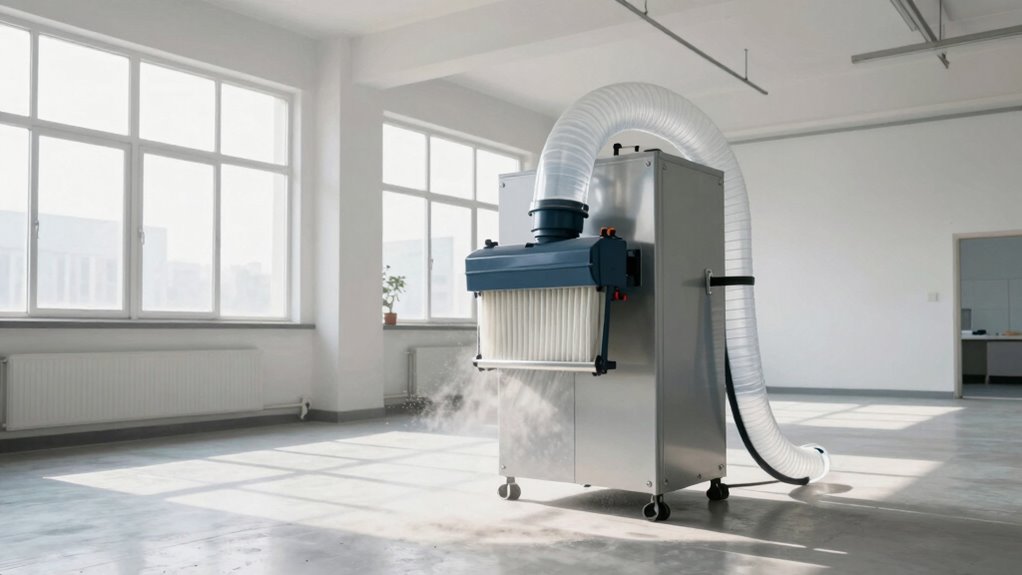
Dust control doesn’t have to be complicated or time-consuming. When you’re working to keep your environment clean and safe, implementing simple strategies can make a huge difference. One of the most effective ways to manage dust is through proper air filtration. Good air filtration systems capture airborne particles before they settle on surfaces or get inhaled, which means you’re not just reacting to dust, but actively reducing it. Invest in high-quality filters suited for your space, and remember to change or clean them regularly. This proactive step minimizes dust buildup and creates a healthier environment without requiring constant effort on your part.
Alongside air filtration, using the right safety gear can substantially streamline your dust control process. Safety gear, such as masks or respirators, protects you from inhaling fine particles, especially during activities that tend to generate a lot of dust. Wearing the appropriate gear doesn’t have to be a hassle; it can be as simple as keeping masks accessible and making them part of your routine. When you prioritize safety gear, you not only protect yourself but also reduce the need for extensive cleanup later, because fewer particles settle in hard-to-reach places. Incorporating proper safety equipment into your routine ensures consistent protection and minimizes dust dispersal. Additionally, maintaining good air circulation can help prevent dust from settling in one area for too long. Regular cleaning and dust management practices further support effective dust control, making the process feel less overwhelming. Incorporating routine maintenance can also help identify dust issues early before they become more challenging to control.
HEPA air purifier for dust removal
As an affiliate, we earn on qualifying purchases.
As an affiliate, we earn on qualifying purchases.
Frequently Asked Questions
What Are the Best Tools for Dust Control?
The best tools for dust control include dust suppression systems, such as water sprays or misting systems, which directly reduce airborne particles. Air filtration units also play an essential role by capturing dust before it spreads. Combining these tools guarantees effective dust control, making your environment safer and cleaner. Regularly maintaining and properly using these tools simplifies dust management, so you won’t feel overwhelmed by dust-related concerns.
How Often Should Dust Control Measures Be Applied?
Imagine a thin, invisible shield over your surfaces—dust prevention is most effective when you reapply surface sealing every few weeks, especially after heavy use or weather changes. Regularly maintaining dust control measures keeps the barrier strong, preventing dust from settling and becoming an overwhelming problem. Stick to this routine, and you’ll find controlling dust becomes straightforward, creating a cleaner, healthier environment with minimal effort.
Are There Eco-Friendly Dust Control Options?
Yes, there are eco-friendly alternatives for dust control. You can use water-based suppressants, biodegradable products, or natural materials like lignosulfonates that promote sustainable practices. These options reduce chemical impact and are safer for the environment. By choosing eco-friendly dust control methods, you help protect local ecosystems and promote sustainable practices while effectively managing dust. Switching to these alternatives makes dust control both simple and environmentally responsible.
How Do I Handle Unexpected Dust Surges?
When surprising outbreaks happen, act quickly with effective dust mitigation methods like spraying water or applying dust suppressants. You should identify the source of the surge and contain it promptly. Keep a stock of emergency dust control supplies on hand, and stay vigilant for signs of increasing dust levels. Regular monitoring helps you respond rapidly, ensuring dust surges don’t overwhelm your efforts and keeping your environment safer.
Can Dust Control Be Integrated Into Existing Workflows?
Yes, dust mitigation can seamlessly blend into your existing workflows. You’ll find that with thoughtful planning, integrating dust control measures becomes a natural part of your daily routine. Focus on strategic placement of dust suppression tools and training staff to adopt these practices effortlessly. This approach guarantees dust mitigation feels like a smooth extension of your workflow, making dust control manageable and less burdensome while maintaining a cleaner, safer environment.
As an affiliate, we earn on qualifying purchases.
Conclusion
Think of dust control like tending a garden—you just need to stay consistent and attentive. When you water your plants regularly, they thrive; neglect, and they wilt. Similarly, by implementing simple, daily dust management practices, you keep your space healthy and manageable. Don’t let the task seem like a wild jungle; instead, see it as nurturing a garden—small, steady efforts will keep everything in balance and make the process feel much more doable.
As an affiliate, we earn on qualifying purchases.
As an affiliate, we earn on qualifying purchases.
Fall Picks
fall essentials
As an affiliate, we earn on qualifying purchases.