
TL;DR

Get business pricing on tools and workshop supplies
- Business-only prices and quantity discounts
- Tax-exempt purchasing
- Multiple users, one account, clear invoices
An Ideal Home report describes seven ways to reuse Halloween pumpkins, including saving seeds, roasting them, composting or burying pieces, and using an intact shell as a temporary bird feeder. It warns against leaving pumpkins in woodland for wildlife and says pumpkins that held candles or have deteriorated should not be eaten.
Ideal Home has outlined seven ways to reuse Halloween pumpkins, including saving seeds, cooking edible portions, composting, burying pieces in a garden bed and repurposing a hollow shell as a temporary bird feeder. The report also cautions readers not to leave pumpkins in woodland for wildlife, citing risks from rotting produce, unsuitable food and decorations.
The report’s options include washing and drying seeds for spring planting, or roasting extra seeds after coating them with oil and seasoning. Its contributor says seeds saved from two seedlings produced four pumpkins the following year; that is a personal account, not a guaranteed yield. The article gives a suggested roasting method of about 10 to 15 minutes at 200C, with the seeds turned every five minutes.
For pumpkins no longer suitable to eat, the report recommends cutting them into smaller pieces before composting. Rachel Cole, senior seed and plant buyer at DT Brown, says pumpkin flesh is moist and nitrogen-rich, so adding too much at once can make a compost heap wet or compacted. She advises mixing it with dry, carbon-rich material such as fallen leaves and turning the heap to maintain airflow.
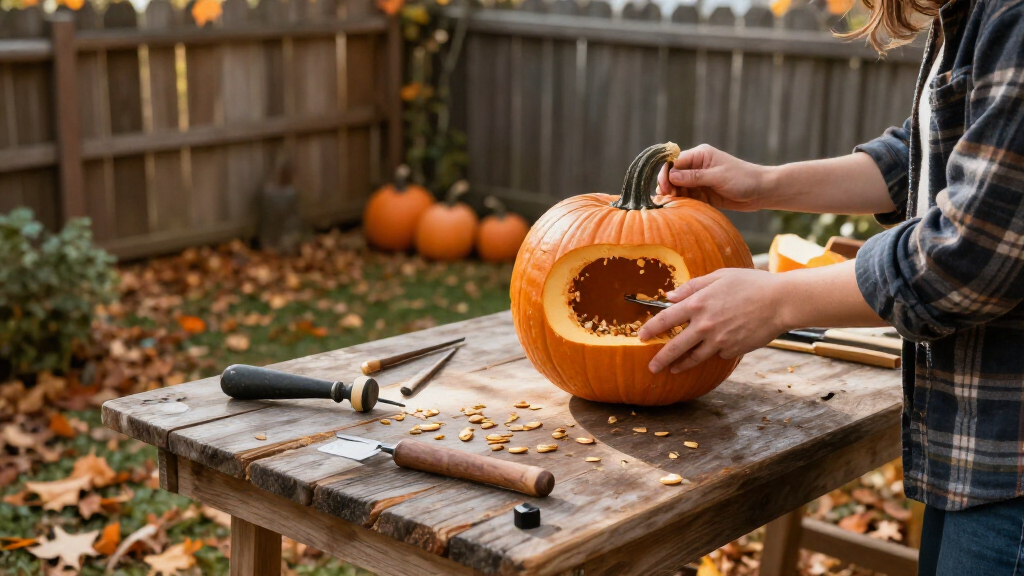
Other ideas include burying small pieces in an empty garden bed, decorating pumpkins without carving so they may remain usable for cooking, and turning a hollow shell into a temporary feeder by cutting it into bowls and hanging them. Cole says an intact pumpkin stored indoors may still be suitable to eat if it is a food-safe variety and shows no deterioration; pumpkins left outside or used with a candle should not be eaten.
Keeping Pumpkins Out of the Bin
The suggestions give households ways to make use of pumpkin flesh, seeds and shells rather than treating every Halloween display as immediate waste. For gardeners, composting or burying small pieces can return organic material to the soil, while saving seeds offers a possible source of plants for a later season.
The wildlife warning is a key qualification: reuse does not mean dumping pumpkins outdoors. The report says pumpkins rot quickly in woodland, are not a natural food there and may make animals such as hedgehogs, foxes and deer unwell. Candle wax and other decorations can add further hazards. Local waste rules and composting facilities vary, so readers may need to check council guidance for pumpkins they cannot reuse at home.
Popular right now

Breville Barista Pro Espresso Machine with Grinder, Brushed Stainless Steel

Breville Bambino Espresso Machine, Brushed Stainless Steel

KitchenAid Classic Series 4.5 Quart Tilt-Head Stand Mixer K45SS, Onyx Black
As an affiliate, we earn on qualifying purchases.
Choosing a Safe Reuse Method
The report frames pumpkin reuse as a practical gardening choice after Halloween, but the right option depends on the pumpkin’s condition and how it was used. Food use is appropriate only for pumpkins that remain sound, were stored properly and are a food-safe variety, according to Cole’s advice in the article. A pumpkin that sat outdoors or held a candle should not be put back into the kitchen.
For composting, the article stresses balance rather than adding a whole wet pumpkin at once. Cutting it into smaller pieces and combining it with dry material can help prevent a soggy, compacted heap. Burying pumpkin is presented as an alternative where there is no compost bin, but the pieces should be kept away from plant stems and allowed time to decompose before planting in that spot.
“It’s easy to think of a pumpkin as something only useful for Halloween, but it’s actually a valuable organic material that people can put to good use.”
— Rachel Cole, senior seed and plant buyer at DT Brown
Condition Determines What Is Safe
The report does not establish that every pumpkin can be reused in every suggested way. Edibility depends on variety, storage and condition, and the source does not provide a full checklist for judging spoilage. It also does not specify how long a buried pumpkin or composted pieces will take to break down, since that can depend on garden and compost conditions.
The bird-feeder suggestion is described as temporary, but the supplied report excerpt ends before giving any further guidance on what food to add, how often to clean the shell or when to remove it. Readers should not assume the article provides detailed feeding or hygiene instructions. The personal account of growing four pumpkins from two seedlings is likewise an individual result, not a forecast for other gardeners.
Use or Dispose of Pumpkins Safely
Households can first check whether a pumpkin is intact, food-safe and properly stored before deciding whether to cook it; pumpkins that have been outdoors or held a candle should not be eaten. Seeds intended for planting should be cleaned and dried before storage, while pumpkins headed for compost should be cut up and mixed with dry material.
Where none of the home-use options is suitable, readers can check their local authority’s guidance on food and garden waste rather than leaving pumpkins in woodland. The source provides no announced follow-up event or policy change; its practical next step is for households to choose a reuse or disposal method based on the pumpkin’s condition.
Key Questions
Can I eat a pumpkin after Halloween?
Only if it is a food-safe variety, has been stored properly and shows no signs of deterioration, according to Rachel Cole’s advice in the report. Do not eat one that has been left outside or held a candle.
Can I leave my pumpkin in the woods for animals?
No. The report says pumpkins are not natural woodland food and can rot quickly. They may make wildlife unwell, and wax or other decorations could pose additional risks.
How should I compost a Halloween pumpkin?
Cut it into smaller pieces and mix it with dry, carbon-rich materials such as fallen leaves. Cole cautions that adding too much moist pumpkin at once can leave a compost heap wet or compacted.
Can pumpkin seeds be saved for planting?
The report recommends separating seeds from the flesh, washing them and drying them thoroughly before storing them in an envelope for spring planting. Its example of four pumpkins from two seedlings is a personal result, not a guaranteed yield.
Source: idealhome.co.uk