
TL;DR

Get business pricing on tools and workshop supplies
- Business-only prices and quantity discounts
- Tax-exempt purchasing
- Multiple users, one account, clear invoices
An Ideal Home report outlines six habits for drying laundry indoors while limiting moisture buildup: use an extra spin, space garments out, consider heated airers and dehumidifiers, choose a well-ventilated spot, and ventilate the room. The advice is practical guidance, not a guarantee against damp or mould; results depend on the home, weather and laundry load.
Ideal Home has published six recommendations for drying laundry indoors while limiting moisture buildup: remove more water in the wash, leave space between garments, use drying equipment thoughtfully, position the airer for airflow and ventilate the room. The advice matters as outdoor drying becomes less practical in cold or wet weather, when damp clothes can release moisture indoors.
The guide recommends running an extra spin cycle before hanging clothes, provided the selected spin speed is suitable for the garments. The report says this can reduce the water left in laundry, helping it dry sooner and releasing less moisture as it dries. It singles out towels, jeans and bedding as heavier items that can retain substantial water. Readers should follow garment and machine instructions rather than use a spin setting unsuitable for delicate fabrics.
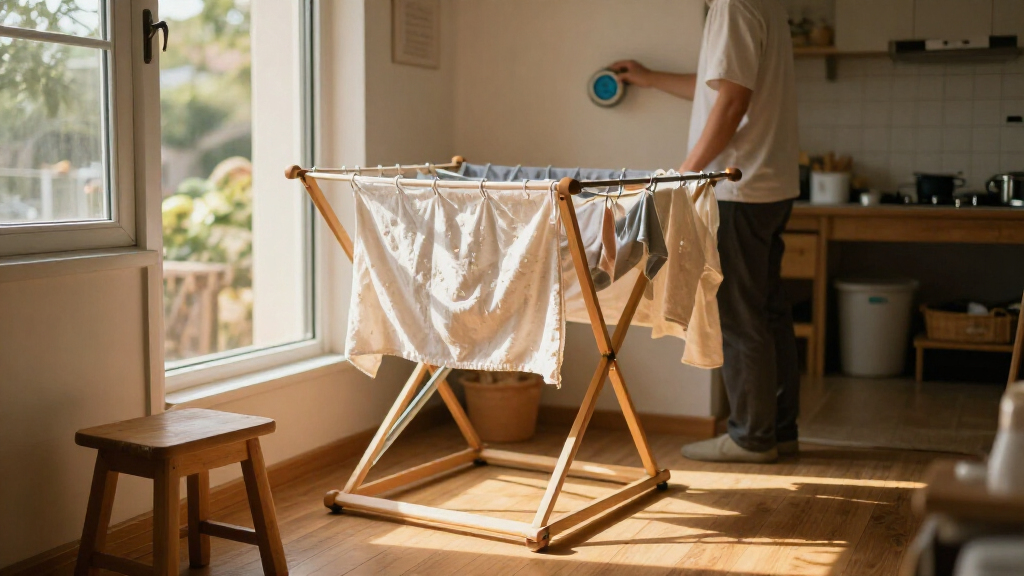
It also advises leaving space between clothes so air can circulate around them. Brabantia laundry expert Lauren Roelofs says this can help garments dry more evenly. The report suggests spreading sleeves, opening shirts and avoiding folded-over trouser legs; heavier items can be turned partway through drying to reduce damp patches.
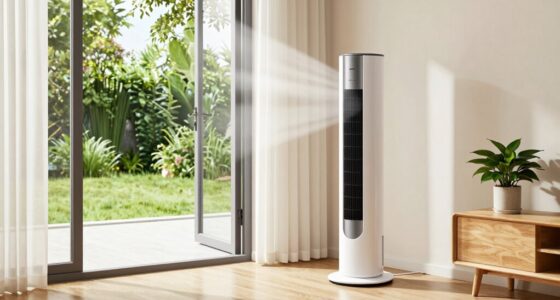
For regular indoor drying, the article suggests considering a heated clothes airer, ideally with a compatible cover, and pairing it with a dehumidifier. Lakeland buying lead Catrin Parry says a dehumidifier can remove excess moisture from the air, which a heated airer does not itself do. The remaining recommendations are to place the airer slightly away from walls and to ventilate the room. The supplied source text cuts off before giving further detail about ventilation.
Managing Moisture During Indoor Drying
Wet laundry releases water into the surrounding air as it dries. In rooms with limited airflow or moisture removal, that can contribute to higher indoor humidity and condensation. The guide’s suggestions address both sides of the problem: helping clothes give up water more efficiently and giving moisture a route out of the room or a way to be collected.
That is relevant for households without outdoor drying space or a tumble dryer, and for people who do not want or cannot afford the cost of running one. The measures are not a promise that damp or mould will be prevented. Home conditions, room ventilation, the amount of laundry and the weather all affect the outcome.
Popular right now

De'Longhi Magnifica Evo Fully Automatic Espresso Machine with Manual Milk Frother, Silver

Breville Bambino Espresso Machine, Brushed Stainless Steel (BES450BSS)

De'Longhi 15-Bar Pump Espresso Machine with Milk Frother & Temperature Control
As an affiliate, we earn on qualifying purchases.
Why Winter Drying Needs Planning
The report frames its advice around colder, wetter weather, when outdoor drying may be unavailable or impractical. It notes that a clothes airer can see frequent use in homes where a tumble dryer is not available or affordable to run. Its central point is that the water in wet washing does not disappear: it either remains in the garments or enters the indoor air as they dry.
The source presents product suggestions alongside household habits, including heated airers and dehumidifiers. Its product descriptions and performance statements are part of the publication’s shopping guidance, not independent test results included in the supplied material. The recommendations about spacing, positioning and ventilation can be followed without buying specialist equipment.
“Leaving space between garments allows air to circulate, helping clothes dry more evenly.”
— Lauren Roelofs, laundry expert at Brabantia, as quoted by Ideal Home
Limits of the Indoor-Drying Advice
The supplied article text ends partway through its sixth recommendation, which begins by advising readers to ventilate the room. It does not provide the full explanation or any specific instructions on how long to open windows, how to ventilate safely in different weather, or how to manage ventilation in homes with limited openings.
The source also provides no comparative measurements showing how much each action reduces drying time, humidity or mould risk. Parry’s statement that a cover can reduce drying times by a couple of hours is conditional on the laundry load and conditions; it is not a guaranteed result. The report does not claim that these practices eliminate damp or mould, and it gives no assessment of individual homes.
Practical Steps for the Next Load
For a household applying the guide, the immediate steps are to check the laundry’s care labels, use a suitable spin setting, spread garments out and place the airer where air can move around it. If using a heated airer or dehumidifier, follow the manufacturer’s instructions and keep the equipment in a position that allows airflow. Ventilate the room in a way that suits the home and conditions.
The source provides no follow-up study or scheduled update. Readers should treat the recommendations as household guidance and monitor whether condensation persists; the article does not establish a single fix for every home.
Key Questions
What are the six indoor laundry-drying recommendations?
The report recommends an extra suitable spin cycle, spacing clothes apart, using a heated airer, pairing the airer with a dehumidifier, positioning the airer away from walls and ventilating the room.
Does a heated clothes airer remove moisture from the room?
Not by itself, according to the guide. It helps dry laundry, while a dehumidifier can remove moisture from the air. The report recommends using both together where practical.
Why leave space between garments?
Space allows air to circulate and can help clothes dry more evenly, Brabantia expert Lauren Roelofs told Ideal Home. Spreading sleeves and avoiding overlapping heavy items are also suggested.
Will these steps prevent mould?
The article offers ways to limit moisture buildup but does not claim the steps will prevent mould in every home. Results depend on ventilation, indoor conditions, the laundry load and other factors.
Source: idealhome.co.uk