
If you’re focused on digitizing detailed materials like photos, documents, or artwork, a flatbed scanner will considerably improve your workflow by delivering high-resolution, color-accurate digital copies. However, if your goal is to produce large-scale prints for displays or banners, a wide-format printer streamlines your process and offers impressive physical output. Both tools serve different needs; understanding their strengths helps you choose what fits best. Keep exploring to find out which device suits your workflow even better.

Get tools and workshop supplies delivered free — and shop member deals
- Fast, free delivery on millions of items
- Access to Prime Big Deal Days deals on October 6–7
- Prime Video, Amazon Music and more included
Key Takeaways
- Flatbed scanners excel in digitizing detailed, high-resolution images for accurate digital archiving.
- Wide-format printers efficiently produce large-scale prints, streamlining the creation of big visual displays.
- Scanners enhance workflows involving digital editing, sharing, and preserving intricate textures or colors.
- Printers improve productivity for large-format output, reducing the need for external printing services.
- Workflow impact depends on whether the primary goal is digital capture or physical large-format printing.
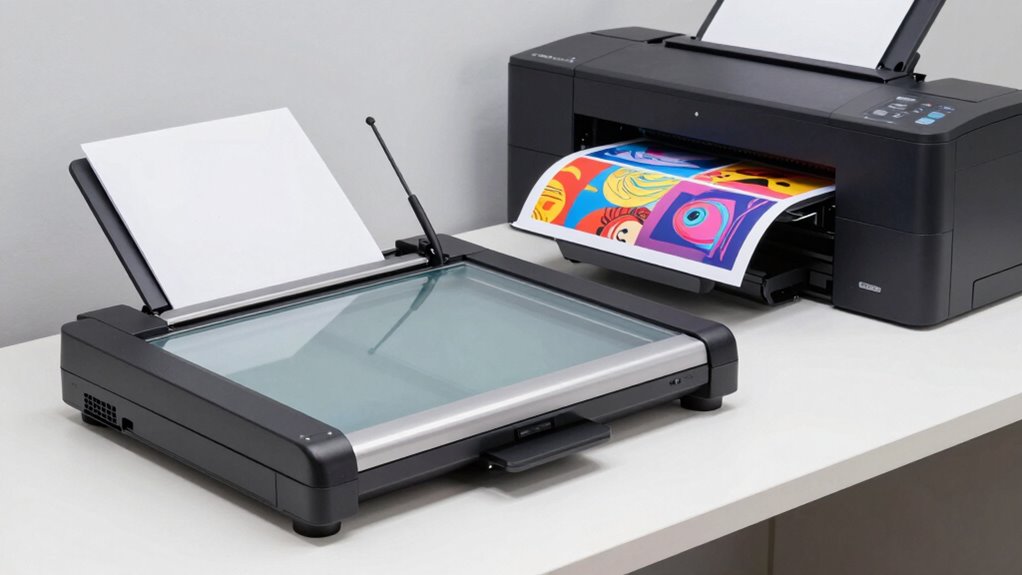
When choosing between a flatbed scanner and a wide-format printer, understanding their core functions and ideal uses is essential. Both devices play pivotal roles in workflows, but they serve different purposes. A flatbed scanner excels at capturing detailed digital images of flat objects like photographs, documents, and artwork. Its primary strengths are digital resolution and color accuracy. When you scan an image, the scanner’s digital resolution determines how sharp and clear the digital copy will be. Higher resolutions mean more detail, which is critical for preserving fine lines or intricate textures. Color accuracy is also important; a good flatbed scanner reproduces colors faithfully, ensuring that the digital version closely matches the original. This accuracy is essential if you’re digitizing artwork, photographs, or sensitive documents where color fidelity matters. Additionally, flatbed scanners are generally better suited for high-resolution digital capture of physical materials, making them indispensable for detailed archiving.
Flatbed scanners capture detailed, color-accurate digital images of flat objects like photos and artwork.
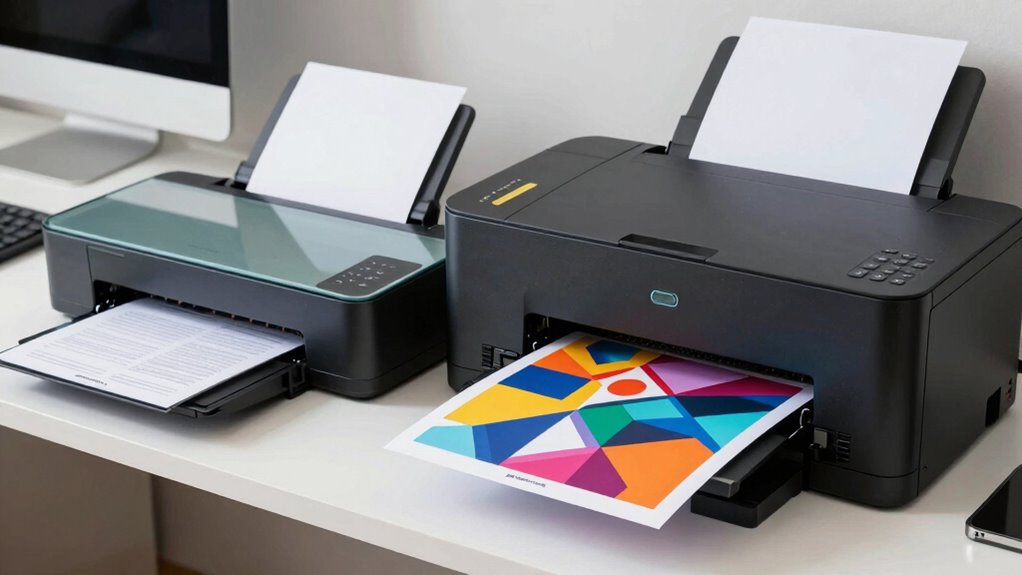
On the other hand, a wide-format printer is designed to produce large-scale physical copies of digital files. It’s ideal for creating posters, banners, or architectural plans that need to be printed in large sizes. The quality of output from a wide-format printer depends heavily on its color management capabilities and ink technology. While digital resolution still influences the sharpness of printed images, the printer’s ability to accurately reproduce colors and gradients determines the overall visual impact. For your workflow, if your goal involves sharing visual content in physical form, a wide-format printer allows you to produce professional-looking large prints that capture the vibrancy and detail of your digital files.
Choosing between these two depends on your primary needs. If you frequently digitize physical materials for editing, archiving, or digital sharing, a flatbed scanner will likely improve your workflow more. It provides high digital resolution and excellent color accuracy, ensuring your digital copies are precise and true to the original. Conversely, if your workflow involves producing high-quality large-format prints, investing in a wide-format printer will streamline your process and enhance output quality. It enables you to create impressive visual displays directly from your digital files, saving time and reducing the need for external printing services.
Ultimately, both devices can complement each other, but your choice hinges on whether your focus is on digitizing and preserving images or on creating large-scale physical reproductions. Understanding their core functions and strengths helps you select the tool that best enhances your workflow efficiency and output quality.
high resolution flatbed scanner for artwork
As an affiliate, we earn on qualifying purchases.
As an affiliate, we earn on qualifying purchases.
Frequently Asked Questions
Which Device Is More Cost-Effective Long-Term?
A flatbed scanner is more cost-effective long-term because its initial investment is lower, and maintenance costs tend to be minimal. When you consider cost comparison and long-term savings, scanners usually require fewer consumables and have a longer lifespan. Wide-format printers, while versatile, often incur higher ongoing expenses for ink, paper, and repairs. So, if budget is a concern, a flatbed scanner offers better long-term savings.
How Do Maintenance Requirements Differ Between the Two?
You’ll find maintenance requirements wildly different—wider-format printers demand relentless cleaning protocols to prevent ink clogs and paper jams, making them feel like full-time jobs. Flatbed scanners, on the other hand, need less frequent attention but require careful calibration. Consumable costs also vary: printers chew through ink and paper faster, escalating expenses, while scanners mainly need periodic cleaning supplies. Prepare for a maintenance routine that’s more intense with wide-format printers and more straightforward with flatbed scanners.
Can Both Devices Handle Color Accurately?
Both devices can handle color accurately, but their effectiveness depends on proper color calibration. Flatbed scanners excel at capturing precise color fidelity for detailed images, especially when calibrated regularly. Wide-format printers can reproduce vibrant, accurate colors for large-scale prints if they are professionally calibrated and use quality inks and media. Regular color calibration guarantees consistent, true-to-original results, making both devices dependable for color-sensitive projects when properly maintained.
Are There Size Limitations for Each Device?
Both devices have size limitations; flatbed scanners typically handle standard document sizes like A4 or Letter, while wide-format printers can accommodate larger media, often up to 44 inches wide. Consider your size restrictions and storage needs—flatbed scanners are compact, but wide-format printers require more space and proper storage. Decide based on the maximum project size you require and how much room you have available.
Which Device Offers Faster Scanning or Printing Speeds?
They say “time is money,” so speed comparison matters. In this case, wide-format printers often offer faster printing speeds, especially for large projects, boosting your efficiency analysis. Flatbed scanners tend to be slower, but they provide detailed, high-quality scans. If quick turnaround for large prints is your goal, the wide-format printer will serve you better. Consider your workflow needs carefully to choose the device that saves time and enhances productivity.
large format wide printer for banners
As an affiliate, we earn on qualifying purchases.
As an affiliate, we earn on qualifying purchases.
Conclusion
Choosing between a flatbed scanner and a wide-format printer is like picking the right tool for your creative toolbox. Both can boost your workflow, but the best choice depends on your specific needs. Think of your workspace as a garden—adding the right equipment helps your projects flourish. So, weigh your priorities carefully, and you’ll find the perfect partner to turn your ideas into reality, making your workflow smoother than a well-oiled machine.
As an affiliate, we earn on qualifying purchases.
professional wide format printer
As an affiliate, we earn on qualifying purchases.
As an affiliate, we earn on qualifying purchases.
Halloween Picks
halloween
As an affiliate, we earn on qualifying purchases.