
TL;DR

Get business pricing on tools and workshop supplies
- Business-only prices and quantity discounts
- Tax-exempt purchasing
- Multiple users, one account, clear invoices
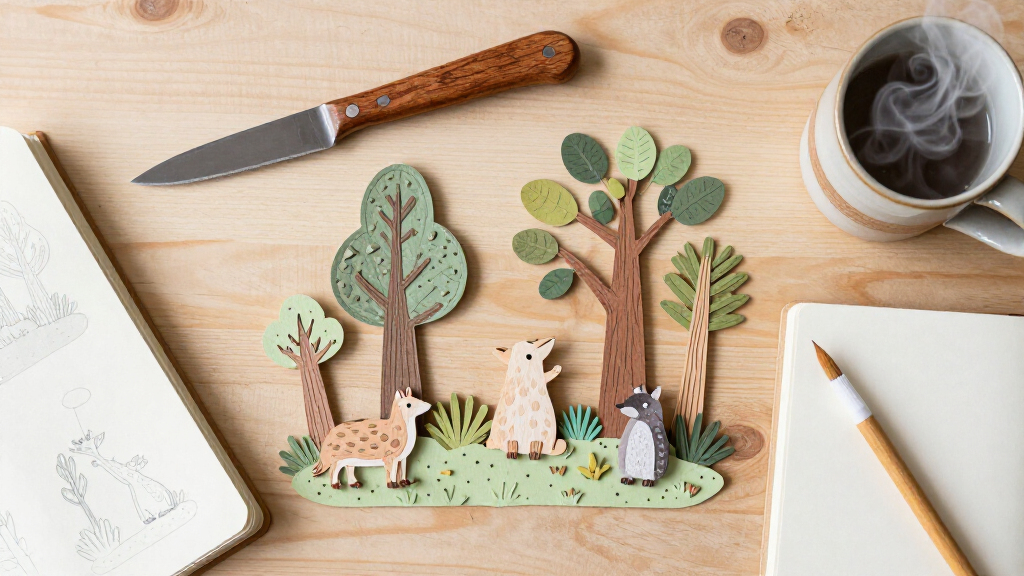
Japanese artist Kanako Abe has gained attention for her intricate paper cutouts depicting woodland creatures in an imaginary landscape. This trend reflects growing interest in detailed paper art, though the full scope of her work remains under exploration.
Japanese artist Kanako Abe has gained notable attention for her intricate paper cutouts featuring woodland creatures in an imaginary landscape. Her work combines delicate craftsmanship with imaginative storytelling, captivating audiences and art critics alike. This emerging trend highlights a renewed appreciation for detailed paper art as a form of contemporary expression.
Kanako Abe’s artwork involves meticulously cutting and assembling paper to create detailed scenes inhabited by animals such as foxes, deer, birds, and rabbits. Her pieces often depict these creatures in lush, fantastical environments that seem to exist outside of reality, blending natural elements with whimsical elements. The artist’s process involves multiple layers of paper, each carefully cut and assembled to produce depth and texture, resulting in highly detailed, three-dimensional scenes.
While Abe’s work has been exhibited in galleries across Japan and has garnered online attention, her specific techniques and the full scope of her portfolio remain largely under the radar outside the art community. The recent surge in coverage appears linked to social media sharing and the growing popularity of paper art as a niche but expanding genre. Experts note that her craftsmanship exemplifies a high level of skill, requiring precision and patience, with some pieces taking weeks to complete.
Sources indicate that Abe’s work is inspired by both traditional Japanese paper arts and contemporary fantasy themes, creating a bridge between cultural heritage and modern storytelling. Her pieces are often accompanied by minimalistic backgrounds, emphasizing the detailed figures and natural motifs. The exact number of her completed works is not publicly confirmed, and she has yet to announce any upcoming exhibitions or projects.
Why Abe’s Paper Creatures Capture Artistic and Cultural Interest
The rising interest in Kanako Abe’s work underscores a broader trend toward appreciating handcrafted art forms in a digital age. Her detailed paper scenes resonate with audiences seeking tactile, visual storytelling that contrasts with mass-produced digital content. Additionally, her focus on woodland creatures and fantastical landscapes taps into a cultural nostalgia for nature and folklore, which is experiencing renewed relevance amid environmental concerns and a global interest in traditional crafts.
This trend also highlights the growing visibility of contemporary Japanese artists working within traditional media, blending cultural heritage with innovative techniques. Abe’s work exemplifies how detailed craftsmanship can elevate paper art to a new level of artistic legitimacy and appeal, potentially influencing other artists and collectors to explore similar mediums.
As an affiliate, we earn on qualifying purchases.
Background on the Rise of Paper Art and Imaginary Worlds
Interest in handcrafted paper art has seen a resurgence in recent years, driven by social media platforms that amplify detailed, visually captivating works. Artists worldwide are exploring paper as a medium for fine art, with many drawing inspiration from nature, folklore, and fantasy. In Japan, traditional paper crafts such as origami and kirigami have long histories, but contemporary artists like Kanako Abe are expanding these traditions into complex, layered scenes that function as both art and storytelling.
The current spike in coverage and online searches around Abe’s work suggests a growing curiosity about this niche art form. While her precise techniques and the full extent of her portfolio are not yet fully documented, her work exemplifies a broader movement towards detailed, handcrafted art that emphasizes patience, skill, and imagination. The trend’s origins are difficult to pinpoint, but it is likely influenced by a combination of cultural heritage and modern digital aesthetics that favor intricate visuals.
It remains unclear whether Abe’s work will lead to wider recognition or influence a broader movement in paper art, as her career is still emerging. The recent attention appears to be driven primarily by online sharing rather than formal exhibitions or institutional recognition.
As an affiliate, we earn on qualifying purchases.
Unconfirmed Aspects of Abe’s Artistic Development
Details about the full scope of Kanako Abe’s portfolio, her future projects, and whether she plans to exhibit widely remain unclear. It is also not confirmed how her work will evolve or influence the broader paper art scene. The exact techniques she employs are not publicly documented, and her current recognition appears primarily driven by social media sharing rather than institutional support.
Additionally, it is uncertain whether her work will be adopted or adapted by other artists or if she intends to develop a broader thematic series. The impact of her rising popularity on her career and the potential for institutional exhibitions are still developing.
As an affiliate, we earn on qualifying purchases.
Next Steps for Kanako Abe and the Paper Art Trend
Abe is expected to continue developing her portfolio, possibly revealing new works or techniques through upcoming exhibitions or online platforms. Art critics and enthusiasts will likely monitor her activity for signs of broader influence within the niche of handcrafted paper art. The trend of detailed, fantasy-inspired paper scenes may also expand as other artists explore similar themes or techniques.
It remains to be seen whether Abe will gain wider recognition beyond the online art community or participate in major art fairs and exhibitions. Her current momentum suggests that her work could inspire a new wave of interest in paper craftsmanship and fantasy landscapes.
handmade woodland animal paper cutouts
As an affiliate, we earn on qualifying purchases.
As an affiliate, we earn on qualifying purchases.
Key Questions
What materials does Kanako Abe use for her paper scenes?
While specific details are not publicly confirmed, her work typically involves layered and precisely cut paper, likely using traditional Japanese washi paper or similar materials that allow for fine detail and durability.
Are Abe’s artworks available for purchase or viewing in galleries?
As of now, her works are primarily shared through social media and online platforms, with limited gallery exhibitions. No major commercial sales or exhibitions have been officially announced.
How long does it take Abe to complete a single piece?
Exact timelines are not publicly disclosed, but experts suggest her detailed scenes can take several weeks to complete, given the precision and layering involved.
Will Abe participate in upcoming exhibitions?
There is no confirmed information about future exhibitions, but industry observers expect her to showcase her work as her recognition grows.
What themes does Abe explore in her paper art?
Her work centers on woodland creatures and fantastical landscapes, blending elements of nature, folklore, and imagination to create immersive worlds.
Source: rss
Fall Picks
fall essentials
As an affiliate, we earn on qualifying purchases.