
To prevent paper from curling while it dries, control the environment by increasing humidity with a humidifier to slow uneven drying. Lay the paper flat on a smooth surface and gently apply even weights, like parchment paper and clips, to hold it in place. Guarantee the paper stays slightly damp but firm during drying. Managing humidity and pressure carefully helps keep your paper flat. Learn more tips to perfect your drying process and avoid curling.
Key Takeaways
- Control room humidity with a humidifier to slow uneven evaporation and promote flat drying.
- Lay paper on smooth, non-porous surfaces and secure edges to prevent curling during drying.
- Apply gentle, even pressure using weights or clips once the paper is partially dry to maintain flatness.
- Keep the drying environment consistent by managing temperature and moisture levels to avoid uneven moisture loss.
- Use a flat, clean weight and layer protective material like parchment paper to press the paper flat as it dries.
When paper dries unevenly, it often curls, making it difficult to use or display. This curling happens because the moisture evaporates at different rates across the surface, causing one side to shrink more than the other. To prevent this, you need to control the drying environment and carefully manage how the paper dries. Humid environments can be your ally here; a higher humidity level slows down the evaporation process, allowing the moisture to leave the paper more evenly. If you’re in a very dry setting, consider using a humidifier or placing the paper in a room with increased moisture. This controlled environment helps maintain an even moisture gradient, reducing the chances of curling.
Controlling humidity levels helps prevent paper from curling during drying.
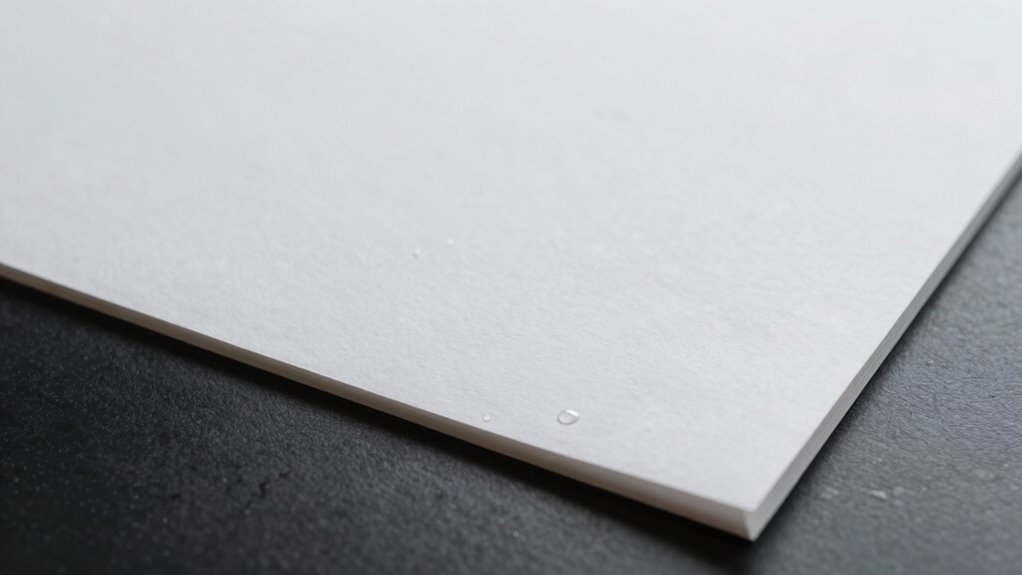
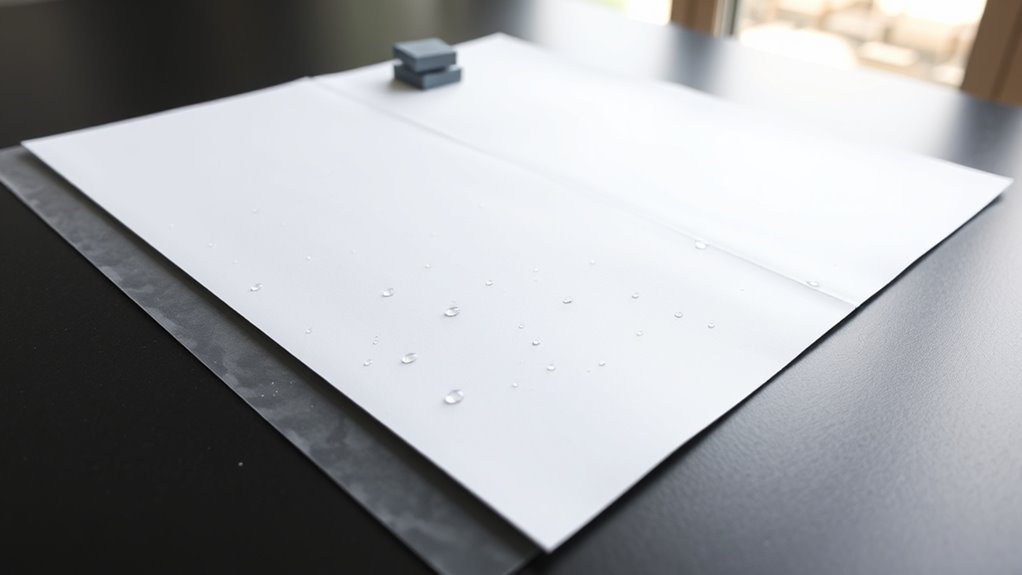
Another effective technique is weight application. Once you’ve finished your initial drying process, gently place a flat, clean weight on top of the paper. This could be a heavy book, a stack of flat objects, or any item that applies consistent pressure without damaging the paper. The key is to keep the weight evenly distributed across the surface, pressing out any uneven curves as the paper fully dries. Be sure to use a piece of clean, smooth material—like parchment paper or a cloth—between the weight and your paper to prevent any impressions or marks. This method works best when the paper is still slightly damp but firm enough to hold the weight without tearing or cracking.
Additionally, consider the technique of drying the paper flat on a smooth surface. Lay the paper on a clean, non-porous surface like glass or plastic, and then apply a light, even weight on top. This ensures the paper dries flat and minimizes the risk of curling. If you’re working with delicate or valuable sheets, you can also use clips or tape at the edges to secure the paper to the surface, but make sure these are gentle enough not to damage the paper.
Finally, understanding the importance of precise humidity control can greatly enhance your ability to keep paper flat during drying. Managing moisture levels through environmental adjustments helps prevent uneven drying and curling. Ultimately, controlling the environment and applying gentle, even pressure with weights are your best strategies to keep paper flat while it dries. By managing humidity levels and ensuring consistent weight distribution, you can markedly reduce curling, making your paper easier to handle, display, or preserve. These simple steps can make a noticeable difference, ensuring your paper stays smooth and flat, ready for your next project or presentation.
humidifier for paper drying
As an affiliate, we earn on qualifying purchases.
As an affiliate, we earn on qualifying purchases.
Frequently Asked Questions
Can Using a Hairdryer Prevent Paper From Curling?
Using a hairdryer can help prevent paper from curling by controlling the drying process. Its effectiveness depends on the technique you use—keep the dryer on a low heat and hold it at a safe distance to avoid warping the paper. Curling prevention techniques like gentle, even drying and flattening the paper with a heavy book afterward work best. Just be cautious not to overheat, which may cause more curling or damage.
Does the Type of Paper Affect How It Curls While Drying?
Yes, the type of paper affects how it curls while drying. Smooth, glossy paper with low ink absorption tends to curl less because it dries evenly and resists warping. On the other hand, textured or porous paper absorbs ink quickly, causing uneven drying and more curling. So, choose a thicker or coated paper if you want to minimize curling, especially for projects needing a neat finish.
Is There a Difference Between Drying With a Fan Versus Air Drying?
Drying paper with a fan speeds up the process and minimizes curling more than air drying, especially with heavier paper. Fans promote even drying, reducing uneven moisture that causes curling. Light or thin paper may need gentle air drying to prevent warping, while heavier paper benefits from the faster drying speed of a fan. You can control curling by choosing the right method based on your paper’s weight and desired drying time.
How Does Humidity Impact Paper Curling During Drying?
Humidity effects markedly influence how your paper curls while drying. When humidity is high, moisture levels in the air increase, causing the paper to absorb extra moisture and curl more as it dries unevenly. Conversely, low humidity helps the paper dry faster and more evenly, reducing curling. To minimize this, dry your paper in a controlled environment with consistent humidity levels, or use a fan to promote even moisture evaporation.
Can Applying a Protective Coating Stop Curling During Drying?
Applying a protective coating acts like a shield, keeping your paper flat and resisting curling during drying. These coatings provide a barrier that prevents moisture from unevenly escaping, which causes warping. For effective curling prevention, choose lightweight, flexible protective coatings that won’t add bulk or stiffness. By doing so, you help your paper stay smooth and crisp, ensuring your project looks professional and neat from start to finish.
flat weight for paper pressing
As an affiliate, we earn on qualifying purchases.
As an affiliate, we earn on qualifying purchases.
Conclusion
To keep your paper flat while drying, follow these simple tips and avoid unnecessary wrinkles. Use weights or flat surfaces, and let the paper dry naturally to prevent curling. Remember, a stitch in time saves nine—taking a little extra effort now keeps your project looking neat and professional. With patience and the right techniques, your paper will stay smooth and pristine, just like a well-pressed garment. Keep these tips in mind, and you’ll always have perfect results.
non-porous surface for drying paper
As an affiliate, we earn on qualifying purchases.
As an affiliate, we earn on qualifying purchases.
clips for securing paper edges
As an affiliate, we earn on qualifying purchases.
As an affiliate, we earn on qualifying purchases.