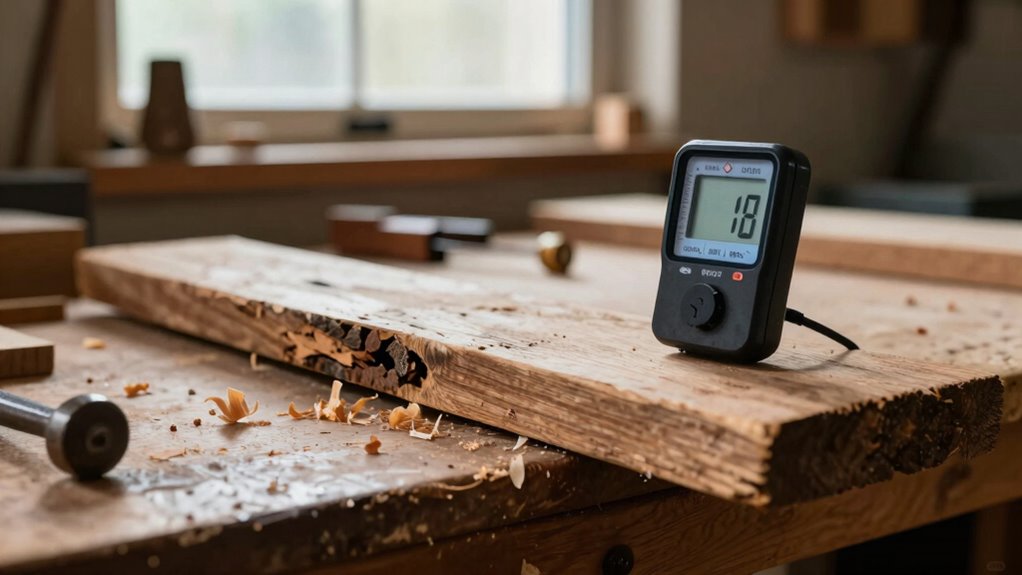

Understanding wood moisture content is key to creating durable, stable projects. Too much moisture can cause warping, splitting, or shrinking, while too little makes wood brittle and prone to cracking. Using a reliable moisture meter helps you measure accurately, so you pick the right wood for your needs. Managing moisture guarantees your craftsmanship lasts and looks professional. Keep exploring, and you’ll discover how proper drying and measurement make all the difference in your projects.

Get business pricing on tools and workshop supplies
- Business-only prices and quantity discounts
- Tax-exempt purchasing
- Multiple users, one account, clear invoices
Key Takeaways
- Maintaining proper moisture content ensures wood stability, preventing warping, cracking, and shrinking in finished projects.
- Ignoring moisture levels can lead to structural issues, poor finishes, and decreased durability over time.
- Accurate moisture measurement with reliable tools helps select suitable wood and guides proper drying.
- Different projects require specific moisture ranges; understanding these ensures optimal performance and longevity.
- Regularly monitoring moisture content during crafting enhances craftsmanship and prevents costly mistakes.

Understanding wood moisture content is essential for home crafters because it directly impacts the quality and durability of your projects. When you’re working with wood, knowing its moisture level helps determine how well it will perform over time. Too much moisture can lead to warping, splitting, or shrinking after your project is complete, while too little can cause the wood to become brittle or crack. Proper wood drying and accurate moisture measurement are *indispensable* steps in your crafting process. If you don’t pay attention to these factors, you risk wasting time and materials on work that won’t stand the test of time. Monitoring wood moisture content carefully ensures your finished project remains stable and long-lasting. Additionally, understanding the moisture content helps you choose the right wood for specific applications, whether indoor or outdoor, to ensure optimal performance. Using reliable moisture meters can significantly improve your ability to assess wood accurately and avoid issues caused by improper moisture levels. Being aware of the appropriate moisture range for different types of projects can further enhance your craftsmanship and result in more durable, professional-looking finishes.
As an affiliate, we earn on qualifying purchases.
Frequently Asked Questions
How Does Wood Moisture Content Affect Indoor Air Quality?
High wood moisture content can negatively impact your indoor air quality by increasing humidity levels, which makes your home feel damp. This excess moisture creates ideal conditions for mold growth, releasing spores into the air that can cause allergies or respiratory issues. To maintain good air quality, make sure your wood is properly dried, reducing moisture and preventing mold growth, which keeps your indoor environment healthier and more comfortable.
Can Moisture Content Vary Between Different Wood Species?
Yes, moisture content varies between wood species, driven by differences in wood density and grain pattern. Denser woods like oak tend to hold more moisture, while softer woods like pine dry out quicker. Grain pattern influences how moisture moves within the wood, affecting drying rates and stability. So, as you craft, consider these characteristics to guarantee your projects stay true to size and shape, avoiding warping or cracking.
What Is the Ideal Moisture Level for Outdoor Woodworking Projects?
For outdoor woodworking projects, you should aim for a moisture level of around 12-15%. Proper wood drying is essential to prevent warping or cracking, so use a moisture measurement tool to check your wood regularly. Ensuring your wood reaches this ideal moisture content helps it withstand outdoor elements better and maintains its stability over time. Always dry your wood thoroughly before starting your outdoor project.
How Often Should I Recheck Wood Moisture Content During a Project?
Think of your project as a delicate dance with your wood; you need to keep checking its rhythm. Recheck the moisture content every few days, especially during wood storage. Use moisture calibration tools to verify accuracy and avoid surprises. Regular checks help you stay in sync, preventing warping or cracking. Staying attentive ensures your craftsmanship stays true, and your project remains solid from start to finish.
Are There Environmental Factors That Influence Wood Moisture Levels?
Environmental humidity and conditions considerably influence wood moisture levels. When you’re wood drying, high humidity slows the process, keeping wood wetter longer. Conversely, dry air speeds up drying but can cause cracking or warping if not monitored carefully. Temperature fluctuations also impact moisture content. To maintain consistent results, keep your workspace climate-controlled and check moisture levels regularly, especially during seasonal changes or in varying weather conditions.
As an affiliate, we earn on qualifying purchases.
Conclusion
Understanding wood moisture content is like mastering the tides—you need to know when to sail and when to wait. By keeping your wood properly dried, you set your project on a steady course, avoiding warping and cracking. Think of moisture levels as the heartbeat of your craft; when they’re just right, your work will stand the test of time. Stay vigilant, and your creations will flourish like a well-tended garden.
wood drying and moisture measurement tools
As an affiliate, we earn on qualifying purchases.
As an affiliate, we earn on qualifying purchases.
moisture content tester for woodworking
As an affiliate, we earn on qualifying purchases.
As an affiliate, we earn on qualifying purchases.
Halloween Picks
halloween
As an affiliate, we earn on qualifying purchases.
![How Blackwing Pencils Are Made [Video]](https://worldfinecrafts.com/wp-content/uploads/2026/08/how-blackwing-pencils-are-made-video-featured-560x300.jpg)