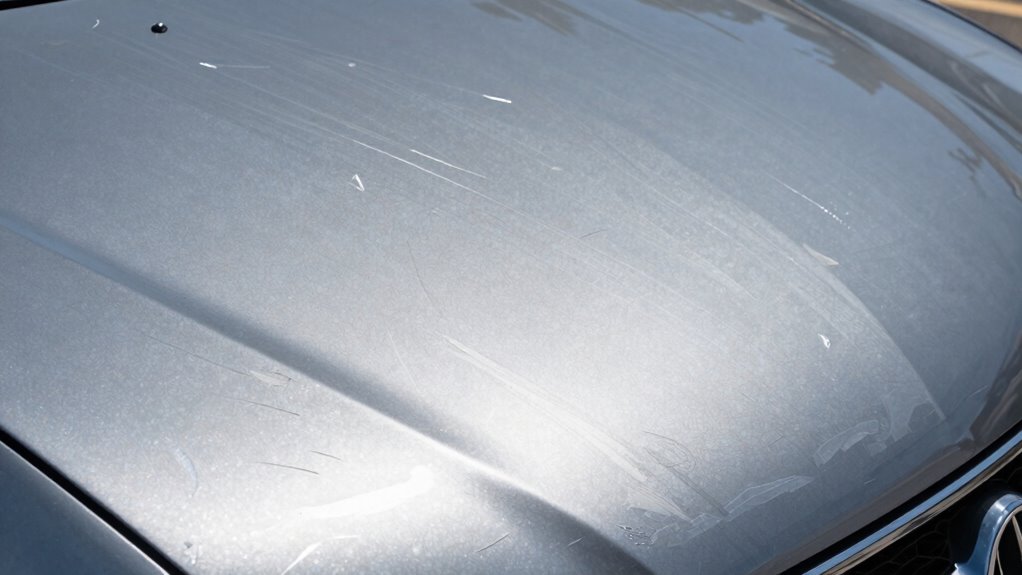

Metallic paint can appear streaky because the tiny reflective particles tend to settle unevenly, especially if you don’t stir it well or apply thick coats. Using inconsistent strokes, applying too much paint, or rushing can highlight these flaws. To get a smooth finish, make sure to stir thoroughly, use multiple thin coats, and work steadily with proper tools. If you keep these tips in mind, you’ll improve your metallic finish—you’ll discover more secrets to perfection.
Key Takeaways
- Uneven metallic particle distribution caused by inadequate stirring leads to streaky finishes.
- Applying thick coats or overworking the paint can prevent proper leveling, resulting in streaks.
- Insufficient drying time between coats causes uneven patches and visible streaks.
- Using tools with uneven application pressure or inconsistent technique can create streaks.
- Poor lighting during inspection makes it harder to identify and correct streaks before finishing.
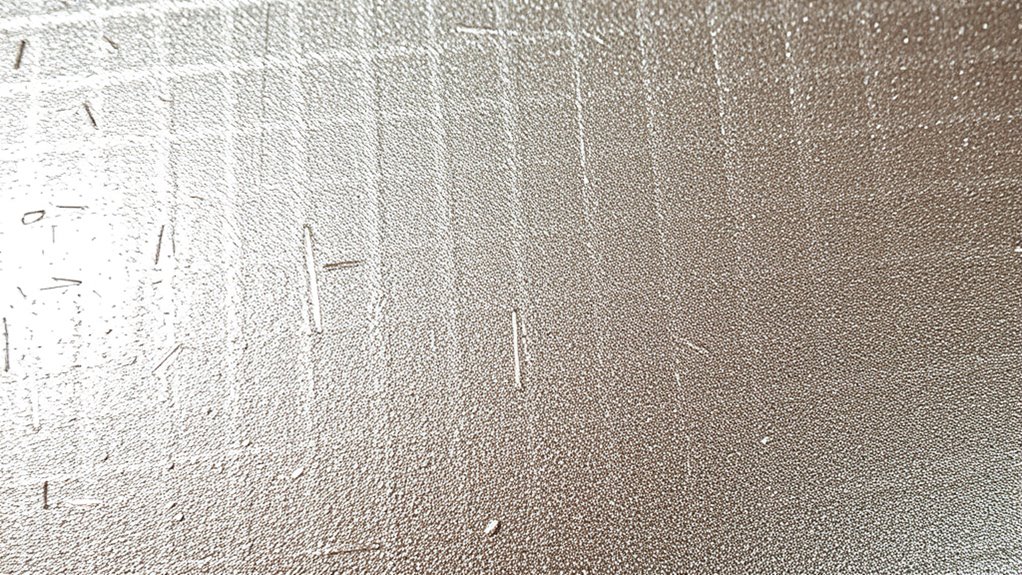
When planning to apply metallic paint, understanding its coverage is essential to achieving a smooth, even finish. Metallic paints can be tricky because their application techniques and paint formulation play significant roles in the final look. If you rush or skip steps, you might end up with streaks or uneven patches that detract from the paint’s natural shimmer. To prevent this, start by choosing a high-quality metallic paint formulated specifically for your project. These formulations contain tiny metallic particles designed to reflect light uniformly, but if the paint isn’t formulated well or if you don’t apply it correctly, streaks can become apparent.
Your application techniques are vital. Metallic paints tend to be more sensitive to brush strokes, roller marks, or uneven spraying. When applying, use smooth, consistent strokes and avoid overworking the paint. Whether you’re brushing, rolling, or spraying, keep your tools well-loaded and maintain a steady hand. For spraying, practice on a scrap surface to get a feel for the spray pattern and adjust your pressure and distance accordingly. Applying multiple thin coats instead of one thick layer helps manage the reflective particles better and reduces streaking. Allow each coat to dry thoroughly before applying the next. This patience prevents dragging or lifting previously applied layers, which can leave streaks or uneven sheen.
Another key factor is understanding paint formulation. Some metallic paints have a thicker or more fluid consistency, affecting how easily they level out on the surface. If the formulation is too thick, it might not spread evenly, causing streaks or lap marks. Conversely, a paint that’s too thin can run or sag, creating uneven patches. Always stir the paint thoroughly before use, ensuring the metallic particles are evenly distributed. If needed, follow the manufacturer’s recommendations for thinning the paint with the appropriate solvent or reducer. This helps improve application and leveling, resulting in a more uniform finish. Additionally, considering lighting conditions during application can help you spot uneven areas early and correct them before the paint dries.
Lighting also influences how you see streaks during application. Work in well-lit conditions to identify any uneven areas as you go. After painting, inspect the surface from different angles under different lighting to catch inconsistencies. If streaks or uneven patches appear, you might need to lightly sand the surface once dry and apply a touch-up coat, taking care to use the same application techniques. With patience, proper application techniques, and attention to your paint’s formulation, you can achieve a sleek, metallic finish that truly looks professional and streak-free.
Amazon Product B0F25T39CL
As an affiliate, we earn on qualifying purchases.
Frequently Asked Questions
Can Specific Brands Prevent Streaks in Metallic Paint?
Yes, certain brands can help prevent streaks in metallic paint due to consistent brand formulation and quality control. When you choose reputable brands known for their paint consistency, you’re more likely to achieve smooth coverage. These brands often use specialized formulations that minimize streaking and provide better metallic particle dispersion. Sticking to trusted brands guarantees you get predictable results, making your painting project easier and producing a professional-looking finish.
Does Environmental Humidity Affect Metallic Paint’s Finish?
Sure, humidity interference can really mess with metallic paint’s finish. You might think environmental factors are out of your control, but high humidity levels cause moisture to disrupt with paint adhesion and drying, leading to streaks or uneven coverage. To get a smooth finish, work in a controlled environment with low humidity, use a dehumidifier if needed, and guarantee proper ventilation. It’s all about controlling those pesky environmental factors.
Are There Alternative Techniques for Achieving a Streak-Free Metallic Look?
You can achieve a streak-free metallic look by using proper brush techniques and thorough surface preparation. Opt for a high-quality, soft brush and apply thin, even coats, avoiding over-brushing. Before painting, clean and sand the surface to guarantee smoothness. Keep a consistent distance while applying paint and work in a well-ventilated area. These steps help prevent streaks and give your metallic finish a sleek, flawless appearance.
How Does Primer Choice Influence Metallic Paint Application?
Did you know that proper primer choice can improve metallic paint adhesion by up to 50%? When you select the right primer, it enhances surface preparation, ensuring a smoother finish. Using a primer compatible with metallic paints helps prevent streaks and uneven coverage. Focus on cleaning and sanding your surface thoroughly before applying primer, which creates a uniform base for flawless metallic paint application and prevents streakiness.
Is There a Recommended Drying Time Between Coats?
You should wait at least 2-4 hours between coats to follow a proper drying schedule. This guarantees the metallic paint has enough time to dry and begins curing, which helps prevent streaks and uneven coverage. Keep in mind, the curing duration can vary depending on the paint type and room temperature. For best results, check the manufacturer’s instructions for specific drying and curing times before applying the next coat.
Amazon Product B009YNG21U
As an affiliate, we earn on qualifying purchases.
Conclusion
Now that you understand why metallic paint can appear streaky, you’re ready to transform your surface into a shimmering masterpiece. Think of your brush as a magic wand, gently blending each stroke into a smooth, flowing river of color. With patience and proper technique, you’ll turn that streaky, patchy finish into a glossy, reflective surface that catches the light like a jewel. Your project will shine with the flawless brilliance only skilled hands can achieve.
Amazon Product B0D9NJZHJS
As an affiliate, we earn on qualifying purchases.
Amazon Product B00EKT30JK
As an affiliate, we earn on qualifying purchases.