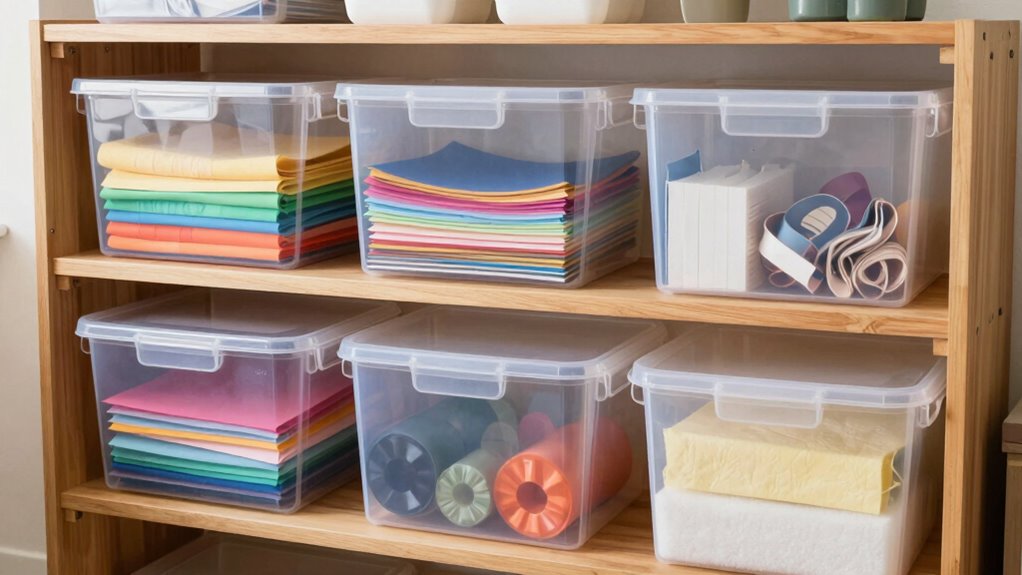

To keep your craft materials from warping, yellowing, or breaking, store them in clear, airtight containers with secure lids, and label everything for easy access. Maintain a stable, cool, dark environment with consistent humidity levels of 40-60%, using dehumidifiers or silica gel packs if needed. Flat storage works best for paper and textiles, while paints and markers should be kept upright and tightly sealed. Proper care and organization help preserve your supplies longer; learn how to implement these tips effectively.
Key Takeaways
- Store materials in a cool, dark, and dry environment to prevent fading, warping, and deterioration.
- Use airtight, UV-resistant containers with secure lids to protect from moisture and light exposure.
- Maintain stable temperature and humidity levels (40-60%) with hygrometers and climate control devices.
- Keep paper and textiles flat in shallow, labeled storage to prevent bending, creasing, and yellowing.
- Handle fragile items carefully, using padded supports and soft cloth wraps to avoid breakage.
airtight clear storage containers for craft supplies
As an affiliate, we earn on qualifying purchases.
As an affiliate, we earn on qualifying purchases.
Choosing the Right Storage Containers for Your Supplies

Choosing the right storage containers is essential to keeping your craft supplies organized and easily accessible. Opt for stackable containers to maximize space and keep everything neat. These containers help you create a compact, efficient storage system, making it simple to find what you need quickly. When selecting containers, consider those with clear sides so you can see contents at a glance, reducing the need for constant rummaging. Incorporate effective labeling techniques to identify contents easily—use waterproof labels or a label maker for clarity and durability. Stackable containers also prevent clutter and allow you to customize your storage according to your space. Understanding Free Floating concepts can help you design a more adaptable and flexible storage setup. Additionally, choosing suitable materials for your containers will ensure they resist warping, yellowing, or breaking over time, maintaining their integrity in the long term. Using durable plastic options can further enhance longevity and resilience against common damages. Selecting containers made from UV-resistant materials can help prevent yellowing caused by exposure to light, keeping your supplies looking fresh for longer. Opting for airtight seals can also protect delicate or moisture-sensitive craft materials from damage. By choosing versatile, well-labeled, stackable containers, you’ll streamline your craft organization and keep your supplies in top condition.
UV-resistant plastic storage bins
As an affiliate, we earn on qualifying purchases.
As an affiliate, we earn on qualifying purchases.
Keeping Materials in a Controlled Environment

Maintaining a controlled environment is essential for preserving the quality of your craft materials. Sudden temperature fluctuations can cause warping, yellowing, or breaking, so aim for a stable climate. Keeping humidity levels consistent also prevents mold and deterioration. To safeguard your supplies, consider pest prevention methods like sealing containers and checking regularly. For added protection, utilize reliable backup power solutions to ensure climate control systems remain operational during outages. Additionally, monitoring storage conditions with appropriate devices can help detect and address any environmental issues promptly. Understanding environmental stability helps you create optimal storage conditions that extend the lifespan of your materials.
label maker for craft organization
As an affiliate, we earn on qualifying purchases.
As an affiliate, we earn on qualifying purchases.
Properly Storing Paper and Cardstock to Prevent Warping
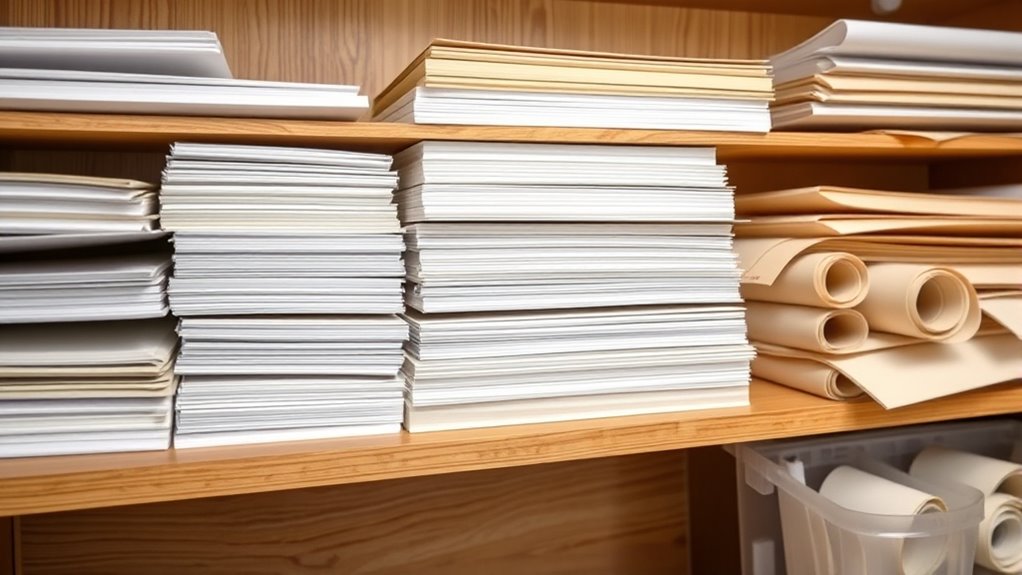
To keep your paper and cardstock flat and undamaged, store them in a dry environment away from moisture. Use flat storage options like drawers or shelves to prevent warping, and avoid exposing your materials to direct sunlight. Proper storage methods help maintain their shape and quality over time. Additionally, consider using waterproof containers to protect your materials from humidity and potential water damage. Selecting acid-free storage materials can further prevent deterioration and yellowing of your papers. Incorporating climate control in your storage area can also help stabilize temperature and humidity levels, further preserving your materials. Employing proper handling techniques can also reduce the risk of bending or tearing when accessing your supplies.
Keep in Dry Environment
Storing paper and cardstock in a dry environment is essential to prevent warping and damage. Climate considerations play a vital role, as high humidity can cause materials to bend, curl, or develop mold. Choose a storage location with low moisture levels, away from bathrooms, kitchens, or basements prone to dampness. Make certain the area has good ventilation and is not exposed to water sources or direct sunlight, which can cause yellowing and weakening. Using a climate-controlled space helps maintain consistent conditions, reducing the risk of warping over time. Keep your craft materials in a designated, dry spot to preserve their quality, guaranteeing they stay flat, intact, and ready for your projects. Maintaining proper air quality in storage areas further protects sensitive materials from pollutants that can accelerate deterioration. Additionally, controlling temperature fluctuations can help prevent expansion and contraction that may lead to warping or cracking. Proper storage practices such as using acid-free containers and avoiding overcrowding can further extend the lifespan of your materials by minimizing environmental stressors.
Use Flat Storage Methods
Using flat storage methods guarantees your paper and cardstock stay smooth and warping-free. When you store materials flat, you prevent bending and creasing that can cause warping over time. Flat storage also maximizes space efficiency, letting you keep more items organized without clutter. To implement this, consider using shallow drawers, storage boxes, or even flat file cabinets designed for paper. Keep your materials stacked neatly, avoiding heavy objects on top that could cause dents. This approach helps preserve the quality and integrity of your craft supplies, ensuring they stay flat and ready for use. Proper material storage also reduces the risk of yellowing and breaking caused by improper handling or environmental factors. Remember, a well-organized flat storage system keeps your workspace tidy and your paper in pristine condition, making your crafting experience smoother and more enjoyable.
Avoid Sunlight Exposure
Sunlight can cause paper and cardstock to warp, fade, or become brittle over time, so it’s essential to keep your materials away from direct exposure. UV protection is crucial, especially for light-sensitive materials that degrade quickly under UV rays. Store your craft supplies in a dark, cool area, away from windows and direct sunlight. Use opaque containers or opaque folders to shield items from harmful rays. Here’s a quick overview:
| Material Type | Recommended Storage Method | Additional Tips |
|---|---|---|
| Light-sensitive paper | Store in UV-protected containers | Avoid bright, direct light |
| Cardstock | Keep in dark drawers or shelves | Use covers for extra protection |
| Photos or prints | Use acid-free sleeves | Keep away from sunlight |
| Old documents | Store in archival boxes | Prevent fading over time |
| Digital backups | Store digitally in dark, cool places | Protect from heat and light |
flat storage drawers for paper and textiles
As an affiliate, we earn on qualifying purchases.
As an affiliate, we earn on qualifying purchases.
Protecting Paints, Markers, and Ink From Drying Out
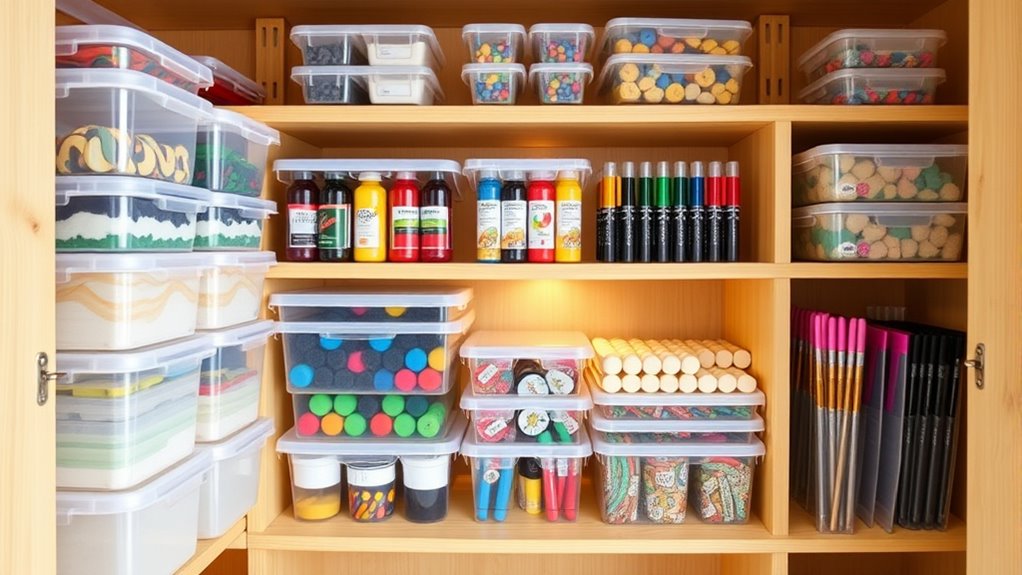
To keep your paints, markers, and ink from drying out, make sure to seal containers tightly after each use. Store them upright to prevent leaks and spills, and consider using airtight storage options for added protection. These simple steps help your supplies stay fresh and ready whenever you need them. Additionally, avoiding exposure to high humidity environments can prevent deterioration of your craft materials. Using proper storage techniques ensures your supplies maintain their quality and longevity over time.
Seal Containers Tightly
Sealing containers tightly is essential to prevent paints, markers, and ink from drying out. Using airtight containers with secure lids ensures your supplies stay fresh longer. When you close containers properly, you minimize exposure to air, which causes drying and degradation. Keep these tips in mind:
- Always check that lids are snapped on firmly before storing.
- Choose containers with rubber seals or gaskets for extra airtight protection.
- Avoid over-tightening, which can damage lids or containers and cause leaks.
- Proper sealing also helps prevent material degradation, ensuring your craft supplies remain in good condition over time.
- Additionally, maintaining a consistent sealing method helps preserve the quality of your materials, extending their usability and preventing issues like warping or yellowing.
Store Upright Properly
Ever wonder why storing paints, markers, and ink upright helps keep them from drying out? When you store items vertically, it reduces pressure on the tips and openings, preventing air from entering and causing evaporation. Vertical stacking keeps your supplies organized and easy to access, especially when combined with label organization. Clearly labeled containers allow you to quickly identify colors and types, minimizing unnecessary opening and closing that can expose contents to air. This method also prevents accidental spills or damage that can occur when items are stored horizontally or loosely. By maintaining an upright position, your craft supplies stay in better condition longer, ensuring they won’t dry out prematurely and remain ready for your next creative project.
Use Airtight Storage
Storing your paints, markers, and ink in airtight containers creates a reliable barrier against air exposure, which is the main factor causing these supplies to dry out. Using containers with airtight seals helps preserve their moisture and extend their lifespan. To maximize effectiveness, choose containers that fit your supplies snugly, preventing air from sneaking in. Always double-check the seals before storing, ensuring they’re secure. Consider labeling your airtight containers for easy identification, especially if you have multiple colors or types. Keep the containers in a cool, dark place to further slow down drying and deterioration. Additionally, proper storage techniques can help prevent warping, yellowing, or breaking of your craft materials over time. For example, storing your supplies away from direct sunlight and fluctuating temperatures can further prevent material degradation. Remember, the key is minimizing air contact—airtight containers keep your craft materials fresh, vibrant, and ready for your next project.
Storing Fabrics and Textiles to Avoid Yellowing and Damage

To prevent fabrics and textiles from yellowing and sustaining damage over time, proper storage is essential. Focus on fabric care and textile preservation by keeping textiles in a cool, dark, and dry environment. Avoid direct sunlight, which can accelerate discoloration, and store items in breathable containers like cotton bins or muslin wraps instead of plastic, which traps moisture and promotes yellowing. Folding textiles neatly minimizes creases and stress that could lead to tears. Keep humidity levels low to prevent mold and mildew. If possible, store textiles flat to prevent warping or use padded supports for delicate fabrics. Regularly inspecting your stored textiles guarantees early detection of any damage, helping you maintain their quality and longevity.
Safeguarding Wood and Wooden Craft Items From Breakage
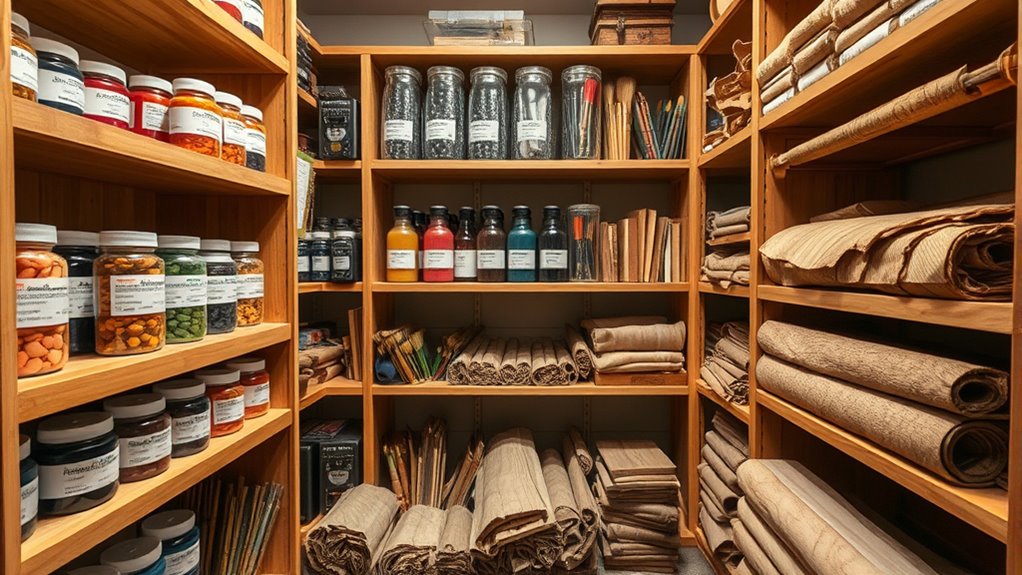
Wooden craft items are vulnerable to breakage if not handled and stored properly. To guarantee their longevity, focus on wooden sculpture preservation and proper wooden tool maintenance. Always store fragile items upright or flat, avoiding stacking that could cause pressure cracks. Use padded or cushioned containers to prevent bumps during movement. When cleaning or handling, use gentle techniques to avoid stress on delicate areas. Regularly inspect your pieces for signs of wear or damage. Keep tools sharp and well-maintained to prevent accidental breakage during use. Consider wrapping intricate sculptures in soft cloths for added protection. Remember, careful handling and thoughtful storage are key to keeping your wooden crafts intact and beautiful for years to come.
Using Humidity Control to Preserve Your Materials

Controlling humidity levels is essential for preserving your craft materials and preventing damage. Fluctuating moisture can cause paper to warp, fabrics to mildew, and wood to crack or swell. To maintain proper moisture control, keep your storage area within a stable humidity range, ideally between 40-60%. Use a hygrometer to monitor humidity levels regularly. If the air is too humid, consider dehumidifiers or silica gel packs to absorb excess moisture. Conversely, if the environment is too dry, use a humidifier to add moisture. Consistent humidity helps prevent warping, yellowing, and deterioration, keeping your materials in ideal condition. By managing moisture control effectively, you ensure your craft supplies stay safe, durable, and ready for your next project.
Organizing Your Supplies for Easy Access and Safety
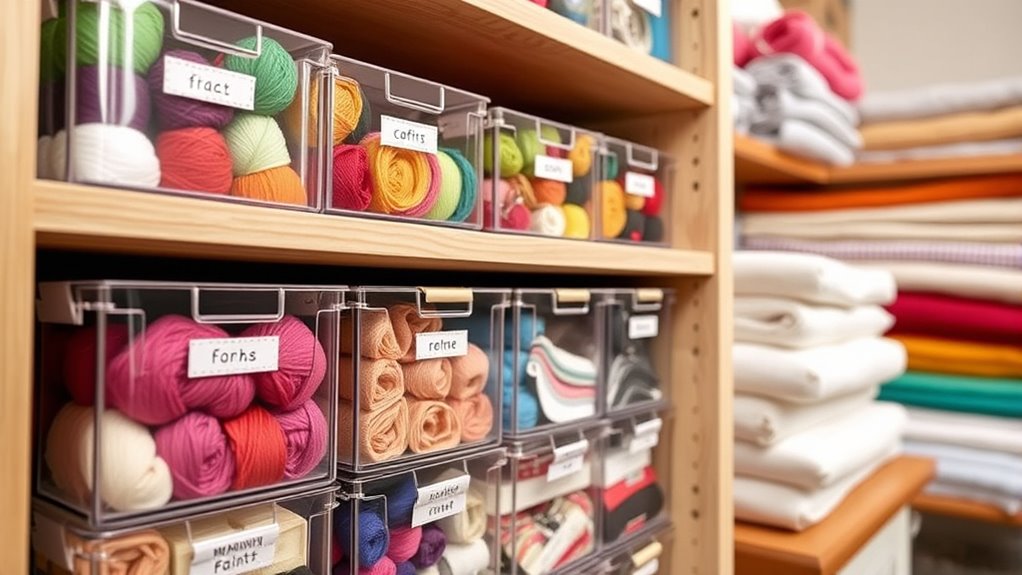
Organizing your craft supplies guarantees you can find what you need quickly and work safely. A creative display not only makes your space inspiring but also helps you see everything at a glance. Use labeling techniques to keep items sorted, so you don’t waste time searching or accidentally grabbing dangerous tools. To stay organized, consider these tips:
- Arrange supplies in clear containers for easy visibility
- Group similar items together, like paints or beads
- Label each container or shelf clearly with descriptive tags
This approach ensures your workspace remains safe and efficient, reducing clutter and potential hazards. Proper organization keeps your supplies protected from damage and makes your crafting sessions more enjoyable. With a little effort, you’ll create a functional, inspiring environment for all your projects.
Frequently Asked Questions
How Can I Identify if My Supplies Are Already Damaged From Improper Storage?
You can identify damaged supplies by inspecting for material deterioration and storage indicators. Look for warping, yellowing, or cracking, which signal improper storage. Feel the items for brittleness or fragility, and check for mold or discoloration. If you notice these signs, your materials have likely been compromised. Proper storage is key to preventing further damage, so assess your supplies regularly to make certain they stay in good condition for future projects.
What Are the Best Methods for Cleaning and Maintaining Stored Craft Materials?
Think of your craft supplies as delicate seeds that need gentle tending. To keep them in top shape, follow consistent cleaning routines using soft cloths and mild cleaners. Establish a maintenance schedule, checking for dust, mold, or damage regularly. Store items properly after cleaning, and avoid exposure to extreme temperatures or sunlight. This routine preserves your materials’ integrity, ensuring they remain vibrant and ready for your next creative adventure.
How Often Should I Rotate or Check My Stored Supplies for Preservation?
You should check your stored supplies at least once every three to six months, following a consistent storage schedule. This preservation frequency helps you catch any issues early, like warping or yellowing. During these inspections, rotate items if needed and make certain they remain properly protected. Regular checks prevent damage, keep your craft materials in top condition, and extend their lifespan, so your supplies stay ready for your next creative project.
Are There Specific Storage Tips for Delicate or Vintage Craft Materials?
For vintage storage and delicate handling, you should use acid-free boxes and tissue paper to protect fragile items. Keep vintage materials in a cool, dark place to prevent yellowing and warping. Handle delicate pieces with clean hands or gloves, and avoid stacking heavy objects on top. Regularly check your items for signs of deterioration, and gently rotate or reposition them to guarantee their preservation over time.
How Can I Prevent Pests From Damaging My Stored Craft Supplies?
Think of pests as uninvited guests that you want to keep at bay. To prevent their visit, use airtight storage containers for your craft supplies, ensuring no crumbs or residues attract them. Keep your storage area clean, dry, and well-ventilated, and consider adding natural pest repellents like lavender or cedar blocks. Regularly check your supplies to catch any signs early, maintaining a pest-free haven for your craft treasures.
Conclusion
By choosing the right containers, controlling humidity, and organizing your supplies, you’ll keep your craft materials in perfect condition. Think of your storage space as a fortress protecting your treasures from the relentless march of time and damage — nothing will stand in your way! With these tips, your supplies will stay vibrant, intact, and ready for your next masterpiece, making your craft space feel like a sanctuary where creativity can thrive forever.