To understand a fabric label like a pro, start by checking the fiber content, which tells you what materials make up the fabric—natural fibers like cotton or synthetic ones like polyester. Look at the weave or knit style to see how the fabric is constructed. Next, review care symbols—they show you how to wash, dry, and iron without damaging the item. If you keep exploring, you’ll uncover even smarter tips to maintain your wardrobe perfectly.
Key Takeaways
- Identify fiber content percentages to understand material durability and care requirements.
- Examine weave or knit patterns to determine fabric texture and suitable maintenance methods.
- Read care symbols carefully to follow recommended washing, drying, and ironing instructions.
- Check for certifications or logos indicating eco-friendly practices and quality standards.
- Follow specific care instructions on the label to prolong garment lifespan and maintain appearance.
Deciphering Fiber Content and Material Types
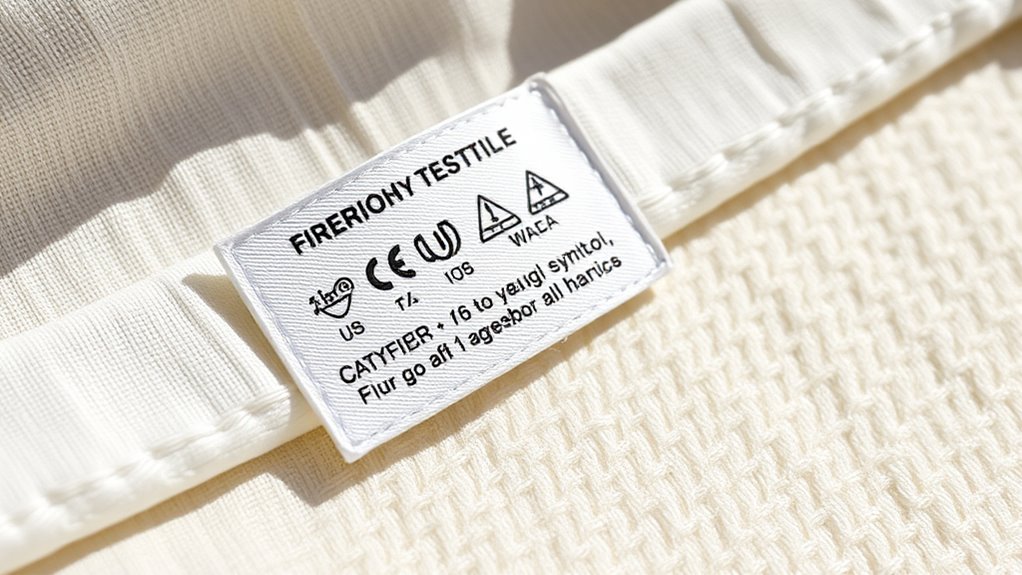
Understanding the fiber content on fabric labels is essential because it tells you what materials your clothing is made of and how to care for it properly. When you see fabric blending, it indicates the combination of different fibers, which can affect the garment’s feel and longevity. Recognizing the types of fibers helps you gauge fiber durability—some materials, like polyester or nylon, are more resistant to wear and tear than natural fibers like cotton or wool. By understanding the fabric blend, you can determine how the clothing will perform over time and choose pieces that suit your lifestyle. Proper knowledge of fiber content guarantees you follow the right washing and maintenance routines, helping your clothes last longer and stay looking their best. Additionally, understanding body jewelry measurements and materials can inspire you to maintain your clothing and gear with proper cleaning and storage practices. Knowing about fiber blending techniques can also assist you in selecting fabrics that meet your comfort and aesthetic preferences, especially as different fiber types influence how fabrics feel and perform.
Recognizing Different Weaves and Knit Patterns

Different weaves and knit patterns give fabrics their unique textures, appearances, and performance characteristics. Recognizing woven textures and knit structures helps you identify fabric types quickly. For example, a plain weave creates a smooth, balanced surface, while a twill weave forms diagonal lines and a textured feel. Knit patterns vary from tight, dense stitches to more open, airy designs. Use this table to visualize: a variety of fabric textures and their corresponding structures to better understand their uses and properties. Additionally, understanding fiber content and weave type can help determine the fabric’s durability and care requirements. Being familiar with weaving techniques enhances your ability to select fabrics suited for different projects and needs. Recognizing these fabric structures also assists in determining the appropriate cleaning and maintenance methods for each fabric type.
Understanding Care Labels and Symbols
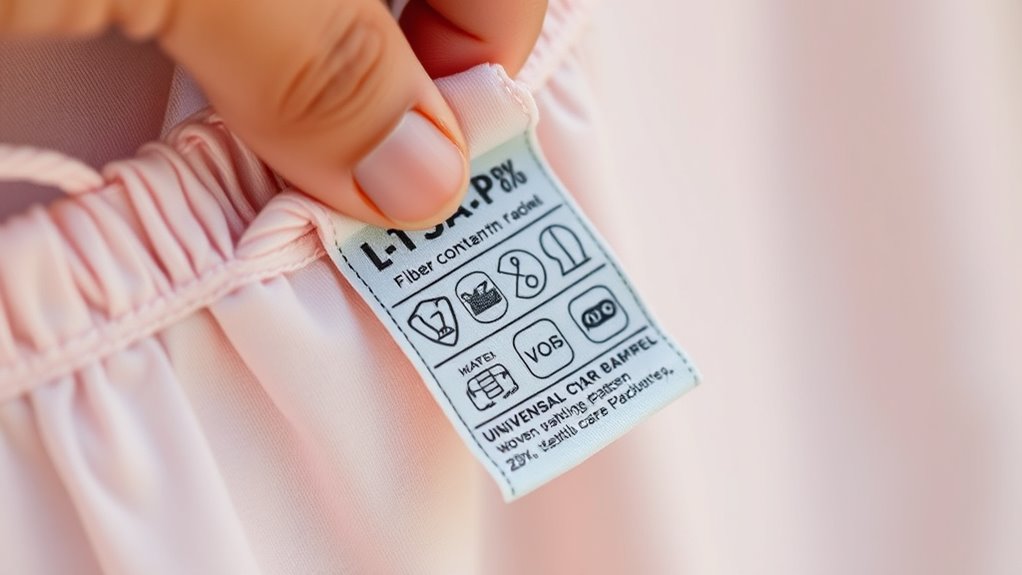
Care labels and symbols provide essential instructions to help you maintain your garments properly. They guide you through cleaning, drying, ironing, and more, ensuring your clothing lasts. When reading these symbols, consider how fabric dyeing and garment construction affect care needs. For example:
- Look for symbols indicating machine wash or hand wash to protect dyed fabrics.
- Check drying icons to avoid shrinking or damaging delicate weaves.
- Follow ironing symbols to prevent fabric dyeing from fading or bleeding.
- Pay attention to special care symbols that address specific garment construction details, like layered fabrics or trims.
- Understanding how fabric care labels are designed can help you maximize your clothing’s durability and appearance over time. Recognizing the importance of coaching and mentoring dynamics can also assist in personal development related to garment care and maintenance.
Understanding these symbols helps you care for your clothes properly, extending their lifespan and maintaining their appearance. Familiarity with care labels guarantees your garments stay vibrant and intact, regardless of fabric dyeing or construction nuances.
Interpreting Additional Tag Information and Certifications

When you examine garment tags beyond the standard care symbols, you’ll often find additional information and certifications that provide valuable insights into the product’s quality, safety, and environmental impact. Eco-friendly certifications, such as GOTS or OEKO-TEX, indicate the textile’s adherence to strict environmental and social standards. These labels help you identify products made with sustainable practices and safer materials. Additionally, textile industry standards ensure quality control, confirming that the fabric meets specific performance or safety benchmarks. Recognizing these certifications allows you to make informed choices aligned with your values. Keep an eye out for official logos or statements that specify eco-friendly practices or compliance with recognized standards, empowering you to select garments that are both responsible and reliable. Being aware of sustainable practices can further enhance your ability to choose environmentally conscious clothing options. Awareness of fabric certifications also helps you understand the origin and safety of the materials used in your garments, ensuring better quality and ethical standards. Understanding industry standards can assist you in evaluating the overall durability and safety of the clothing you purchase, especially when considering the colorfastness and longevity of the fabrics. Incorporating knowledge of natural fibers can also guide you toward more eco-friendly textile choices, supporting sustainable production methods.
Tips for Properly Caring for Your Garments Based on Labels

Your garment’s care label is your best guide to maintaining its appearance and longevity. To protect fabric durability and dye fastness, follow these tips:
- Always adhere to recommended washing temperatures and cycles indicated on the label.
- Use gentle detergents suited for the fabric type to prevent damage.
- Avoid overloading the washer, which can cause excessive wear and dull colors.
- When in doubt, opt for air drying or low heat to preserve fabric quality and prevent fading.
Frequently Asked Questions
How Can I Tell if a Fabric Is Eco-Friendly or Sustainable?
You can tell if a fabric is eco-friendly or sustainable by checking for sustainable certifications like GOTS or OEKO-TEX, which indicate eco-friendly practices. Look for eco-friendly indicators on the label, such as recycled materials or organic fibers. These markers show the fabric’s commitment to sustainability. Always research the certifications to verify they meet strict environmental standards, helping you choose fabrics that are both eco-conscious and durable.
What Do Special Symbols Like a Circle or Triangle Mean on Care Labels?
Think of care symbols as a secret language on your fabric label. When you see a circle, it’s telling you about dry cleaning options, while a triangle indicates bleaching instructions. These care symbol meanings act as a map to proper garment care, helping you interpret label icons with confidence. Mastering label icon interpretation guarantees your clothes stay beautiful longer, avoiding mishaps and keeping your wardrobe in top shape.
Are There Differences in Label Standards Between Countries or Brands?
You’ll notice differences in label standards between countries and brands. International standards aim for consistency, but some brands add their own symbols or instructions, leading to variations. Always check care labels carefully, especially when shopping internationally, because symbols and instructions might differ. Understanding these differences helps you properly care for your garments, avoiding damage and extending their lifespan. So, stay attentive to brand-specific labels and international guidelines for best results.
How Accurate Are Care Instructions in Preventing Fabric Damage?
Care instructions are surprisingly reliable, like a trusted map guiding you through unfamiliar territory. They help prevent fabric damage by considering factors like fabric dye stability and thread strength. However, they’re not foolproof—misinterpretations or outdated labels can lead to mishaps. So, always double-check specific fabric needs, gently test new cleaning methods, and remember that your hands-on approach complements the label’s guidance for best results.
Can Fabric Labels Help Identify Counterfeit or Fake Designer Garments?
Fabric labels can help you spot counterfeit or fake designer garments by checking label authenticity. Genuine labels often include specific details like brand logos, accurate material info, and secure stitching. By comparing these details with official brand labels, you can detect counterfeit detection. Always scrutinize the label’s quality and consistency to guarantee the garment’s authenticity, helping you avoid fake designer pieces and make smarter purchasing decisions.
Conclusion
By mastering how to read fabric labels, you hold the key to revealing your wardrobe’s secrets. Think of labels as a map guiding you through fabric terrains and care journeys, helping your clothes stay vibrant and lasting longer. With a keen eye and a little practice, you’ll turn everyday labels into your personal fashion compass. Soon, caring for your garments will feel as natural as reading a familiar book—each symbol and tag telling its own story.