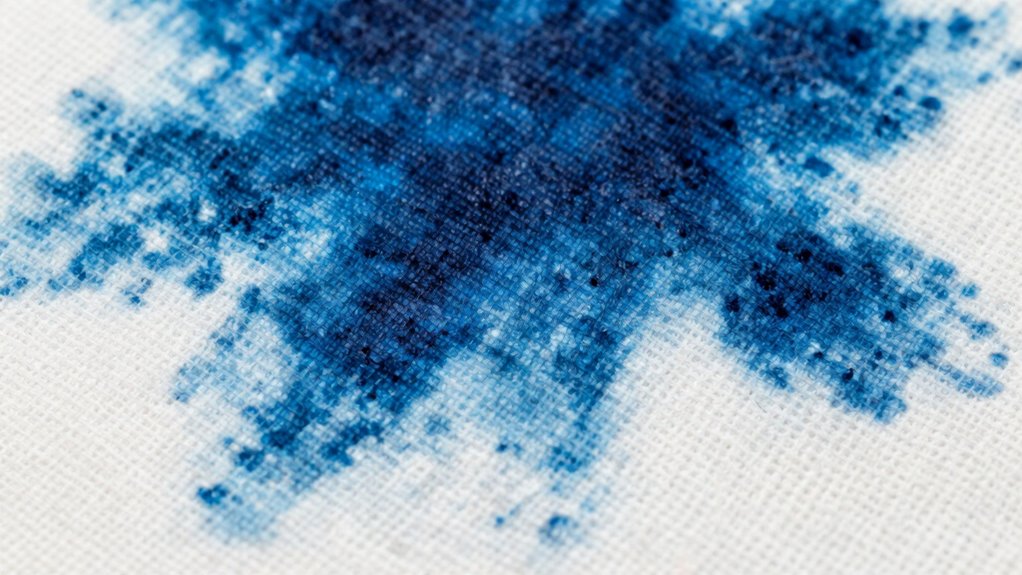

Colorfastness is how well a fabric’s dye stays put and resists fading or bleeding during washing or use. Some dyes bleed forever because they haven’t bonded properly with the fibers or weren’t fixed during manufacturing, making them unstable. Poor dye stability or inadequate treatment allows dyes to leach out over time. Understanding why certain fabrics bleed can help you choose better products and care for them properly—if you want to learn more, keep exploring the details behind colorfastness.
Key Takeaways
- Dyes with poor stability tend to leach out and cause bleeding, especially if not properly fixed during manufacturing.
- Natural dyes are often less stable than synthetic dyes, increasing the risk of bleeding over time.
- Proper fabric treatments like mordanting and heat setting enhance dye fixation, reducing bleeding.
- Unstable dyes that don’t bond well with fibers are more prone to fading and transferring color during washing.
- Well-treated fabrics with stable dyes maintain colorfastness and resist bleeding, ensuring long-lasting vibrancy.

Colorfastness refers to a fabric’s ability to retain its color without fading or bleeding when exposed to washing, rubbing, or environmental conditions. If you’ve ever noticed a brightly colored shirt losing its vibrancy after a few washes or a new piece of fabric transferring dye onto your skin or other clothes, you understand why this quality matters. The key factors influencing colorfastness include dye stability and fabric treatment. When dyes are stable, they resist breaking down or washing out, ensuring the colors stay bright and true over time. Conversely, unstable dyes are more prone to bleeding, fading, or changing shade, which can ruin the look of your garments and complicate cleaning routines.
Dye stability is at the heart of good colorfastness. It’s about how well the dye molecules bond with the fabric fibers during the dyeing process. If the dye isn’t stable, it’s likely to leach out when exposed to water, detergents, or even humidity. Different dyes have varying degrees of stability, and the choice of dye substantially impacts the fabric’s longevity. For example, synthetic dyes tend to be more stable than natural dyes, but even the best synthetic dyes need proper fixation during manufacturing. This is where fabric treatment becomes vital. Proper fabric treatment involves processes like mordanting, heat setting, or chemical fixing, which help lock the dye into the fibers. These treatments enhance dye stability, making the fabric more resistant to washing and environmental stress.
When you buy clothes or textiles, understanding how they’re treated can give you clues about their colorfastness. High-quality fabrics undergo specific treatments to guarantee the dye sticks firmly, reducing bleeding and fading. Conversely, lower-quality items might skip or shortcut these steps, leading to dyes that are less stable and more likely to bleed. If you want your fabrics to last and maintain their appearance, look for those that have been properly treated and dyed with stable dyes. Proper fabric treatment doesn’t just improve colorfastness; it also enhances the overall durability of the material, making it easier to care for and less prone to damage.
Ultimately, achieving excellent dye stability through effective fabric treatment is what keeps colors vibrant and prevents bleeding forever. When dyes are well-fixed into the fabric, you can wash your clothes repeatedly without worry, and they’ll look fresh for years. Proper fabric treatment methods play a crucial role in this process by ensuring dyes are securely bonded to the fibers. So, next time you’re shopping or caring for your textiles, consider the importance of dye stability and the treatment process behind your fabrics. They’re the secrets behind long-lasting, color-rich garments that stay true, wash after wash.
Frequently Asked Questions
How Does Fabric Type Affect Dye Bleeding?
Fabric type crucially impacts dye bleeding because different fibers react uniquely during dyeing. Natural fibers like cotton and wool absorb dye differently, leading to uneven dye penetration and increased bleeding. Synthetic fibers such as polyester often resist dye penetration, making them less prone to bleeding. Your fabric’s composition determines how well the dye bonds, affecting colorfastness. Choosing the right fabric can minimize dye bleeding and ensure your colors stay vibrant longer.
Can Washing Temperature Improve Colorfastness?
Washing at the right temperature can help improve colorfastness, especially when you follow proper washing cycles and stain removal techniques. Using cold water reduces dye bleeding, keeping colors vibrant and preventing bleeding during future washes. Hot water might loosen dyes, causing bleeding and fading. So, for better color retention, wash with cold water, select gentle cycles, and focus on effective stain removal without risking color loss.
Are Synthetic Dyes More Colorfast Than Natural Dyes?
Synthetic dyes generally have better dye stability than natural dyes, making them more resistant to fading and bleeding. You’ll notice less pigment migration with synthetic dyes, especially after washing, since their chemical composition locks in color more effectively. Natural dyes, on the other hand, often lack this stability, so their colors may bleed or fade over time. If you want durability, synthetic dyes are usually the better choice for colorfast fabrics.
How Long Does a Typical Dyeing Process Take?
A typical dyeing process takes anywhere from a few hours to a day, depending on the fabric and dye type. You’ll usually start with dye fixation, where heat or chemicals help the dye bond to the fibers. Mordant application is also essential, especially for natural dyes, as it helps improve colorfastness. If you follow these steps carefully, your dyed fabric will have vibrant, long-lasting color.
What Environmental Factors Impact Dye Longevity?
Environmental exposure and chemical treatments notably impact your dye’s longevity. Sunlight, moisture, and pollutants can cause colors to fade faster, especially if your fabric isn’t protected. Chemical treatments like bleaching or harsh detergents may weaken dye bonds, leading to bleeding or fading over time. To keep your colors vibrant longer, limit exposure to direct sunlight, use gentle cleaning agents, and consider protective finishes or treatments to enhance colorfastness.
Conclusion
Understanding colorfastness helps you choose fabrics that stay vibrant, resist bleeding, and last longer. It guides you to care for your clothes properly, prevent damage, and enjoy their beauty over time. It informs your decisions, protects your investments, and enhances your wardrobe. By knowing why some dyes bleed forever, you become more confident in your choices. So, stay informed, stay mindful, and keep your colors true—because your clothing deserves to look its best, always.