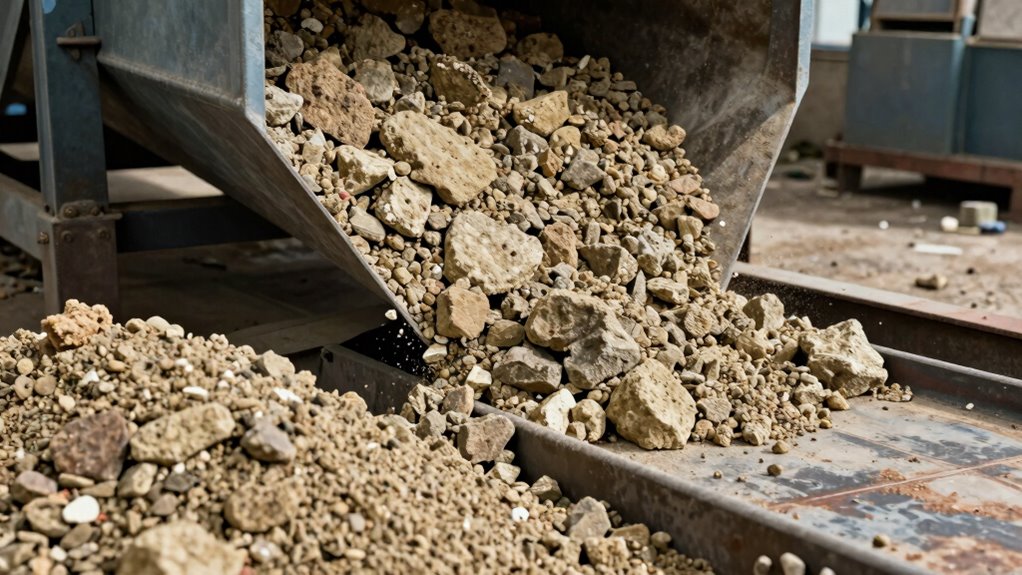

Bulk materials can perform worse than small batches because managing their storage, contamination risks, and quality control becomes more difficult at scale. Larger quantities are more susceptible to environmental fluctuations, moisture, and microbial growth, which can lead to spoilage or inconsistent performance. Handling and transfer pose additional contamination risks, making it harder to keep quality high. If you want to understand how these challenges impact performance, there’s more to explore below.

Get business pricing on tools and workshop supplies
- Business-only prices and quantity discounts
- Tax-exempt purchasing
- Multiple users, one account, clear invoices
Key Takeaways
- Larger quantities are more prone to environmental fluctuations that can degrade quality and performance.
- Bulk storage increases contamination risks, which can compromise the entire batch’s efficacy.
- Handling and transfer of large volumes heighten the chance of introducing foreign particles or microbes.
- Detecting and rectifying quality issues in bulk is more difficult and costly than in small batches.
- Maintaining consistent conditions across large batches is challenging, leading to uneven performance.
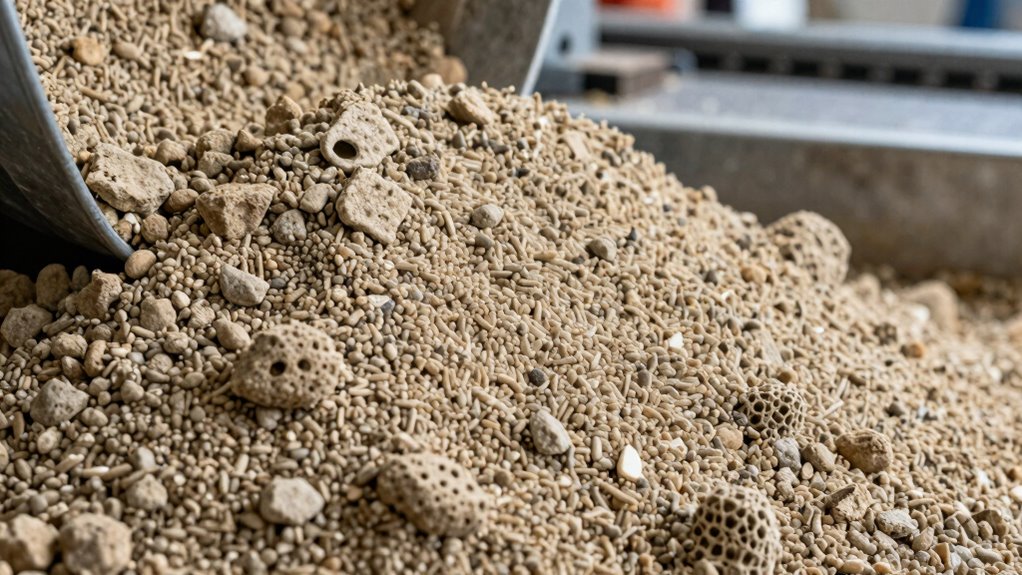
Have you ever wondered why larger quantities of materials sometimes underperform compared to smaller batches? It might seem counterintuitive—more material, more potential—but several factors come into play that can affect performance. One key aspect is storage conditions. When you store bulk materials, maintaining ideal environment parameters becomes more challenging. Larger quantities are more susceptible to temperature fluctuations, humidity changes, and exposure to light, all of which can degrade the quality of your materials over time. For example, moisture can seep into the bulk, causing clumping or spoilage, especially if the storage area isn’t properly sealed or climate-controlled. As the size of the batch increases, ensuring consistent storage conditions across the entire volume becomes a complex task, raising the risk of uneven quality. Additionally, proper storage management becomes increasingly critical as the batch size grows, to prevent deterioration and maintain quality. Proper handling procedures are essential to avoid inadvertent contamination during transfer or processing. Contamination risks also rise considerably with larger quantities. In small batches, if contamination occurs—say, due to a compromised container or contact with unclean surfaces—it’s easier to isolate and address the issue without affecting the entire supply. But with bulk materials, a single point of contamination can spread throughout the entire batch, compromising the quality of the whole lot. You might not notice early signs of contamination until it’s too late, especially if your storage setup isn’t designed to prevent cross-contamination. Dust, pests, microbial growth, or chemical impurities can all contaminate bulk supplies more readily, especially if the storage environment isn’t meticulously maintained. Moreover, contamination control becomes increasingly complex with larger volumes, requiring rigorous protocols and sanitation measures. Implementing quality assurance protocols is essential to identify issues early and prevent widespread problems. Proper handling techniques and contamination prevention strategies are crucial to safeguarding your materials. Additionally, handling large quantities increases the chance of introducing contamination during transfer or processing. Every time you move or manipulate bulk materials, there’s a risk of introducing foreign particles or microbes. Without proper protocols—such as sanitized equipment, controlled handling procedures, and protective coverings—you inadvertently heighten contamination risks. This can lead to inconsistent performance, compromised efficacy, or safety concerns. Furthermore, once contamination or deterioration occurs in a bulk supply, it’s often more difficult and costly to rectify. You may need to discard large portions of the material, which isn’t just wasteful but also impacts your operational efficiency. Small batches, on the other hand, allow for easier testing, quality control, and disposal if issues arise. This capacity for targeted management makes small-batch handling inherently safer and more reliable. In essence, the challenges of maintaining ideal storage conditions and preventing contamination risks grow exponentially with the size of your material batch. These factors help explain why sometimes, despite the apparent advantage of quantity, larger bulk materials underperform compared to smaller, more manageable batches.
bulk material storage containers
As an affiliate, we earn on qualifying purchases.
As an affiliate, we earn on qualifying purchases.
Frequently Asked Questions
How Does Particle Size Influence Material Performance?
Particle size greatly influences material performance by affecting surface area and particle aggregation. Smaller particles have a larger surface area, which can enhance reactivity or bonding, but also promote aggregation, reducing effectiveness. Larger particles tend to resist aggregation, maintaining consistent flow and performance. You need to balance particle size to optimize surface interactions, minimize unwanted aggregation, and guarantee the material’s desired properties are achieved efficiently.
What Manufacturing Processes Favor Small-Batch Over Bulk Materials?
You prefer small-batch manufacturing processes like complex mixing because they allow you to maintain higher quality consistency and control. These methods enable precise ingredient blending, reducing variability and ensuring uniformity. Small batches help you detect issues early, adjust formulations quickly, and achieve better overall performance. In contrast, bulk materials often pose challenges in maintaining quality, making small-batch approaches ideal for delicate or complex products where precision is essential.
Are There Specific Industries Where Bulk Materials Underperform?
In industries like aerospace and electronics, bulk materials often underperform due to supply chain complexities and cost efficiency issues. You might face challenges with quality control, storage, and transportation of large quantities, which can lead to delays or defects. Small-batch production gives you better flexibility, reduces waste, and guarantees higher quality, making it more suitable when precision and rapid adjustments are vital for your operations.
How Do Storage Conditions Affect Bulk Versus Small-Batch Materials?
Storage conditions considerably impact bulk and small-batch materials differently. You might notice bulk materials are more vulnerable to contamination risks and reduced storage stability due to their larger volume and surface exposure. Proper storage, such as controlled temperature and humidity, helps maintain their quality. Small batches, being more manageable, often have less exposure and easier to monitor, which preserves their integrity longer and minimizes performance issues.
What Testing Methods Best Compare Bulk and Small-Batch Material Quality?
Think of testing like inspecting a ship’s hull; you need thorough methods. You should use moisture absorption tests to gauge how bulk and small-batch materials handle humidity, and surface contamination analysis to detect external pollutants. Techniques like gravimetric testing, surface microscopy, and spectroscopic analysis provide detailed insights. These methods help you compare quality effectively, ensuring your materials withstand environmental factors and maintain performance, much like a well-maintained vessel steering through rough seas.
climate-controlled storage for bulk supplies
As an affiliate, we earn on qualifying purchases.
As an affiliate, we earn on qualifying purchases.
Conclusion
So, next time you notice bulk materials underperforming, remember that sometimes, less really is more. The bigger batch might seem efficient, but it can hide subtle flaws or overlooked details. Small-batch approaches often reveal nuances that bulk methods miss, guiding you toward better insights. Embrace the idea that in some cases, a gentle touch or a more refined process can reveal hidden potential, reminding you that patience and precision often lead to the most rewarding results.
contamination-proof bulk storage bins
As an affiliate, we earn on qualifying purchases.
As an affiliate, we earn on qualifying purchases.
bulk material handling equipment
As an affiliate, we earn on qualifying purchases.
As an affiliate, we earn on qualifying purchases.
Halloween Picks
halloween
As an affiliate, we earn on qualifying purchases.