To build a handmade look without chaos, embrace imperfections with purpose—add subtle rough edges and textured accents that signal craftsmanship. Stick to a limited, harmonious color palette and select quality materials that age well. Balance intricate handcrafted details with clean, structured lines, and use consistent spacing to keep everything organized. Incorporate negative space to highlight key features and avoid clutter, creating a warm, authentic space you’ll love—discover more ways to perfect your style as you go.
Key Takeaways
- Incorporate subtle handcrafted textures and intentional imperfections, like uneven lines or rough edges, to add authenticity without clutter.
- Limit color palettes to harmonious neutrals and core shades to maintain a cohesive, clean aesthetic.
- Balance intricate handcrafted details with sleek, structured lines to prevent visual overwhelm.
- Use precise alignment tools and ample negative space to organize elements and keep the design tidy.
- Keep decorative accessories minimal and purposeful, highlighting craftsmanship without overcrowding.
Embrace Imperfection With Purposeful Choices

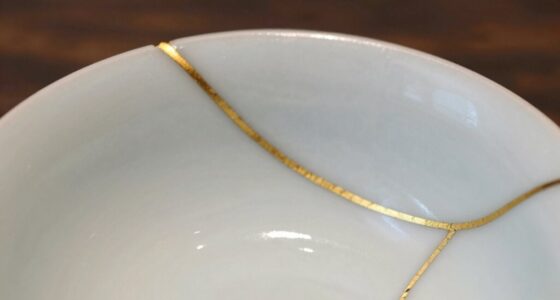
Even if you’re aiming for a handmade look, embracing imperfection can actually make your project more authentic and charming. Incorporate rough edges intentionally—these subtle flaws add character and a sense of craftsmanship. Asymmetrical shapes, when used purposefully, create visual interest and break the monotony of perfect symmetry. Don’t worry about perfection; instead, focus on highlighting intentional imperfections. Slightly uneven lines or irregular shapes can make your work feel more personal and unique. This mindset aligns with craftsmanship principles, which emphasize skill and artistry over flawlessness. Recognizing the value of authenticity helps you craft designs that resonate on a deeper level. Embracing imperfection as a deliberate choice allows you to convey personality and authenticity in your work. This approach allows you to celebrate craftsmanship without it appearing messy. By choosing to highlight these natural imperfections, you craft an authentic aesthetic that feels warm and inviting. Incorporating intentional flaws can also help you develop a distinctive style that stands out. Additionally, understanding the Gold IRA markets can inspire confidence in choosing genuine, high-quality materials for your projects, ensuring durability and value. Remember, the goal is to make imperfections work for you, not against you.
Use a Limited Color Palette for Cohesion
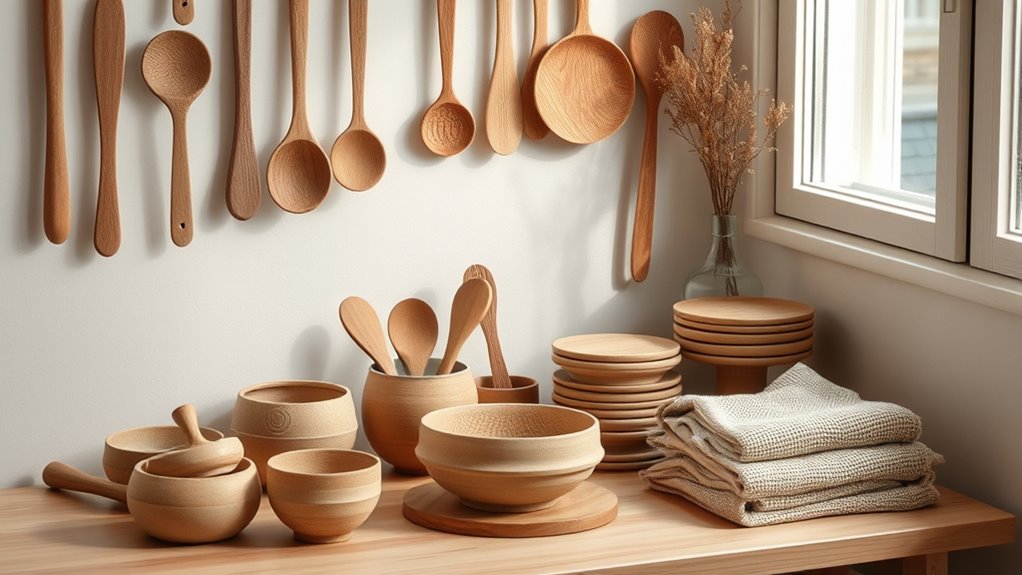
Choosing a limited color palette helps create a unified, polished look. Stick to a few harmonious colors to keep your project feeling intentional and cohesive. This simple step prevents chaos and guarantees your handmade elements look deliberate and refined. Incorporating outdoor‑kitchen essentials with a consistent color scheme can further enhance the overall aesthetic. Additionally, using a cohesive color palette ensures that all your handmade decor elements work seamlessly together for a more sophisticated appearance. Selecting colors based on color theory can also guide you in creating pleasing combinations that elevate your design.
Select Harmonious Colors
How can you create a cohesive handmade look without overwhelming your design? The key lies in selecting harmonious colors that work well together. Focus on color harmony to ensure your palette feels balanced and pleasing to the eye. Choose colors that complement each other, such as analogous or monochromatic schemes, to maintain visual flow. Avoid using too many contrasting shades, which can create a chaotic appearance. Instead, stick to a limited set of hues that evoke a unified feel. This approach helps your handmade elements stand out without seeming cluttered. By thoughtfully choosing harmonious colors, you guide the viewer’s eye smoothly across your project, creating a polished yet approachable handmade aesthetic. Incorporating color accuracy in your palette ensures that your handmade design truly reflects your intended style and mood. When considering techniques like visual cues, you can further enhance the cohesion of your project while maintaining a handmade charm. Additionally, paying attention to backyard transformation essentials can inspire subtle natural accents that complement your color scheme. Ensuring proper water management can also help maintain the integrity of your handmade materials over time.
Limit Your Palette
Using a limited color palette is one of the simplest ways to create a cohesive handmade look. It enhances color harmony and guides the viewer’s eye smoothly across your project, establishing a clear visual flow. To achieve this, consider these steps:
- Select 2-4 core colors that complement each other well.
- Stick to shades and tints of these colors to add variety without chaos.
- Use neutral tones as balancing elements to prevent overwhelm.
- Limit your color choices in each section to maintain focus and unity.
- Incorporate color coordination techniques to further unify your design and ensure a polished, handmade appearance.
Incorporate Textural Elements for Depth

Adding textural elements can instantly give your handmade look more depth and visual interest. By mixing different textures, you create visual contrast and tactile layering that keeps your design engaging without appearing cluttered. Incorporate materials like burlap, knit fabrics, or rough wood alongside smooth ceramics or glass to enhance dimension. To illustrate, consider this simple breakdown:
| Material Type | Texture Style | Effect |
|---|---|---|
| Burlap | Rough, fibrous | Adds rustic, tactile contrast |
| Knit fabric | Soft, cozy | Introduces warmth and depth |
| Smooth ceramic | Sleek, polished | Balances rough textures |
| Natural wood | Grainy, organic | Creates tactile layering |
Through careful selection, you emphasize tactile contrast while maintaining harmony, avoiding messiness. Incorporating textural variety and understanding material contrast is essential to achieving a cohesive, handcrafted aesthetic that feels deliberate and refined. Additionally, using Suprem fabric, which combines durability with softness, can enhance the tactile richness of your designs. Recognizing the importance of material harmony helps in blending contrasting textures seamlessly for a polished, handcrafted look. Incorporating layering techniques can further elevate the depth of your design by thoughtfully combining textures in a way that feels intentional and balanced.
Select Quality Materials Over Quantity
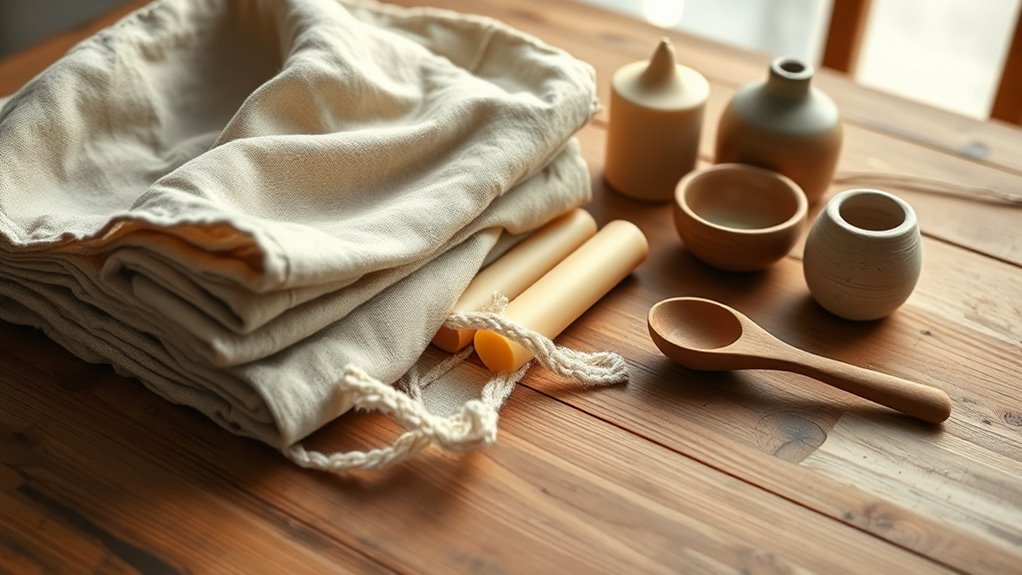
Focusing on quality materials rather than quantity guarantees your handmade look remains polished and intentional. High-quality materials ensure better material durability and a cohesive appearance. When choosing supplies, consider these key factors:
Prioritize quality over quantity for a polished, durable, and cohesive handmade look.
- Opt for durable fabrics and finishes that withstand wear and tear. Material longevity is essential to maintain the aesthetic over time.
- Prioritize materials with natural color harmony to create visual consistency.
- Select well-crafted items that show attention to detail and craftsmanship.
- Avoid overloading your project with numerous cheap components; instead, invest in fewer, better pieces.
- Incorporate proper ventilation considerations to maintain the integrity of your materials over time.
- Paying attention to material sustainability can also enhance the overall quality and appeal of your handmade projects.
- Understanding material composition helps in selecting the most suitable options for your specific project needs.
Balance Handcrafted Details With Clean Lines
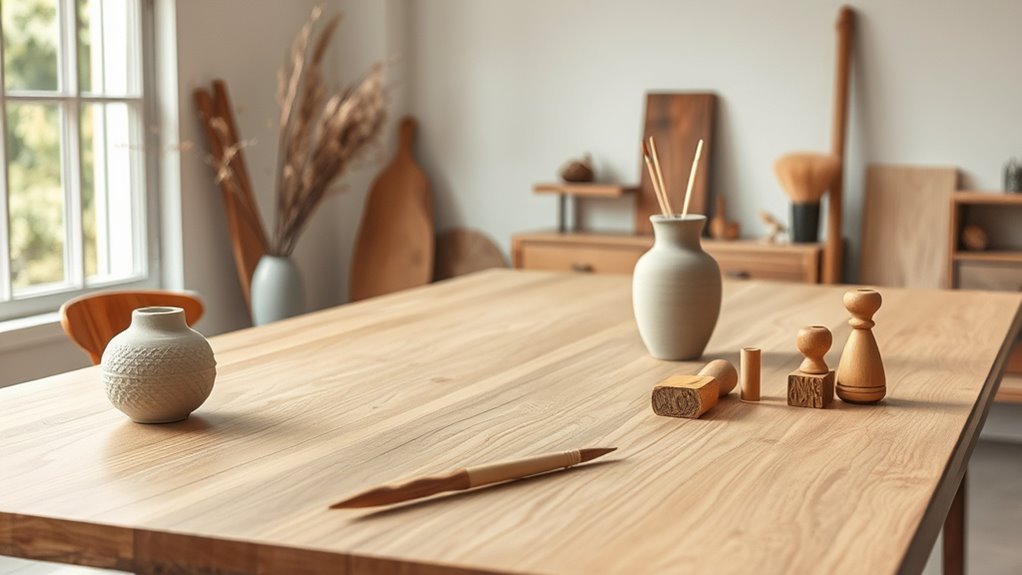
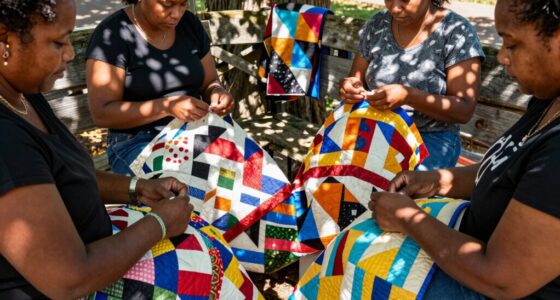
To achieve a polished handmade look, it is essential to balance intricate details with clean, simple lines. Incorporate handmade textures to add depth and authenticity without overwhelming the design. For example, opt for furniture or decor with subtle, crafted accents that highlight craftsmanship but maintain a sleek silhouette. This contrast allows you to showcase artistry while ensuring the overall aesthetic remains refined and uncluttered. Keep surfaces free of excessive ornamentation, and choose a neutral color palette to emphasize the handcrafted elements. By blending detailed textures with streamlined shapes, you create a space that feels thoughtfully curated rather than chaotic. The key is to let handcrafted details stand out by pairing them with clean lines, achieving a sophisticated yet approachable handmade vibe. Remember, balanced design is essential in creating a welcoming, polished look that celebrates craftsmanship without sacrificing elegance.
Maintain Consistent Spacing and Alignment

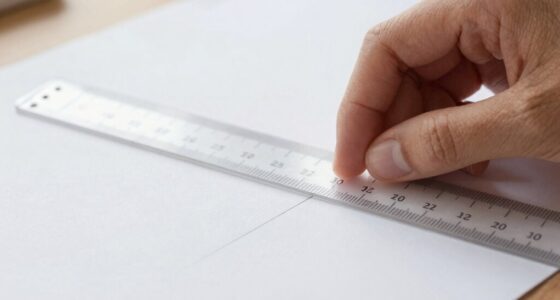
Using a grid or guides helps keep your elements aligned and evenly spaced. Regularly editing for consistent gaps guarantees your design looks intentional, not cluttered. This attention to detail makes your handmade look neat and cohesive. Incorporating visual harmony principles ensures your layout remains balanced and pleasing to the eye.
Use Grid or Guides
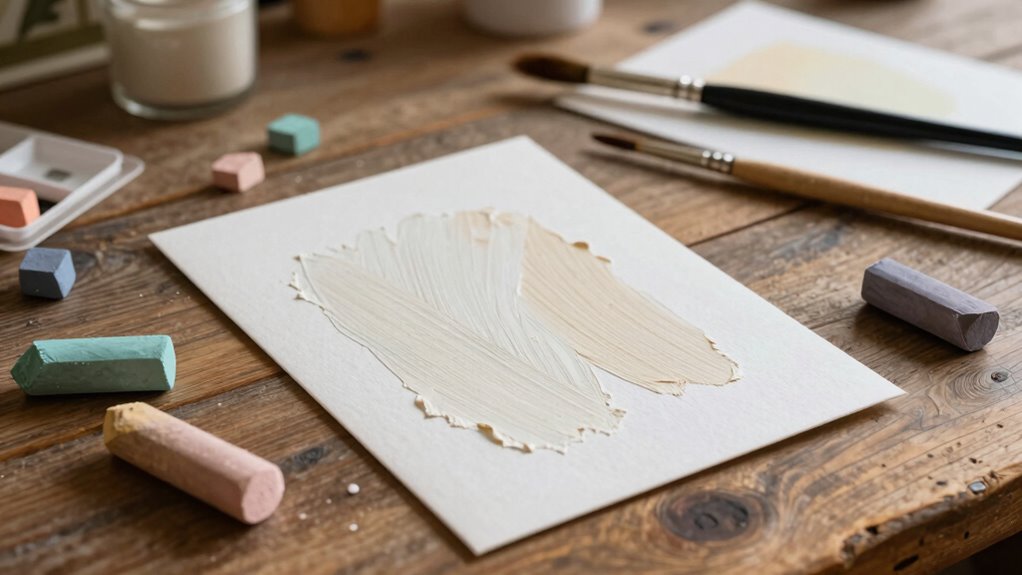
Implementing grids or guides is essential for maintaining consistent spacing and alignment when creating a handmade look. These tools help you keep brush stroke textures and handmade typography cohesive, avoiding chaotic results. To make the most of them:
- Use grid lines to align elements, ensuring uniform spacing between brush strokes.
- Apply guides for positioning text and graphics, maintaining visual balance.
- Lock guides in place to prevent accidental shifts during editing.
- Regularly check alignment against your grid to preserve the handmade feel without sacrificing precision.
Edit for Even Gaps
Even gaps can make or break the handmade look, so it’s important to carefully edit your spacing to achieve consistency. Use digital tools like alignment guides or grid overlays to spot uneven gaps easily. Aim for minimalist design principles by maintaining simple, uniform spacing between elements. Adjust the spacing so that gaps are even across your layout, creating a cohesive and intentional feel. Small differences in gaps can make your work look inconsistent or cluttered, so take the time to fine-tune each one. Consistent gaps give your design a polished, handcrafted appearance without looking messy. Remember, subtle variations in spacing can add charm, but overall, aim for evenness to keep the handmade aesthetic clean and deliberate.
Incorporate Negative Space for Clarity
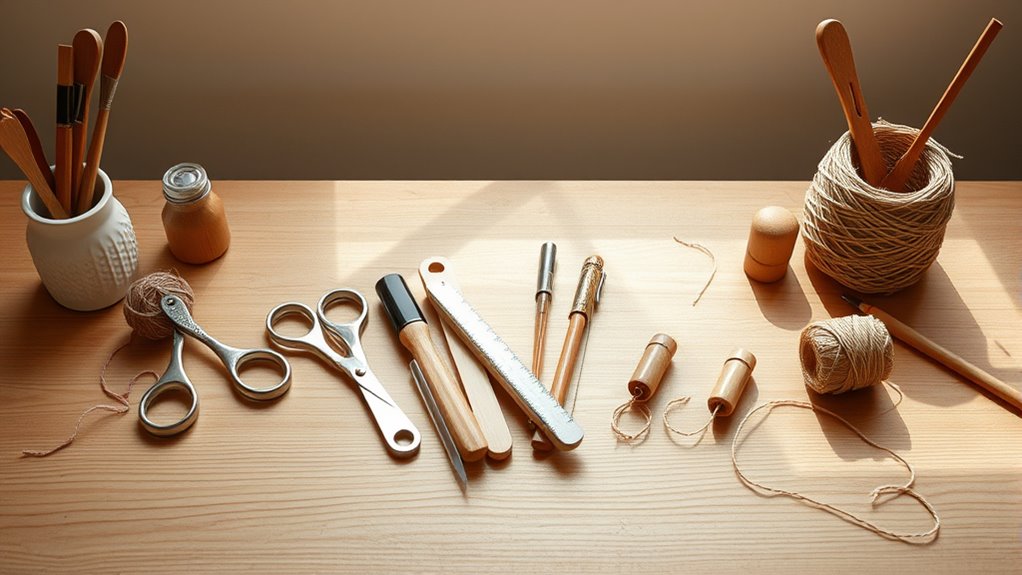
Incorporating negative space into your design helps create a clean, balanced look that guides the viewer’s eye and emphasizes your key elements. Negative space allows your design to breathe, enhancing visual clarity. To effectively use negative space:
Effective use of negative space creates a clean, balanced design that highlights your key elements and enhances clarity.
- Prioritize simplicity by removing unnecessary elements that clutter your layout.
- Use ample margins and padding around focal points to draw attention.
- Balance filled and empty areas to prevent overwhelm and maintain harmony.
- Highlight important features by surrounding them with sufficient negative space.
This approach ensures your handmade aesthetic remains clear and intentional, preventing the design from feeling chaotic. Emphasizing negative space helps your craftsmanship stand out without sacrificing the authenticity of a handmade feel.
Limit Clutter to Highlight Key Features
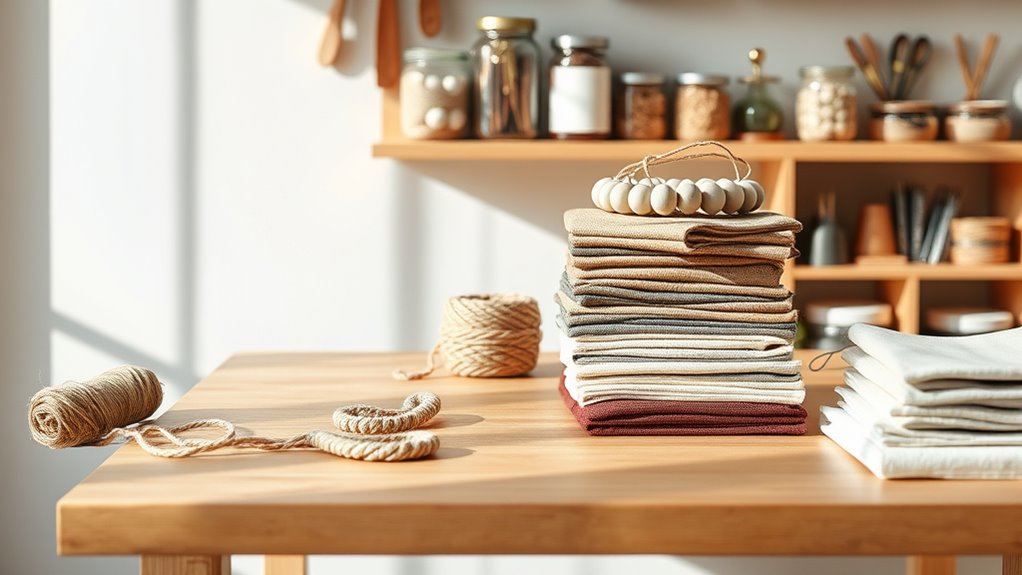
To make your key features stand out, it’s essential to limit clutter in your design. Keep decorative accessories minimal and purposeful, selecting only a few meaningful pieces. Avoid overcrowding surfaces with too many items; instead, choose a few standout decorative accessories that draw attention. Incorporate unconventional materials thoughtfully—use them as focal points or accents rather than filling every space. Clear surfaces and organized displays help highlight your main features, giving your space a curated, handmade feel without appearing messy. When you focus on quality over quantity, each element can shine. Limiting clutter creates visual breathing room, emphasizing the craftsmanship behind your design and making your handmade look feel intentional and polished.
Frequently Asked Questions
How Can I Intentionally Incorporate Imperfections Without Making My Space Look Messy?
You can intentionally incorporate imperfections by choosing pieces with subtle flaws or distressed finishes, adding character without chaos. Mix curated clutter thoughtfully—you might layer different textures or patterns, but keep a balance so it looks deliberate. Use asymmetry for visual interest, ensuring each imperfection is purposeful. This approach creates a handmade feel, making your space inviting and authentic without appearing messy or uncontrolled.
What Are Some Examples of a Cohesive Limited Color Palette?
A cohesive limited color palette is like a well-orchestrated symphony. You can use monochromatic schemes, choosing shades of the same color for harmony, or opt for analogous colors, which sit next to each other on the color wheel for a natural flow. For example, soft blues and teals create a calming, unified look, while warm oranges and reds evoke energy. Stick to these palettes to keep your space visually cohesive without clutter.
How Do I Choose Textures That Complement Each Other Without Overwhelming the Design?
To choose textures that complement each other, focus on texture pairing and pattern coordination. Mix smooth, matte finishes with tactile, textured surfaces to add depth without clutter. Balance busy patterns with calmer, solid textures, ensuring they don’t compete. Keep the overall look cohesive by sticking to a limited color palette and varying textures strategically, so each element enhances the handmade vibe without overwhelming your space.
What Are Key Indicators of Quality Materials for a Handmade Aesthetic?
Think of quality materials as the heart of your handmade aesthetic. You’ll spot natural fibers like linen, wool, or cotton, which offer authenticity and texture. Artisanal finishes—such as hand-stitched details or matte paints—also signal craftsmanship. These indicators show your piece is crafted with care, adding depth without clutter. Trust these signs, and your work will radiate genuine charm and timeless quality.
How Can I Maintain Visual Balance When Mixing Handcrafted and Modern Elements?
To maintain visual balance when mixing handcrafted and modern elements, you should focus on creating harmony through contrast. Use a neutral color palette to unify different styles, and vary textures to add interest without overwhelming the space. Balance larger, modern pieces with smaller, handcrafted accents, ensuring each element complements the other. Keep a consistent rhythm, so the visual contrast feels intentional rather than chaotic, resulting in a cohesive, balanced look.
Conclusion
By thoughtfully blending deliberate imperfections with refined details, you create a handmade aesthetic that feels both authentic and polished. Embrace subtle nuances, like understated textures and carefully curated simplicity, to evoke craftsmanship without overwhelming. Remember, restraint is often the true mark of artistry. With a keen eye for balance and harmony, you’ll craft a look that subtly celebrates the beauty of imperfection—an elegant affirmation to your refined handmade touch.