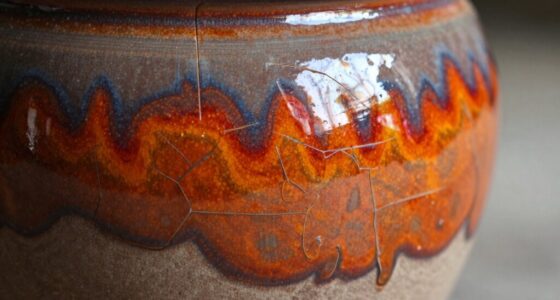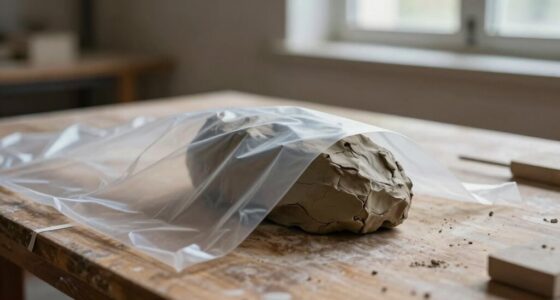
Rushing the bisque stage secretly weakens your pottery by trapping hidden moisture inside, which can cause cracks, warping, or even explosions during firing. When you speed up drying or firing processes, the clay doesn’t have enough time to release moisture properly, leading to structural issues that you might not notice until it’s too late. Patience is key, and if you keep going, you’ll discover how careful timing saves your pieces from disaster.

Get business pricing on tools and workshop supplies
- Business-only prices and quantity discounts
- Tax-exempt purchasing
- Multiple users, one account, clear invoices
Key Takeaways
- Rushing can trap residual moisture, leading to cracks or explosions during firing.
- Rapid heating prevents proper moisture escape, weakening the pottery’s structure.
- Incomplete drying causes warping, cracking, and surface defects in the final piece.
- Hasty firing increases the risk of thermal shock and stress fractures.
- Lack of patience undermines long-term durability and aesthetic quality of the pottery.
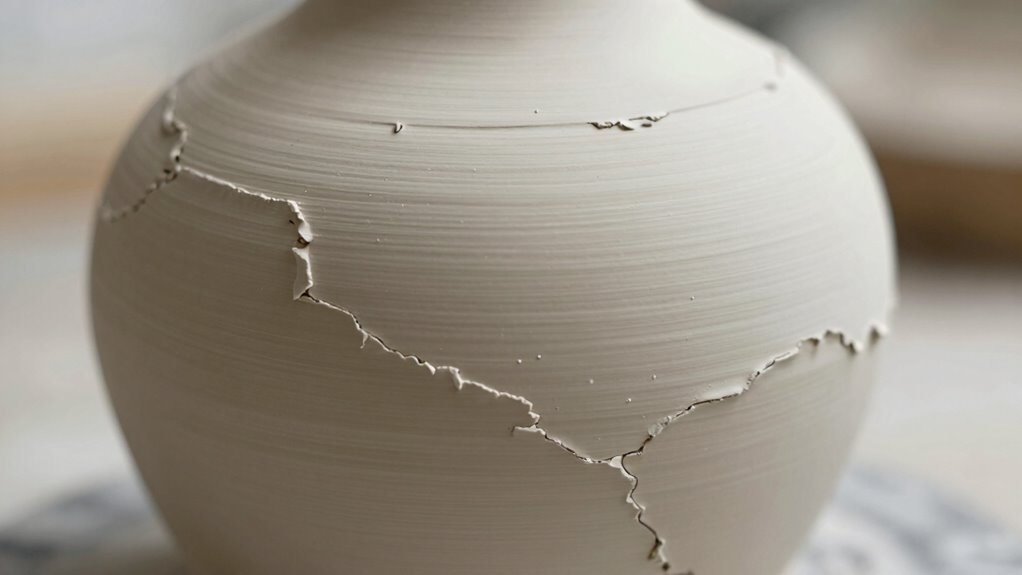
Rushing the bisque stage might seem like a way to save time, but it can secretly sabotage your entire pottery project. When you hurry through this critical phase, you risk compromising the quality of your finished piece. The key to a successful bisque firing lies in maintaining proper clay consistency and temperature control, and rushing can throw both of these factors off balance. If your clay isn’t just right—neither too wet nor too dry—it won’t behave predictably during firing. When you push the process, you might leave the clay too moist, which can lead to warping or even cracking as moisture escapes unevenly. Conversely, if the clay becomes too dry because you’re impatient, it loses its plasticity, making it fragile and prone to breakage. Achieving the right clay consistency takes patience; rushing it means you might skip crucial drying steps or ignore subtle signs that the piece isn’t ready. Proper drying also involves monitoring moisture content, which is essential for preventing issues during firing. Additionally, clay plasticity plays a critical role in how well the piece withstands the firing process, emphasizing the importance of patience. Proper temperature control is equally vital during bisque firing. When you rush the process, you often increase the heat prematurely or set the kiln to a higher temperature than appropriate. This can cause uneven heating, leading to stress within the clay body. When temperature ramps up too quickly, the moisture inside the clay can vaporize too rapidly, resulting in cracks or even explosions in the kiln. Proper temperature control involves gradual heating, allowing moisture to escape safely and the clay to mature evenly. Rushing this step disregards these principles, risking structural weaknesses and surface defects. It’s tempting to want to finish quickly, but ignoring the importance of controlled heating can ruin your piece before it even reaches its final form. Additionally, rushing through the bisque stage often leads to neglecting the importance of patience in drying. You might think your piece is dry enough because it feels firm to the touch, but residual moisture can still be lurking inside. This unseen moisture can cause severe problems during firing, including cracks or explosions. Taking the time to ensure your pottery is thoroughly dried at a steady, controlled pace is essential for avoiding these hazards. When you respect the natural drying process and temperature control, you give your pottery the best chance to develop strength and durability. It’s also important to note that proper kiln loading can influence the evenness of the firing process, further underscoring the need for patience and precision. Recognizing the importance of consistent firing schedules is essential to prevent thermal shock and other defects. Moreover, understanding proper cooling procedures is critical for minimizing the risk of stress fractures in the finished piece. Ultimately, rushing the bisque stage might seem like a shortcut, but it’s a false economy. By prioritizing proper clay consistency and temperature control, you safeguard your work from cracks, warping, and other defects. Patience during this phase isn’t just a virtue—it’s an investment in the quality and longevity of your pottery. If you want your finished pieces to stand the test of time, don’t cut corners at this stage. Instead, embrace the process, and your efforts will be reflected in the strength and beauty of your final product.
bisque kiln temperature controller
As an affiliate, we earn on qualifying purchases.
As an affiliate, we earn on qualifying purchases.
Frequently Asked Questions
How Can I Tell if My Bisque Firing Is Successful?
You can tell if your bisque firing is successful by checking if your clay has shrunk evenly and feels fully dry without cracks or warping. Make sure the kiln reached the right temperature, typically around bisque firing temperature, and that the clay’s shrinkage is consistent with your expectations. If the piece sounds hollow when tapped and exhibits a matte, chalky surface, your bisque firing likely succeeded.
What Are Common Signs of Rushing the Bisque Stage?
If you’re rushing the bisque stage, you might notice uneven glaze compatibility or cracking due to improper drying. Signs include warping, pinholes, or surface defects, often caused by firing at too high a temperature too quickly. Rushing prevents even moisture evaporation, risking damage. To avoid this, guarantee gradual temperature increases, proper drying, and monitor firing temperature closely for a successful bisque firing.
Does Bisque Firing Affect Glaze Adhesion?
Think of bisque firing as setting a sturdy foundation for a house. If you rush it, the structure might crack or shift. Yes, bisque firing affects glaze adhesion because it influences glaze compatibility and firing temperature. Properly firing your bisque at the right temperature guarantees the surface is adequately porous, helping glazes bond well and preventing defects. Skimping on this step risks weak adhesion and uneven finishes.
How Long Should I Wait Before Applying Glaze After Bisque Firing?
You should wait until your piece has cooled completely after bisque firing before applying glaze. This allows for temperature consistency and prevents thermal shock, which can cause cracks. Make certain your kiln is well-calibrated to achieve accurate firing temperatures, reducing the risk of uneven cooling. Rushing this process can compromise glaze adhesion and surface quality. Patience ensures your bisque piece is ready for a smooth, successful glazing application.
Can I Fix a Bisque Firing That Went Wrong?
Yes, you can fix a bisque firing that went wrong, but timing is critical. As the kiln cools, check the temperature carefully; if it’s too high or uneven, you might need to re-fire. Sometimes, cooling too quickly causes cracks or warping. Carefully examine your pieces, and if needed, slowly reheat in a controlled environment to stabilize the temperature, giving your pottery a second chance.
As an affiliate, we earn on qualifying purchases.
Conclusion
Rushing the bisque stage might seem like saving time, but it often hides bigger issues. When you skip patience, you risk trapping unseen cracks or weak spots that could ruin your piece later. Sometimes, slowing down is the real shortcut—giving the clay time to mature guarantees durability and beauty. Trust the process, even when it feels slow. Because in pottery, as in life, rushing often masks the deeper truths waiting to be revealed through patience.
ceramic kiln temperature monitor
As an affiliate, we earn on qualifying purchases.
As an affiliate, we earn on qualifying purchases.
As an affiliate, we earn on qualifying purchases.
Fall yard work Picks
leaf blowers
As an affiliate, we earn on qualifying purchases.