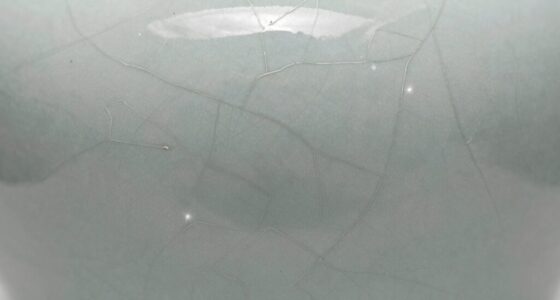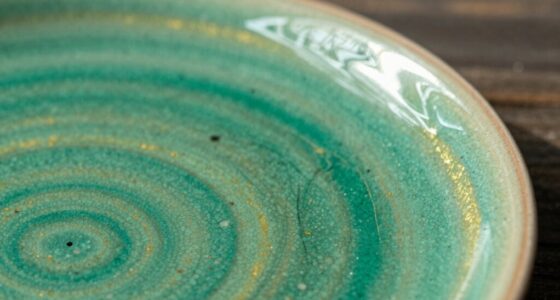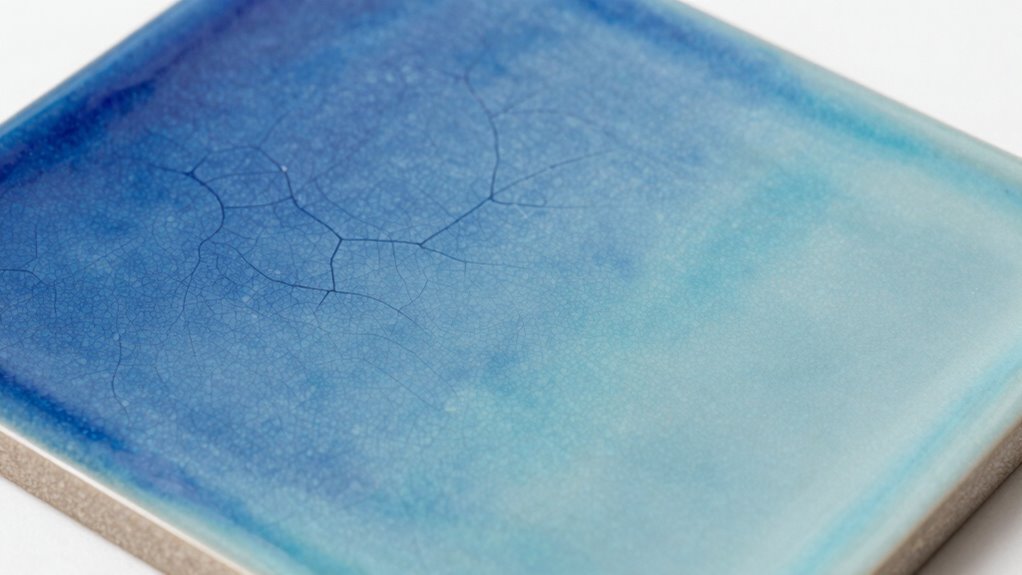

Using test tiles helps you see how your glaze responds to different firing temperatures, preventing surprises with unexpected color shifts. Firing temperature, chemistry, and atmosphere can all change your glaze’s final look, so testing small batches allows you to observe these effects firsthand. By experimenting with test tiles, you can fine-tune your firing schedule and chemistry for consistent, predictable results. Keep exploring to discover how mastering this process can improve your glazing outcomes.
Key Takeaways
- Test tiles reveal how glaze colors change at different firing temperatures, preventing unexpected shifts in final results.
- They help identify the ideal firing schedule to achieve consistent, desired glaze colors.
- Testing small batches allows you to understand chemical reactions and avoid surprises in main work.
- Test tiles enable you to fine-tune variables like cooling rate and atmosphere that affect color development.
- Using test tiles builds confidence and accelerates learning, reducing risks of unpredictable glaze outcomes.

Have you ever noticed how the color of your glazed pottery can change after firing? It’s a common experience among ceramic artists, and understanding why this happens can save you a lot of frustration. The key factors influencing glaze color shifts are firing temperature and glaze chemistry. When you’re working on a piece, you might have a specific color in mind, but during the firing process, those colors can morph unexpectedly. That’s where test tiles come into play—they act as your mini laboratory, helping you predict how your glaze will behave under certain conditions.
Firing temperature is one of the most critical elements affecting glaze color. Each glaze formula has an ideal temperature range where its intended color and finish develop best. If you fire too hot or too cool, even slightly, it can cause dramatic shifts in hue. For example, a glaze that looks vibrant and bright at a lower temperature may turn dull or change to a different shade altogether when fired at a higher temperature. That’s because the chemical reactions within the glaze are temperature-sensitive. When you use test tiles at different firing temperatures, you can observe how your glaze responds, enabling you to fine-tune your firing schedule for consistent results.
Firing temperature crucially influences glaze color and finish development.
Glaze chemistry also plays a significant role in color shifts. Different oxides and fluxes in your glaze formulation react uniquely at various temperatures, influencing the final color. For instance, adding certain metal oxides like copper or cobalt can produce vibrant greens or blues, but their appearance depends heavily on the firing environment and temperature. Variations in glaze chemistry can cause unexpected results if you’re not careful. By testing small batches on tiles, you can see how these chemical interactions develop before committing to larger pieces. This proactive approach minimizes surprises and helps you achieve the desired color more reliably.
Using test tiles allows you to experiment with different firing temperatures and glaze recipes without risking your main piece. It’s a smart way to understand how your specific glaze chemistry behaves under various conditions. Over time, you’ll gain insight into how factors like cooling rate or atmosphere influence the final color. This knowledge helps you control the firing process more precisely, reducing unpredictable color shifts in your finished work. Ultimately, test tiles aren’t just about troubleshooting—they’re an essential part of developing your skill and confidence in glaze application and firing.
In addition, understanding glaze color shifts can significantly improve your ability to predict outcomes and achieve consistent results.
Amazon Product B0BWYJWPG9
As an affiliate, we earn on qualifying purchases.
Frequently Asked Questions
How Do Lighting Conditions Affect Glaze Color Perception?
Lighting conditions profoundly affect your glaze color perception. In different lighting, your eyes interpret colors differently, impacting color accuracy. Natural daylight shows true hues, while incandescent or fluorescent lighting can cast warm or cool tones that alter how you see glaze shades. To guarantee consistent results, always check your test tiles under various lighting conditions. This helps you anticipate how your glazes will look in their final environment, avoiding surprises.
Can Glaze Color Shifts Vary Between Different Kiln Firing Atmospheres?
Oh, absolutely! Your glaze’s color can do the cha-cha with different kiln atmospheres, thanks to changes in kiln atmosphere and glaze chemistry. If you fire in oxidation, your glaze might glow happily, but in reduction, it could turn mysterious or moody. Each atmosphere tweaks the chemistry, causing unpredictable color shifts. So, testing tiles in your specific kiln atmosphere is vital to avoid surprises and keep your artistic vision intact.
Are There Specific Clay Bodies That Influence Glaze Color Stability?
Certain clay bodies can influence glaze color stability because their composition affects how glazes interact and mature during firing. If you choose a clay body with a high silica or alumina content, it may help maintain consistent glaze colors, reducing shifts. Understanding clay body influence allows you to select materials that promote glaze stability, ensuring your finished pieces match your expectations and minimizing unexpected color changes during firing.
How Does Application Thickness Impact Final Glaze Color?
You should know that applying a thicker layer of glaze can deepen its color, with some glazes becoming up to 30% darker. Application thickness directly impacts final glaze color, especially with opaque glazes, which tend to hide underlying clay bodies. Thicker coats increase opacity, resulting in richer, more saturated hues, while thinner layers produce lighter, more translucent finishes. Adjusting application thickness allows you to control the final look with precision.
Can Environmental Factors During Firing Cause Unpredictable Color Changes?
Environmental factors during firing, like temperature variations and kiln atmosphere, can cause unpredictable color changes. Firing temperature fluctuations affect glaze chemical interactions, leading to unexpected shifts in color. You should monitor and control kiln conditions closely, as even slight inconsistencies can impact the final appearance. Testing your glaze on tiles beforehand helps you understand how these environmental factors influence color, saving you surprises in your finished pieces.
Amazon Product B0DT8PV51T
As an affiliate, we earn on qualifying purchases.
Conclusion
By testing your glazes beforehand, you’re playing it safe and avoiding surprises down the road. Test tiles give you a clear preview of how your glaze will look once fired, saving you from any last-minute surprises. Think of them as your secret weapon—helping you dodge a bullet and get the perfect finish every time. Remember, a little preparation now can save you from a world of hurt later, so don’t skip the test tiles!
Amazon Product B0CGRKMT3F
As an affiliate, we earn on qualifying purchases.
Amazon Product B0DB887MCD
As an affiliate, we earn on qualifying purchases.