To tell if your clay is too wet or too dry, use the feel test by touching it with your fingers. If it feels sticky, slippery, and leaves residue, it’s too wet and needs to be kneaded or aired out. If it’s dry, crumbly, and cracks easily, it’s too dry and needs a splash of water and thorough kneading. Mastering this simple test helps guarantee your clay is just right for shaping—keep exploring to learn more.

Get business pricing on tools and workshop supplies
- Business-only prices and quantity discounts
- Tax-exempt purchasing
- Multiple users, one account, clear invoices
Key Takeaways
- Wet clay feels sticky, slippery, and leaves residue, indicating excessive moisture needing drying or kneading.
- Dry clay is crumbly, cracks easily, and resists shaping, signaling a need for gradual water addition.
- Proper clay should feel supple, smooth, and slightly moist for optimal workability and shape retention.
- The feel test helps prevent deformation or cracking by ensuring the right moisture balance before shaping.
- Adjust moisture gradually through kneading or drying to achieve the ideal texture for smooth, workable clay.
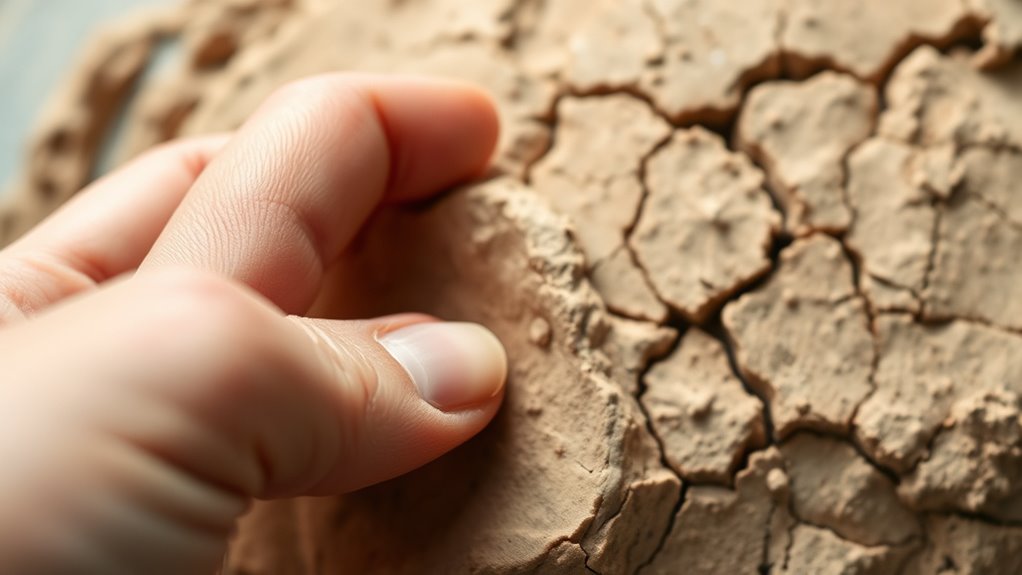
When working with clay, knowing how it feels can tell you a lot about its moisture content and workability. The feel test is a straightforward way to assess whether your clay is suitable for shaping or needs adjustment. To perform this test, you rely on texture assessment—judging how the clay responds to your touch helps you determine if it’s too wet, too dry, or just right. Moisture content directly influences how easily the clay can be molded, smoothed, and finished. Too much moisture makes the clay slippery and overly pliable, risking deformation or collapse during shaping. Too little moisture results in a stiff, crumbly consistency that’s difficult to manipulate.
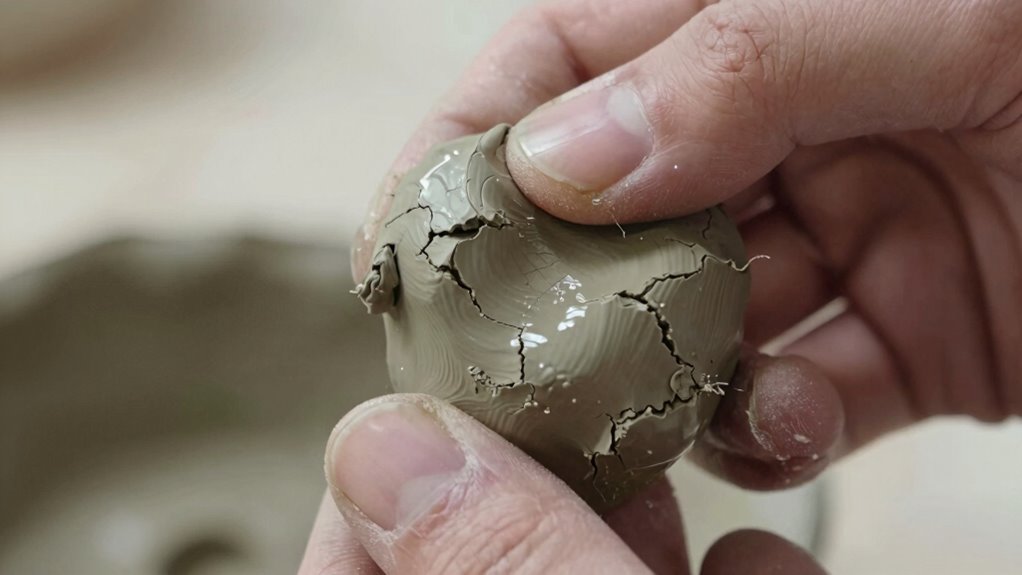
To get started, take a small piece of clay and knead it gently in your hands. If it feels sticky, wet, or slippery, it indicates high moisture content. You might notice it leaving a residue on your fingers, or it may seem overly soft and easily deform under gentle pressure. This texture assessment signals that the clay is too wet. In contrast, if your clay feels dry, crumbly, or cracks easily when you try to smooth it, it’s likely too dry. It may resist shaping or break apart when you attempt to mold it. In this state, the clay lacks the necessary plasticity for effective work. When you find the right moisture content, the clay should feel supple, smooth, and slightly moist but not sticky. It should respond to your touch by holding its shape without excessive deformation or cracking.
Adjusting moisture content based on texture assessment is simple. If the clay feels too wet, you can let it sit uncovered for a little while to allow excess moisture to evaporate. Alternatively, you can knead in a small amount of dry clay or absorbent material like fine sand or grog to reduce moisture. If it’s too dry, add a few drops of water and knead thoroughly until it reaches a more workable consistency. Keep in mind that gradual adjustments work best—adding water or drying out the clay too quickly can cause unwanted changes in texture and workability. Additionally, understanding the importance of moisture control helps you maintain optimal clay consistency for your projects.
Over time, with experience, you’ll develop a keen sense of texture assessment, enabling you to judge moisture content accurately by feel. The more familiar you become with how clay should feel at different moisture levels, the better you’ll be at preparing it for your projects. Remember, the key is to maintain a balance—clay that’s just moist enough to be pliable is ideal. Using your sense of touch to gauge moisture content helps ensure your clay is always ready for shaping, whether you’re creating delicate sculptures or functional pottery.
Popular right now

Shark AI Ultra Robot Vacuum with Self-Empty Base

LG 85-inch QNED75B Mini LED Smart TV Bundle with HDMI and CPS Protection Plan

De'Longhi Stilosa Compact Manual Espresso Machine with Milk Frother
As an affiliate, we earn on qualifying purchases.
Frequently Asked Questions
How Can I Fix Clay That’s Too Wet?
To fix clay that’s too wet, start by letting it air dry in a breathable container, like a paper bag, to reduce excess moisture. You can also knead in dry clay or add a small amount of dry clay from your storage to balance moisture retention. Keep it covered loosely to prevent further moisture absorption, ensuring it reaches the right consistency for shaping and sculpting.
What’s the Best Way to Dry Overly Wet Clay?
To dry overly wet clay, you should spread it out in thin layers, remove excess moisture, and let it air dry in a well-ventilated space. Regularly check its moisture retention, turning it occasionally for even drying. Proper clay storage helps prevent excess moisture, so always keep your clay covered or wrapped. This approach guarantees controlled drying, preserves the clay’s workability, and avoids cracks caused by uneven moisture loss.
How Do I Tell if Clay Is Drying Too Fast?
You can tell if clay is drying too fast by noticing cracks or uneven surfaces, which indicate moisture loss. To prevent this, store your clay properly in airtight containers to improve moisture retention. Keep an eye on its firmness; if it feels overly hard or crumbly quickly, it’s drying too fast. Adjust your clay storage and drying environment to maintain a consistent moisture level and avoid cracking or warping.
Can Adding Water Improve Overly Dry Clay?
Yes, adding water can improve overly dry clay by enhancing water absorption and restoring its proper clay consistency. You should sprinkle small amounts of water evenly over the surface and knead thoroughly, ensuring the moisture distributes evenly. Avoid adding too much at once, as it can make the clay too wet again. With patience, your clay will regain the ideal texture for shaping and workability.
What’s the Ideal Moisture Level for Different Projects?
For your projects, aim for a moisture level that’s just right—like a perfectly damp sponge. Too dry, and your clay crumbles; too wet, and it’s a muddy mess. Store it properly to maximize moisture retention, keeping it pliable and workable. The ideal moisture varies: for sculpture, slightly wetter; for pottery, a balanced dampness. Mastering this guarantees your clay stays perfect, no matter the project’s scale.
Conclusion
Just like Goldilocks found her perfect porridge, mastering the wet or dry feel test guarantees your clay’s just right. Trust your touch—if it feels too slick or crumbly, it’s not ready. When you get the feel for it, you’ll become the master alchemist, turning raw clay into art. Remember, the right consistency is your secret ingredient—so keep practicing until your hands know exactly what to do, like a seasoned craftsman.