
Your clay color changes after firing because of natural chemical reactions involving glaze ingredients, kiln atmosphere, and temperature. These processes aren’t mistakes but integral to the firing journey, revealing the true character of your piece. Factors like oxidation or reduction environments influence how minerals and oxides display their hues. Embracing these transformations allows you to create unique and vibrant results. Keep exploring—understanding these reactions helps you harness the magic behind every firing outcome.
Key Takeaways
- Clay’s color naturally shifts during firing due to glaze reactions and kiln atmosphere, revealing its true character.
- Chemical interactions between glaze ingredients and clay minerals cause unexpected color changes, not mistakes.
- The kiln atmosphere (oxidizing or reducing) significantly influences final color outcomes.
- Firing exposes the complex chemistry of oxides, leading to vibrant or unexpected hues.
- Embracing these natural transformations enhances artistic expression and understanding of ceramic processes.

When you fire clay, its color often changes dramatically, revealing the true character of your piece. This transformation isn’t a mistake; it’s a natural part of the firing process influenced by various factors, especially glaze reactions and kiln atmosphere. Understanding why your clay shifts in color helps you appreciate the complexity behind each piece and guides you in achieving desired effects intentionally. Recognizing the importance of understanding glaze chemistry can enhance your ability to predict and control color outcomes.
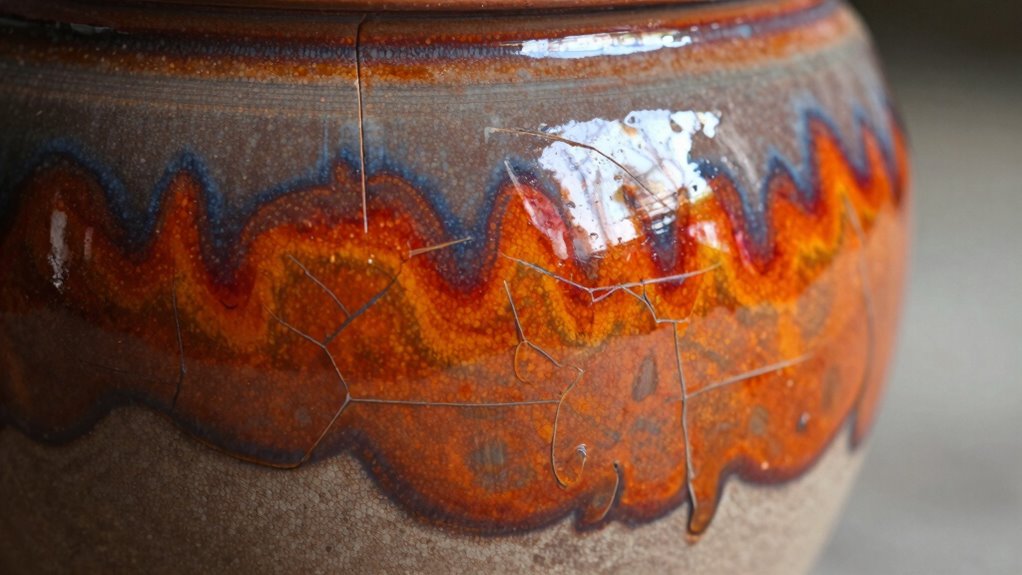
Glaze reactions play a significant role in color changes after firing. When you apply glaze to your clay and then fire it, the chemistry between the glaze ingredients and the clay body creates reactions that can alter colors unexpectedly. For example, certain metal oxides in glazes, like copper or iron, can produce vibrant reds, greens, or browns depending on the firing conditions. During firing, these oxides interact with the heat, forming new compounds that display different colors than when they were raw powders. This is why a glaze that appears one color in its raw form might turn into a completely different hue after firing. Recognizing these reactions allows you to experiment and predict outcomes better, but it also means you should expect some surprises.
The kiln atmosphere is another critical factor that influences clay’s color after firing. Whether your kiln is oxidizing, reducing, or somewhere in between, the environment inside the kiln affects how minerals and oxides in your clay and glazes react. In an oxidizing atmosphere, ample oxygen ensures that metals like iron and copper develop their typical bright or earthy tones. Conversely, in a reducing atmosphere—where oxygen is limited—these metals often produce different shades, sometimes darker or richer. For example, iron can turn from a reddish-brown to a more muted, almost black hue under reducing conditions. The kiln atmosphere can be affected by several factors, including the type of fuel used, venting, and even the kiln’s temperature profile. Knowing how these elements influence the atmosphere can help you control or anticipate color changes.
In essence, the dramatic shifts in your clay’s color after firing are driven by complex chemical reactions and environmental factors within your kiln. Instead of viewing these changes as errors, see them as a crucial part of the artistic process. By understanding glaze reactions and kiln atmosphere, you gain the ability to harness these transformations creatively. Each firing becomes an exploration, revealing new depths and variations in your work. So, next time your piece emerges with a different hue than expected, embrace it as part of the inherent beauty of clay firing. This understanding empowers you to experiment confidently, knowing that each change is a step toward discovering unique and stunning effects that only firing can produce.
Amazon Product B0BWYJWPG9
As an affiliate, we earn on qualifying purchases.
Frequently Asked Questions
Can I Fix the Color Change After Firing?
You can’t fully fix the color change after firing, but you can improve color consistency by choosing the right clay and firing at the correct temperature. To avoid surprises, identify your clay type beforehand and note how it reacts to firing. If you’re unhappy with the color, consider testing different clay brands or adjusting your firing schedule. Proper clay identification helps you predict and control your project’s final appearance.
Does Clay Color Change Vary With Firing Temperature?
Of course, your clay’s color change with firing temperature isn’t just a whimsical game of chance. As you crank up the heat, the clay’s pigmentation reacts dramatically, revealing that firing temperature directly influences its final hue. Higher temps often deepen or alter colors, while lower ones keep things more muted. So, if you want your pottery’s look to match your vision, pay close attention to firing temperature—your clay’s ultimate mood depends on it.
Are Some Clay Types More Prone to Color Shifts?
Yes, some clay types are more prone to color shifts because of their clay mineral composition. Clays with higher iron or organic content tend to change color more noticeably during firing. Additionally, firing atmosphere effects, such as oxidation or reduction, influence how the clay’s mineral components react, resulting in different hues. Understanding these factors helps you anticipate and control the color outcomes of your fired clay pieces.
How Does Glaze Affect the Final Color?
Glaze affects the final color through its chemistry and how it interacts with the clay body during firing. You’ll notice color development varies based on glaze composition, firing temperature, and atmosphere. When you apply a glaze, it creates a glassy surface that can intensify, dull, or change colors as it melts and reacts. Understanding glaze chemistry helps you predict and control these color shifts, giving you more artistic control over your finished piece.
Can I Predict the Fired Color From Raw Clay?
You can’t precisely predict the fired color from raw clay because raw clay variations and firing temperature influence the final look. Different clay bodies have unique mineral contents, which react differently during firing. To get a better idea, test small samples with your specific clay and firing conditions. Keep notes on how your clay responds, as this will help you anticipate the final color after firing and adjust your process accordingly.
Amazon Product B0DT8PV51T
As an affiliate, we earn on qualifying purchases.
Conclusion
So, next time your clay color shifts after firing, remember it’s not a mistake but a transformation. It’s about the change, the depth, and the character added through firing. Embrace the variations, learn from the process, and celebrate the beauty in these natural evolutions. Because your clay’s journey doesn’t end at shaping; it begins anew in firing, revealing a unique and authentic piece every time. Let these color changes inspire your creativity and deepen your connection to your craft.
Amazon Product B0CGRKMT3F
As an affiliate, we earn on qualifying purchases.
Amazon Product B0DB887MCD
As an affiliate, we earn on qualifying purchases.