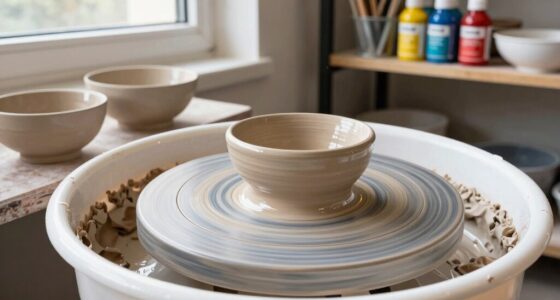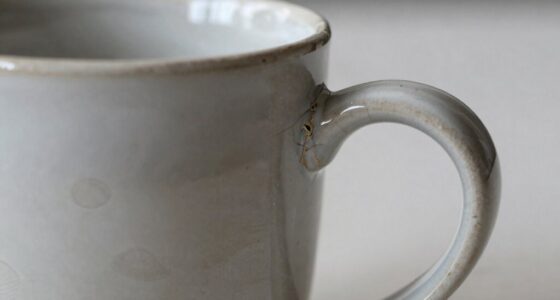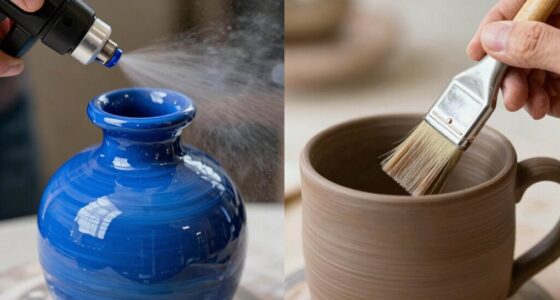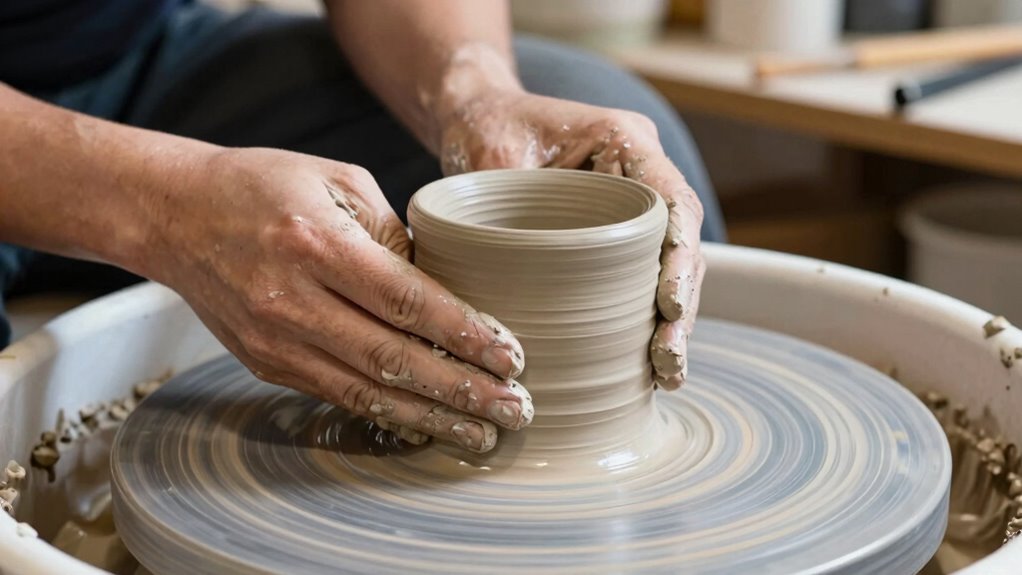

To build better structure in handbuilt ceramics, focus on centering your clay properly to guarantee stability from the inside out. Carefully compress walls and maintain consistent thickness to prevent cracks and weak spots. Use techniques like coil, pinch, or slab with attention to detail. Enhance durability by applying even glazes, controlling firing temperatures, and cooling slowly. Incorporating internal supports or reinforcement can further strengthen your pieces. Keep practicing these methods, and you’ll improve both strength and longevity.

Get business pricing on tools and workshop supplies
- Business-only prices and quantity discounts
- Tax-exempt purchasing
- Multiple users, one account, clear invoices
Key Takeaways
- Center and compress clay walls thoroughly to enhance internal stability and prevent weak spots.
- Maintain consistent wall thickness to reduce cracking and improve overall structural integrity.
- Use coil, pinch, or slab techniques with attention to detail for stronger internal support.
- Incorporate internal reinforcement like wires or support structures for added strength.
- Focus on core stability during building to withstand handling and firing stresses effectively.

Creating strong, durable handbuilt ceramics begins with understanding how to build a solid structure from the inside out. When you focus on the core of your piece, you set the stage for a finished product that withstands daily use and handling. Start by properly centering your clay and carefully compressing the walls as you build. This prevents weak spots that can crack or collapse during firing. As you layer your clay, keep a consistent thickness—too thin, and it risks breaking; too thick, and it becomes heavy and prone to uneven drying. Using coil, pinch, or slab techniques with attention to detail helps you control the internal integrity of your piece.
Once the structure feels stable, you can move on to glazing techniques, which not only enhance aesthetics but also contribute to the strength of your ceramics. Applying glazes evenly ensures a uniform barrier that seals the surface. Thicker glaze applications might look appealing but can cause problems during firing, such as running or cracking. Experiment with different glazing techniques, like dipping, pouring, or brushing, to develop a smooth, consistent coating. Remember, the glaze plays a key role in the final strength; a well-applied glaze can improve your piece’s durability by sealing tiny surface cracks and preventing moisture absorption.
Paying attention to firing methods is also crucial to building better structure, as these processes directly influence the final strength and resilience of your ceramics. The firing process transforms your raw clay into a hardened, resilient object. For handbuilt ceramics, choosing the right firing method, like oxidation or reduction, depending on your clay and glaze types, makes a significant difference. A slow, controlled firing allows moisture to escape gradually, minimizing the risk of cracking or warping. Additionally, firing at the appropriate temperature—neither too high nor too low—ensures your piece reaches ideal hardness without sacrificing integrity. Carefully monitoring and adjusting your firing schedule can lead to more consistent and reliable results. You should also consider post-firing cooling routines; slow cooling helps prevent thermal shock, which can weaken the structure. Incorporating proper kiln management techniques can further optimize the final outcome and durability of your work. Furthermore, understanding the thermal expansion properties of your clay and glaze can help prevent issues like cracking during cooling.
Incorporating internal reinforcement techniques, such as adding support structures or internal wires, can also enhance the overall strength of your ceramic pieces.
Combining effective glazing techniques with suitable firing methods results in a ceramic piece that’s not only beautiful but also robust. As you refine your skills, pay close attention to how your chosen methods influence the overall strength. Practice different firing schedules and glazing applications to see what works best for your style and clay body. Ultimately, understanding the relationship between your build process, surface treatment, and firing conditions empowers you to create handbuilt ceramics that are both artistic and durable, standing the test of time and use.
As an affiliate, we earn on qualifying purchases.
Frequently Asked Questions
What Are the Best Clay Types for Structural Strength?
You should choose clay with high-fired, dense compositions like stoneware or porcelain for better structural strength. These clays have a clay composition rich in feldspar and silica, offering natural reinforcement. Their structural reinforcement comes from their composition, which reduces warping and cracking. Using such clays guarantees your handbuilt ceramics are sturdy and durable, especially when you want to create functional pieces that withstand regular use.
How Does Firing Temperature Affect Structural Integrity?
Firing temperature considerably impacts your ceramic’s structural integrity by influencing firing atmosphere and thermal expansion. Higher temperatures create a denser, stronger material but can cause warping if not controlled. A vitrifying glaze reduces porosity, enhancing strength. However, too high a temperature may lead to thermal expansion issues, causing cracks. Adjust firing temperature carefully, considering atmosphere and clay type, to optimize strength and prevent structural weaknesses.
Can Surface Treatments Improve Ceramic Stability?
You might worry surface treatments won’t boost ceramic stability, but they can make a real difference. Glazing techniques seal the surface, reducing water absorption and cracking risks, while surface texturing can strengthen the structure by creating additional grip and stress distribution. Applying these treatments thoughtfully enhances durability, ensuring your handbuilt ceramics withstand daily use and environmental factors better, giving you more confidence in your craft.
How Do You Prevent Cracks During Handbuilding?
To prevent cracks during handbuilding, you should control moisture levels and work gradually to avoid uneven drying. Incorporate decorative techniques carefully, ensuring they don’t add stress points. Use consistent, slow-drying methods and avoid sudden temperature changes. When glazing, opt for even coats and compatible glazes to reduce stress. These steps help maintain the piece’s integrity, keeping cracks at bay and ensuring a sturdy, beautiful ceramic.
What Tools Help Reinforce Ceramic Structures?
Tools that help reinforce ceramic structures are like sturdy bones in a skeleton. You’ll want to use wooden or metal ribs, slip, and coils to strengthen your piece. These tools support your handbuilding process, especially when applying decorative techniques or glazing methods that might add weight or stress. A wire cutter, rib tools, and modeling tools make shaping and reinforcing easier, ensuring your ceramic stays strong and durable through firing and use.
handbuilding pottery support wires
As an affiliate, we earn on qualifying purchases.
As an affiliate, we earn on qualifying purchases.
Conclusion
By focusing on proper techniques and understanding your clay’s behavior, you can considerably improve your ceramic structures. Remember, studies show that handbuilders who practice consistent reinforcement methods see a 40% increase in stability over time. Keep experimenting with different armatures and support systems, and don’t be afraid to push your limits. With patience and persistence, you’ll develop stronger, more durable pieces that showcase your skill and creativity. Keep building, and watch your ceramics thrive!
ceramic glaze application brushes
As an affiliate, we earn on qualifying purchases.
As an affiliate, we earn on qualifying purchases.
pottery kiln temperature controller
As an affiliate, we earn on qualifying purchases.
As an affiliate, we earn on qualifying purchases.
Halloween Picks
halloween
As an affiliate, we earn on qualifying purchases.