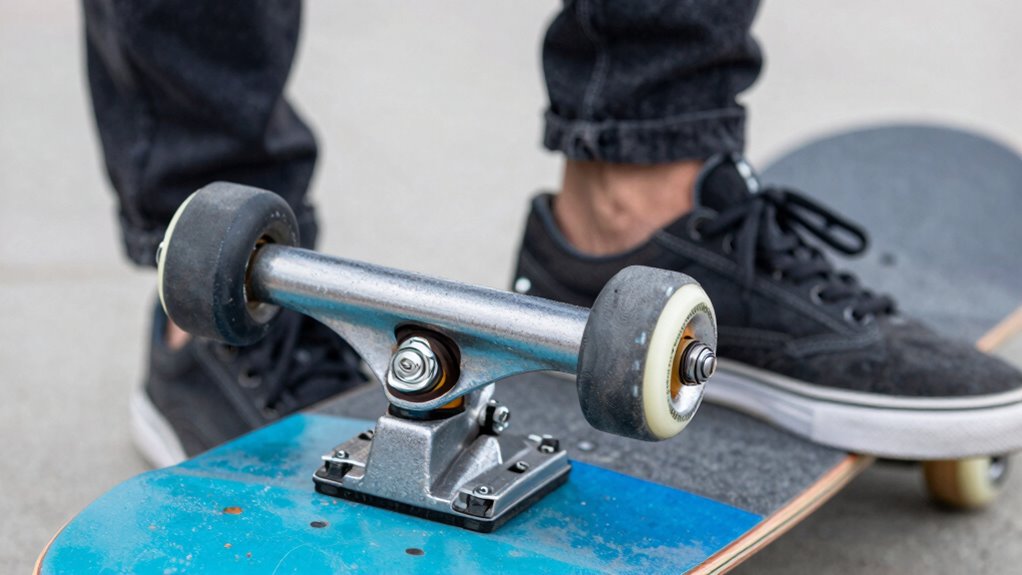

To achieve more balanced handles, rims, and feet, focus on proper alignment, technique, and weight distribution. Keep your grip ergonomic, ensuring fingers and palms are aligned to reduce tension and enhance control. Maintain your body position with relaxed shoulders and elbows close to your sides, which aids in even weight transfer. Regularly check and adjust your stance for consistent balance. Mastering these habits not only improves performance but also promotes even wear and longer equipment life—continue to explore the key details.

Get business pricing on tools and workshop supplies
- Business-only prices and quantity discounts
- Tax-exempt purchasing
- Multiple users, one account, clear invoices
Key Takeaways
- Ensure proper alignment and ergonomic grip for even weight distribution and reduced strain.
- Regularly check and adjust stance and grip to maintain balance during operation.
- Focus on body positioning, keeping elbows close and shoulders relaxed for optimal control.
- Transfer weight smoothly across handles, rims, and feet to prevent imbalance and wobbling.
- Practice consistent technique to promote even wear, enhance safety, and improve overall balance.

Achieving balanced handles, rims, and feet is vital for ideal performance and safety, yet many overlook the importance of proper alignment and technique. The key to mastering this balance starts with your grip—specifically, an ergonomic grip that allows for comfortable, controlled handling. When your grip is ergonomic, you reduce strain on your hands and wrists, enabling smoother, more precise movements. This stability is fundamental because it influences how weight is distributed across your equipment. Proper weight distribution ensures that no single part bears excessive stress, which can lead to uneven wear, fatigue, or injury over time.
An ergonomic grip promotes balanced weight distribution for better control, safety, and equipment longevity.
In addition, maintaining a consistent handling technique helps reinforce proper balance and control during operation. When you focus on your handle grip, aim for a natural, relaxed hold. An ergonomic grip involves aligning your fingers and palms in a way that minimizes tension and maximizes control. This setup helps in evenly distributing the force you apply, preventing any one side from becoming overly dominant. As a result, your handles feel more balanced, and your overall control improves. This balance trickles down to the rims and feet, which rely on your grip and stance to perform effectively. If your handle feels unstable or awkward, it throws off your entire setup, making it harder to maintain proper alignment during action.
Weight distribution is another critical aspect. You want to guarantee that your weight is evenly spread across your handles, rims, and feet. Think of your setup as a tripod—you need all three points to bear equal weight to stay stable. Uneven weight distribution causes imbalance, leading to wobbling, decreased precision, and increased risk of injury. To attain this, you should regularly check your stance and grip, making small adjustments as needed. For example, shifting your weight slightly forward or backward can help realign your balance and improve your control. Paying attention to body positioning can further enhance your ability to maintain proper weight transfer and balance. Additionally, understanding the importance of proper alignment can help prevent common issues like uneven wear and discomfort during extended use.
In practice, this means paying attention to how you hold your equipment and how your body responds during movement. Keep your elbows close, shoulders relaxed, and focus on maintaining a centered, ergonomic grip. This not only enhances comfort but also promotes even weight transfer across your handles, rims, and feet. With consistent adjustments and mindful technique, you’ll find your equipment feels more integrated and responsive. Over time, this leads to better balance, increased safety, and heightened performance, allowing you to operate with confidence and precision.
ergonomic handle grips for gym equipment
As an affiliate, we earn on qualifying purchases.
As an affiliate, we earn on qualifying purchases.
Frequently Asked Questions
How Long Does It Take to See Improvements?
You can start noticing improvements in your balance awareness within a few weeks of consistent proprioception training. Regular practice helps your nervous system adapt, enhancing your ability to control handles, rims, and feet. Typically, noticeable progress occurs after about 3 to 4 weeks, but individual results vary based on effort and frequency. Stay committed, and you’ll see steady gains in stability and coordination over time.
Are There Specific Exercises for Better Balance?
Yes, you can improve your balance with specific exercises. Incorporate dribbling drills that challenge your coordination and control, like one-handed or zig-zag dribbling. Additionally, do balance exercises such as single-leg stands, stability ball workouts, or yoga poses to strengthen your core and enhance stability. Consistently practicing these exercises will help you develop better balance, leading to more control over handles, rims, and feet during gameplay.
Can These Techniques Prevent Injuries?
Yes, these techniques can help prevent injuries by improving your overall balance and stability. Incorporating safety strategies like proper form, gradual progression, and targeted exercises reduces the risk of falls and strains. When you focus on injury prevention, you’re less likely to experience setbacks. Consistently practicing balanced handle, rim, and foot techniques makes your movements safer, strengthening muscles and enhancing coordination for long-term injury resistance.
What Equipment Is Necessary for Practice?
You need simple equipment essentials like balanced handles, rims, and feet for effective practice routines. A sturdy, non-slip surface helps you stay stable, while a mirror allows you to monitor your form. Incorporate resistance bands or light weights to challenge your muscles. Consistent practice with these tools improves coordination and balance. Keep your equipment well-maintained, and focus on proper technique to maximize benefits and prevent injuries.
Is Professional Coaching Required to Master These Skills?
You don’t need professional coaching to master these skills—unless, of course, you enjoy the thrill of injury prevention mishaps. Solo practice can be incredibly effective, helping you develop balance and control at your own pace. While coaches offer valuable tips, consistent practice on your own builds confidence and skills. Just remember, patience and proper technique matter more than fancy lessons, and injuries are the real goal, right?
adjustable weight distribution tools
As an affiliate, we earn on qualifying purchases.
As an affiliate, we earn on qualifying purchases.
Conclusion
So, next time you struggle with handles, rims, or feet, remember — the secret isn’t some magic trick, but just a little balance. Who knew that keeping things even could make all the difference? Ironically, in a world obsessed with perfection, it’s often the simplest, most balanced approach that really works. So go ahead, embrace the chaos, and find your perfect harmony — it’s closer than you think.
As an affiliate, we earn on qualifying purchases.
equipment alignment and balance accessories
As an affiliate, we earn on qualifying purchases.
As an affiliate, we earn on qualifying purchases.
Halloween Picks
halloween
As an affiliate, we earn on qualifying purchases.