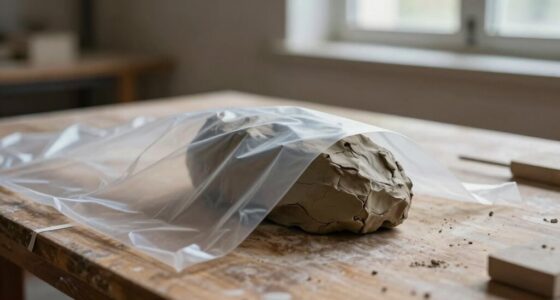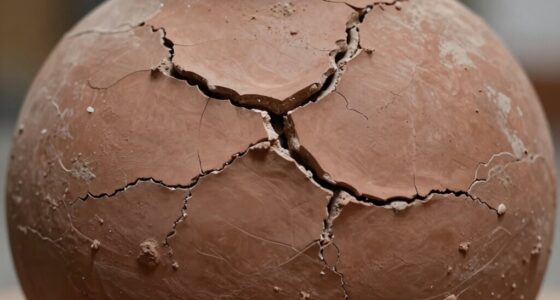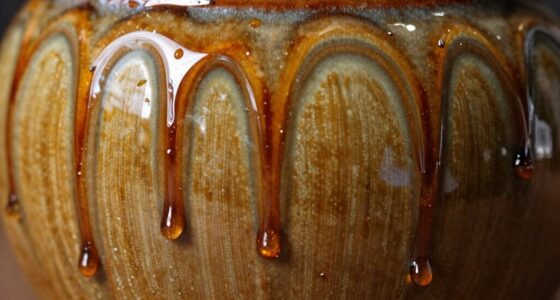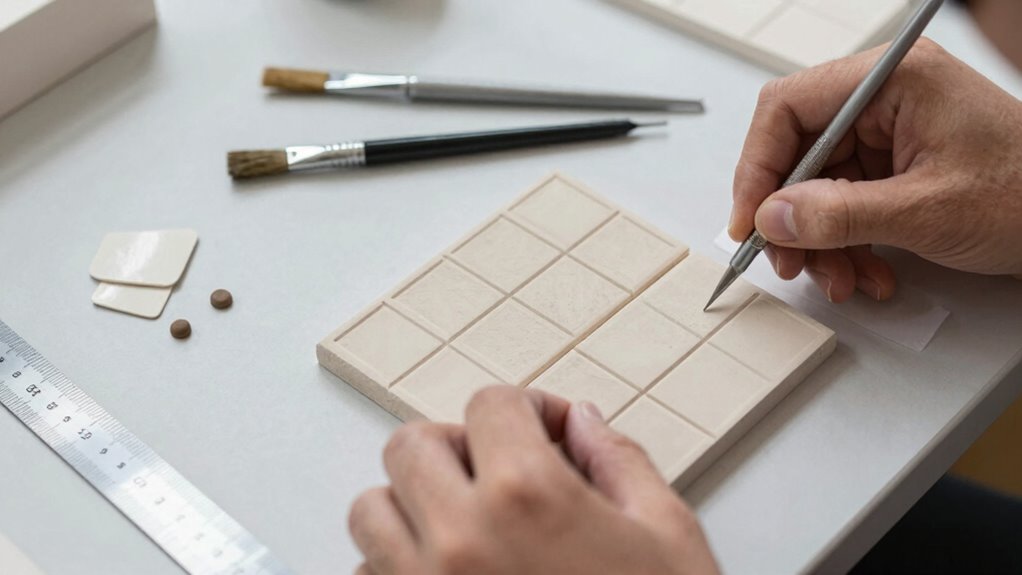

To build a better ceramic test-tile system, focus on applying glazes precisely with consistent techniques like dipping or brushing to guarantee uniform thickness. Calibrate and control your kiln temperature carefully, using precise tools, to avoid variations that affect results. Arrange your tiles strategically to account for heat zones and track different firing conditions. Keep detailed records of recipes, application methods, and temperature settings to identify patterns. Mastering these steps will enhance your results and lead to more reliable testing techniques.

Get business pricing on tools and workshop supplies
- Business-only prices and quantity discounts
- Tax-exempt purchasing
- Multiple users, one account, clear invoices
Key Takeaways
- Standardize glaze application techniques to ensure uniform thickness and reliable comparison of material behavior.
- Regularly calibrate kiln temperature with precise instruments to maintain consistent firing conditions.
- Arrange test tiles strategically within the kiln to monitor and compensate for temperature gradients.
- Keep detailed records of glaze recipes, application methods, and firing parameters for reproducibility.
- Incorporate routine temperature mapping and kiln zoning to optimize heat distribution and test accuracy.

Developing a more effective test-tile system for ceramics is essential to accurately assess material properties and improve quality control. When designing your system, focus on standardizing key factors that influence the reliability of your results. One of the most critical aspects is ensuring consistent glaze application—glaze consistency must be maintained across all test tiles. This means using precise application techniques, such as controlled dipping or brushing methods, to guarantee each tile receives the same amount of glaze. Variations in glaze thickness can lead to misleading results, especially when evaluating how different glazes react to firing conditions. Implementing a consistent process for glaze application helps you compare test tiles accurately and identify genuine differences in material behavior.
Ensuring consistent glaze application is key to accurate, reliable ceramic test results.
Another vital component is temperature calibration. Every kiln or furnace has slight variations in temperature, which can throw off your test results if not properly calibrated. Regularly calibrate your kiln’s temperature using a reliable pyrometer or thermocouple to make sure your firing environment matches the intended program. Accurate temperature calibration guarantees that the test tiles are subjected to the same heat conditions, making it easier to interpret results like glaze melting points, color development, and surface quality. When you maintain precise temperature control, you minimize variables that could distort your data, helping you refine your formulations and firing schedules more effectively. Additionally, understanding kiln temperature variations is crucial for developing a consistent firing process.
In addition, it’s crucial to develop a systematic approach to your test tile layout. Arrange your tiles in a way that accounts for potential temperature gradients within the kiln. Place test tiles at various locations to monitor how different zones might influence glaze behavior or firing outcomes. By doing so, you can identify and compensate for uneven heat distribution, ensuring that each tile’s results reflect the true properties of your materials rather than kiln inconsistencies. Implementing kiln zoning strategies can improve the accuracy of your tests and help you achieve more uniform results across multiple batches. Over time, this practice allows you to fine-tune your firing protocols and achieve more consistent outcomes. Incorporating temperature mapping as part of your routine can also help you visualize and address heat distribution issues more effectively. Furthermore, using consistent layout practices can streamline your process and reduce errors during testing.
Finally, keep detailed records of every firing, including glaze recipes, application methods, kiln temperature settings, and firing durations. This documentation helps you track how adjustments impact your test tiles and provides valuable data for troubleshooting or optimizing your process. As you refine your test-tile system, remember that consistency in glaze application and precise temperature calibration form the foundation of reliable, reproducible results. With these elements in place, you gain deeper insights into your materials, leading to higher quality ceramics and more predictable outcomes in your production.
As an affiliate, we earn on qualifying purchases.
Frequently Asked Questions
What Materials Are Best for Test Tiles?
You should choose materials like porcelain or stoneware clay for test tiles because they offer a good surface finish and reliable material compatibility. These materials are durable and respond well to glaze testing, giving you accurate results. Avoid softer or more porous clays, as they can alter surface finish and skew test outcomes. Opt for uniform, high-quality clay bodies to guarantee consistent, meaningful test results for your ceramic projects.
How Do Temperature Changes Affect Test Tile Durability?
Temperature changes can considerably impact your test tile’s durability by causing thermal expansion, which stresses the material. Repeated heating and cooling lead to material fatigue, weakening the tile over time. You might notice cracks or warping as a result. To improve durability, choose materials with low thermal expansion rates and consider gradual temperature changes during testing to minimize stress and prevent damage.
Can Test Tiles Be Reused After Testing?
Yes, you can reuse test tiles after testing, but it depends on their condition. If they’re not cracked or damaged, you might recycle test tiles by cleaning them thoroughly and repurposing them for future tests. For disposal, consider eco-friendly options, especially if they’re damaged beyond reuse. Recycling test tiles helps reduce waste and promotes sustainability in your ceramic testing process, ensuring minimal environmental impact.
What Calibration Methods Ensure Accurate Test Results?
To guarantee accurate test results, you should regularly perform calibration techniques like using certified reference materials and standard weights. These methods improve measurement accuracy by aligning your test system with known standards. Additionally, calibrate your equipment before each testing session and after any significant changes. Consistent calibration helps maintain precision, reduces errors, and ensures your test tiles’ results are reliable and reproducible over time.
How to Prevent Contamination During Test Tile Fabrication?
To prevent contamination during test tile fabrication, you should identify common contamination sources like dirt, oils, or dust, and control them carefully. Use protective coatings on equipment and workspace surfaces to create a barrier against contaminants. Always wear clean gloves and work in a controlled environment. Regularly clean and sanitize tools and surfaces, and store test tiles in sealed containers to maintain their purity and guarantee accurate test results.
glaze application tools for ceramics
As an affiliate, we earn on qualifying purchases.
As an affiliate, we earn on qualifying purchases.
Conclusion
By refining your test-tile system, you’re shaping not just better ceramics, but a foundation for innovation. Imagine the raw clay transforming beneath your hands, the fiery kiln illuminating possibilities, and each test tile revealing secrets like a quiet, steady whisper. It’s a delicate dance between art and science, where precision meets passion. Embrace these improvements, and watch your craftsmanship rise like a phoenix—strong, vibrant, and ready to leave a lasting mark on the world of ceramics.
kiln temperature calibration device
As an affiliate, we earn on qualifying purchases.
As an affiliate, we earn on qualifying purchases.
As an affiliate, we earn on qualifying purchases.
Fall Picks
fall essentials
As an affiliate, we earn on qualifying purchases.