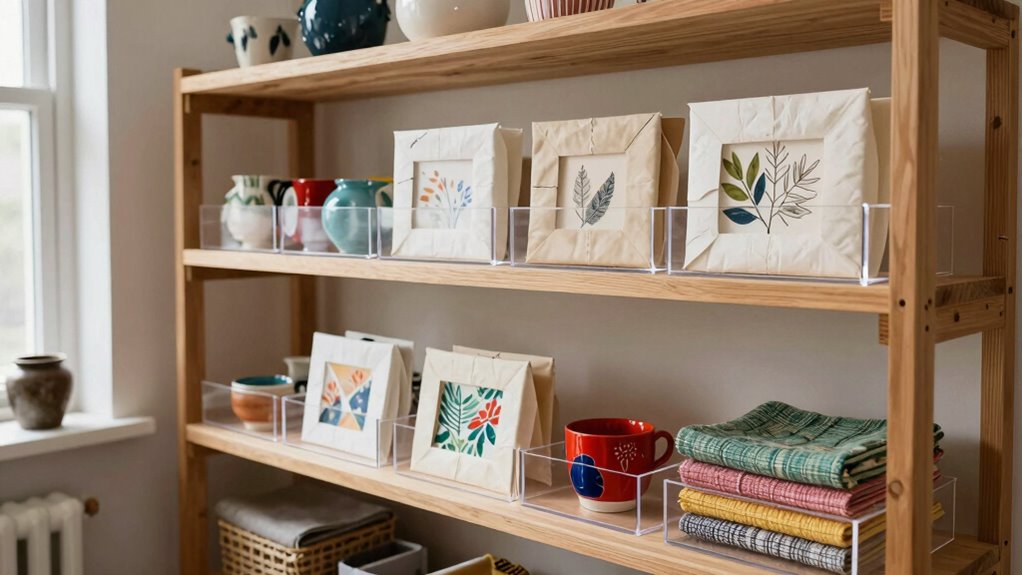

To prevent your crafts from yellowing or cracking, keep them in a stable environment with controlled temperature (65-75°F) and humidity (40-50%). Store them in acid-free, archival-quality containers and wrap delicate parts with acid-free tissue or bubble wrap. Keep crafts away from direct sunlight and UV rays by using UV-filtering films or curtains. Handle pieces carefully and inspect them regularly to catch issues early—more tips lie ahead to help you preserve your creations.

Get business pricing on tools and workshop supplies
- Business-only prices and quantity discounts
- Tax-exempt purchasing
- Multiple users, one account, clear invoices
Key Takeaways
- Store crafts in acid-free, airtight containers away from direct sunlight and UV exposure.
- Maintain a stable environment with 65-75°F temperature and 40-50% humidity levels.
- Use breathable covers like cotton or muslin to protect crafts from dust and moisture.
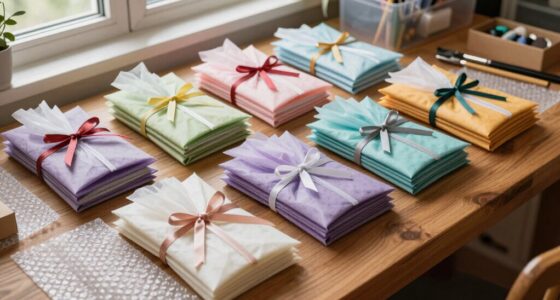
- Wrap delicate items with acid-free tissue or bubble wrap, supporting fragile parts during handling.
- Regularly inspect and clean storage areas to prevent mold, pests, and environmental damage.
archival quality acid-free storage boxes
As an affiliate, we earn on qualifying purchases.
As an affiliate, we earn on qualifying purchases.
Choosing the Optimal Storage Environment
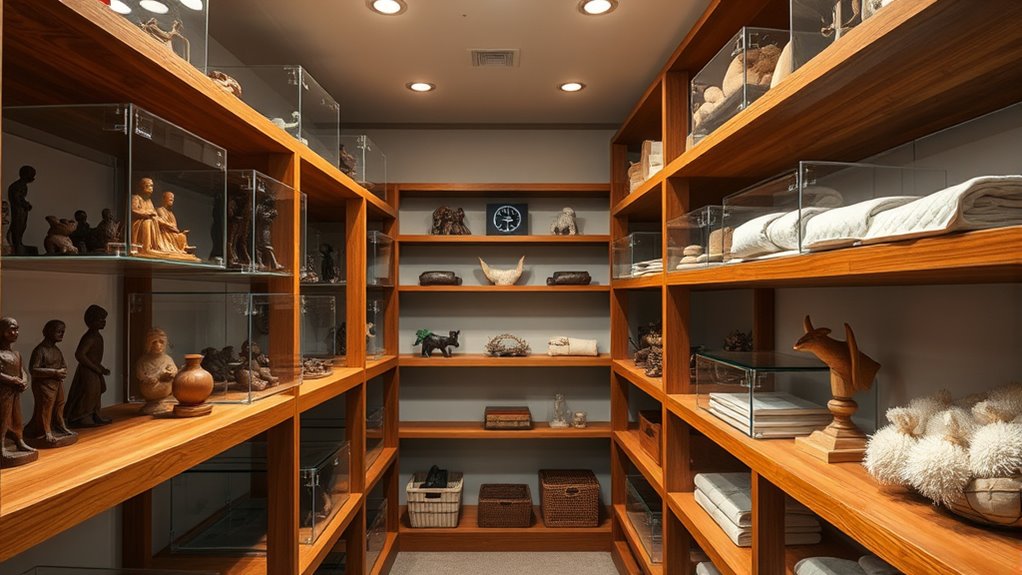
Choosing the right storage environment is vital to keep your finished crafts in top condition. You want to avoid exposure to direct sunlight, which can cause fading and yellowing over time. Opt for a space with consistent temperature and humidity levels to prevent cracking and warping. Selecting proper lighting is essential; soft, indirect light helps preserve colors without accelerating deterioration. Selecting suitable storage containers is equally important—they should be sturdy, airtight, and acid-free to protect your crafts from dust and environmental damage. Avoid plastic bags that can trap moisture or degrade over time. Instead, use archival-quality boxes or containers designed for delicate items. Additionally, environmental controls such as humidity and temperature regulation can significantly extend the lifespan of your crafts. Proper storage conditions play a crucial role in maintaining your crafts’ longevity and appearance. Maintaining stable environmental factors can prevent deterioration caused by fluctuations in temperature and humidity, ensuring your crafts stay pristine over time. Implementing climate-controlled storage solutions can further safeguard your crafts from damage caused by environmental fluctuations.
UV filtering curtains for artwork preservation
As an affiliate, we earn on qualifying purchases.
As an affiliate, we earn on qualifying purchases.
Using Acid-Free Materials for Preservation
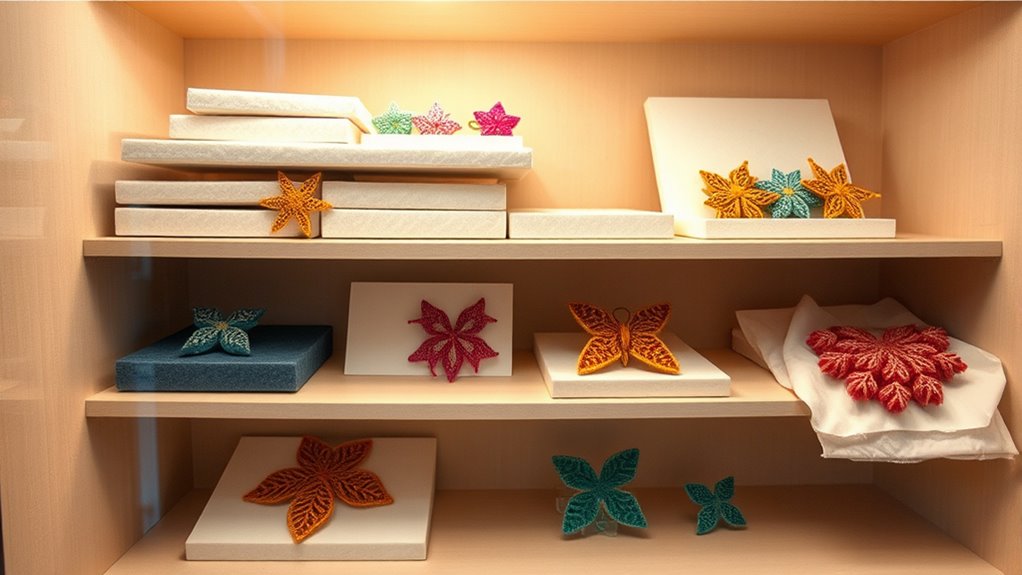
Using acid-free materials is essential to guarantee your finished crafts remain in pristine condition over time. Acid-free paper prevents the transfer of acids that cause yellowing and deterioration. When storing your crafts, opt for archival storage options that prioritize acid-free components. These materials help maintain the integrity of your creations by reducing chemical reactions that lead to cracking or discoloration. Always choose acid-free tissue paper, folders, and boxes designed for preservation. Proper storage with acid-free storage is a simple but effective way to extend the lifespan of your artwork, keeping it vibrant and intact for years to come. Additionally, understanding the importance of color fidelity can further enhance your preservation efforts. Using appropriate storage materials minimizes exposure to harmful environmental factors.
acid-free tissue paper for craft storage
As an affiliate, we earn on qualifying purchases.
As an affiliate, we earn on qualifying purchases.
Properly Wrapping and Covering Your Crafts

When wrapping your crafts, use acid-free materials to prevent damage over time. Make sure to wrap them tightly enough to stay secure, but avoid squeezing or damaging delicate details. Incorporating energy-efficient storage techniques can further help preserve your crafts and reduce environmental impact. Additionally, selecting appropriate wrapping materials that are free from acids and chemicals ensures long-term protection. Using proper storage practices can also minimize exposure to light, temperature fluctuations, and humidity, all of which can cause deterioration. Employing climate-controlled storage environments can significantly extend the lifespan of your crafts by maintaining consistent conditions. Incorporating proper electrical setups in storage areas can help prevent issues caused by fluctuating temperatures and humidity. Finish by covering them with a breathable cover to allow airflow and prevent moisture buildup.
Use Acid-Free Materials
To protect your finished crafts from acid damage and deterioration, it’s essential to wrap and cover them with acid-free materials. Using acid-free paper and other archival storage options prevents yellowing and cracking over time. These materials don’t contain acids that can react with your crafts, ensuring long-term preservation. When choosing supplies, verify they’re labeled as acid-free or archival quality. Properly storing your crafts with these materials helps maintain their original appearance and value. Here’s a quick reference:
| Material | Best Use | Benefits |
|---|---|---|
| Acid-free paper | Wrapping and covering crafts | Prevents acid damage |
| Acid-free tissue | Padding fragile pieces | Avoids surface scratches |
| Archival boxes | Storage for multiple items | Long-term preservation |
| Polyester sleeves | Protects detailed crafts | Transparent, acid-free |
| Acid-free tissue | Interleaving delicate crafts | Reduces friction, damage |
Always prioritize acid-free options for archival storage. Understanding acid-free materials is crucial for ensuring your crafts remain in pristine condition over time. Additionally, proper wrapping techniques can greatly extend the life of your collectibles. To further protect your crafts, consider indoor storage environments that minimize exposure to humidity and light, which are key factors in preservation. Using acid-free adhesives when assembling or repairing crafts can also prevent unintended damage over time. Being aware of storage environment factors such as humidity and light exposure further helps in preserving your crafts effectively.
Wrap Tightly Without Damage
Properly wrapping and covering your crafts guarantees they stay undamaged and preserved over time. To make certain safe storage, use creative wrapping techniques that protect delicate surfaces. Invest in sturdy storage containers that prevent movement and dust accumulation. When wrapping, avoid tight bindings that can cause cracks or dents; instead, secure items gently yet firmly. Here are four tips to follow:
- Use acid-free tissue or bubble wrap for cushioning.
- Wrap items snugly without squeezing, maintaining their shape.
- Incorporate creative wrapping methods that add extra protection.
- Place wrapped crafts in appropriate storage containers to avoid damage. Additionally, understanding material stability can help you choose the best storage practices to prevent yellowing or cracking over time. Considering the environmental factors like humidity and temperature control further minimizes environmental damage, helping your crafts remain pristine for years to come.
Cover With Breathable Cover
Covering your crafts with a breathable material is essential to prevent moisture buildup and mold while allowing air circulation. Breathable covers, such as cotton or muslin, help protect your items from dust and humidity without trapping moisture inside. Using fabric protection ensures your crafts stay safe from potential damage caused by airtight coverings, which can cause yellowing or cracking over time. When choosing a breathable cover, avoid plastic or non-porous materials that can suffocate your crafts or promote mold growth. Instead, gently drape or store your finished pieces in breathable covers that permit airflow while shielding them from dirt and environmental pollutants. Proper fabric protection promotes material properties that influence preservation and helps maintain your crafts’ appearance and integrity for years to come, especially when considering moisture control techniques. Ensuring proper ventilation is also crucial to prevent deterioration and prolong the life of your crafts.
climate-controlled storage containers for crafts
As an affiliate, we earn on qualifying purchases.
As an affiliate, we earn on qualifying purchases.
Avoiding Direct Sunlight and Excessive Heat
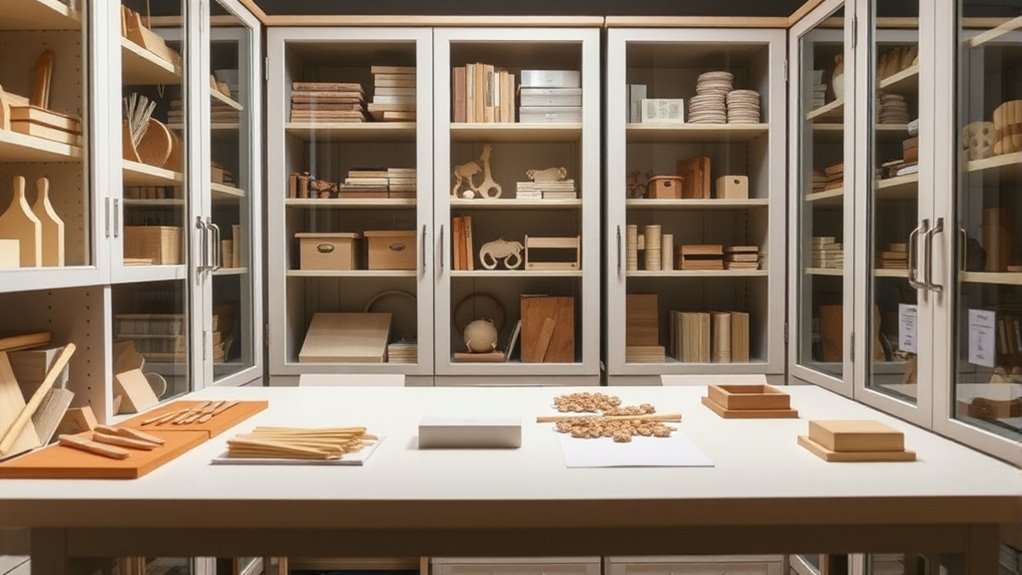
To keep your crafts in top shape, avoid placing them near windows where sunlight can cause fading. Controlling the room temperature prevents damage from excessive heat, so keep your space cool and stable. Using UV-resistant covers adds an extra layer of protection against harmful sunlight and heat.
Keep Away From Windows
Have you ever wondered why placing your finished crafts near windows can cause damage? Sunlight exposure can fade colors, weaken materials, and lead to cracking over time. To protect your creations, consider these tips:
- Use window protection like UV-filtering films or curtains to block harmful rays.
- Keep crafts away from direct sunlight, especially during peak hours.
- Store items in shaded areas to prevent prolonged sunlight exposure.
- Avoid placing crafts near windows that get hot from sunlight, as heat can cause warping or deterioration.
Control Room Temperature
Keeping your crafts away from direct sunlight isn’t enough; controlling the room temperature is equally important. Sudden temperature fluctuations can cause materials to expand and contract, leading to cracking or warping over time. To prevent this, maintain a stable environment with consistent temperature levels, ideally between 65-75°F. Humidity control also plays a vital role; too much moisture can cause swelling, while too little can make materials brittle. Use a dehumidifier or humidifier as needed to keep humidity levels steady, around 40-50%. Avoid placing your crafts near heat sources like radiators or vents, which can cause uneven temperature changes. By managing both temperature fluctuation and humidity, you help preserve your crafts’ integrity and beauty for years to come.
Use UV-Resistant Cover
Using UV-resistant covers is crucial for protecting your crafts from the damaging effects of sunlight and heat. These covers provide essential UV protection that helps prevent fading and cracking over time. To maximize their effectiveness, keep these tips in mind:
- Choose covers made from UV-resistant material to guarantee optimal fade prevention.
- Store crafts in shaded areas, even if covered, to reduce exposure to indirect sunlight.
- Avoid placing covers in areas with high temperature fluctuations to prevent cracking.
- Regularly inspect covers for tears or damage and replace them as needed to maintain UV protection.
Controlling Humidity Levels to Prevent Damage

Controlling humidity levels is essential to prevent damage to your finished crafts. Excess moisture can lead to mold prevention issues and attract pests that damage delicate materials. Keep storage areas between 40-50% relative humidity to avoid cracking, warping, or yellowing. Use a dehumidifier or silica gel packs to maintain consistent levels, especially in humid climates. Proper ventilation also helps prevent mold growth by reducing dampness. Regularly check humidity levels with a hygrometer to catch fluctuations early. By managing moisture, you protect your crafts from deterioration and pest infestations. Maintaining stable humidity isn’t just about preserving appearance; it’s about ensuring your creations remain in excellent condition for years to come. Proper humidity control is a simple but crucial step in smart storage.
Handling and Moving Crafts With Care
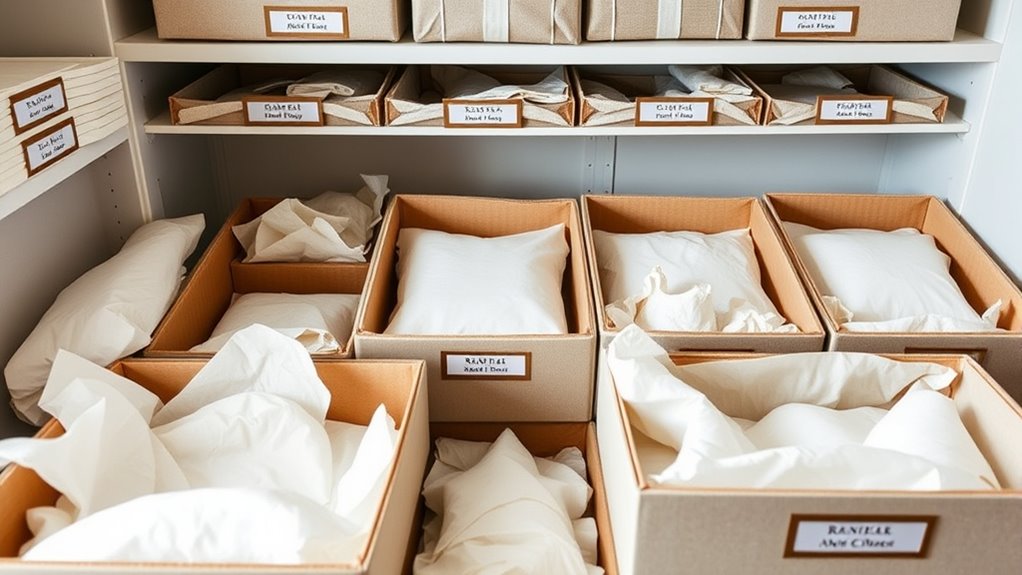
When moving your finished crafts, handling them with care is essential to prevent damage. Proper handling techniques ensure your creations stay in perfect condition. Use gentle, supportive handling to avoid stress on fragile areas. When displaying your crafts, choose techniques that minimize movement, such as secure mounts or padded containers. Always lift with your legs, not your back, to prevent accidents.
Here are four key handling tips:
- Support delicate parts with both hands.
- Wrap items in soft, non-abrasive materials during transport.
- Use proper display techniques to stabilize pieces while on show.
- Avoid sudden movements or stacking heavy objects on top.
Following these steps keeps your crafts safe and looking their best during handling and moving.
Regular Inspection and Maintenance Strategies
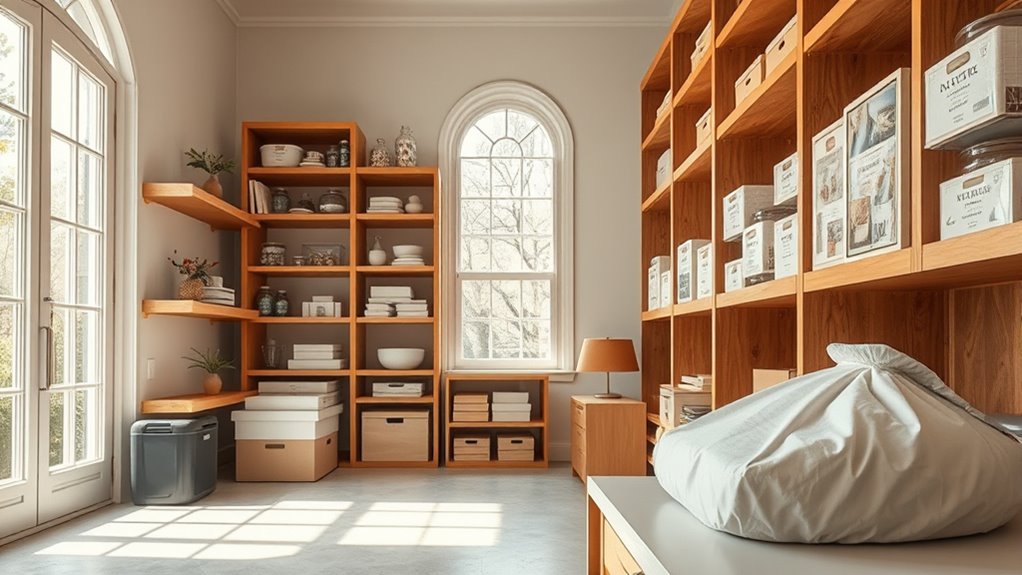
Regular inspection and maintenance are vital to preserving the beauty and integrity of your finished crafts. You should routinely check for dust, dirt, or signs of pest activity. Incorporate cleaning routines like gentle wiping with a soft cloth and using mild cleaning solutions when necessary. Pest prevention is also essential; keep your storage area clean and sealed to deter insects or rodents. To visualize, consider this table:
| Inspection Focus | Action |
|---|---|
| Surfaces & Details | Dust and clean gently |
| Pest Signs | Look for holes or droppings |
| Structural Integrity | Check for cracks or warping |
Staying vigilant ensures your crafts stay beautiful and durable over time.
Frequently Asked Questions
How Long Can Finished Crafts Be Stored Without Deterioration?
You can typically store finished crafts for several years if you use proper preservation techniques. To maximize material longevity, keep your crafts in a cool, dry, and dark environment, and avoid exposure to direct sunlight or extreme temperatures. Using acid-free storage containers and wrapping delicate items carefully helps prevent deterioration. With these steps, your crafts can remain beautiful and intact for many years, maintaining their quality over time.
Are There Specific Cleaning Methods Before Storing Crafts?
You should always use gentle cleaning methods before storing your crafts. Lightly dust or wipe them with a soft cloth to remove dirt without damaging the surface. After cleaning, wrap your crafts in protective materials like acid-free tissue or bubble wrap to prevent scratches and dust accumulation. Proper cleaning and wrapping help preserve your crafts’ quality, keeping them vibrant and intact for years to come.
Can Humidity Levels Vary Seasonally Without Affecting Stored Crafts?
Humidity levels can vary seasonally, but you can protect your crafts by controlling storage conditions. Fluctuations in humidity might cause your items to expand or contract, leading to cracks or warping. To prevent this, store your crafts in a stable environment, use silica gel packs or dehumidifiers, and avoid areas with extreme seasonal effects. Regularly monitoring humidity helps keep your crafts in perfect condition year-round.
What Are the Best Storage Containers for Delicate Crafts?
Forget flimsy boxes—go for acrylic storage containers to keep your delicate crafts pristine. They’re clear, so you can admire your work without rummaging, and sturdy enough to prevent crushing. Pair that with foam padding to cushion fragile surfaces and avoid cracks or dents. These containers protect your masterpieces from dust, moisture, and accidental mishaps, ensuring your craftsmanship stays beautiful and intact for years to come.
How Do I Prevent Pests From Damaging My Stored Crafts?
To prevent pests from damaging your stored crafts, use pest-proof storage containers with tight-fitting lids or seals. Keep your crafts in a cool, dry place and consider adding natural repellents like lavender sachets or cedar chips, which deter insects without chemicals. Regularly check your storage area for signs of pests, and clean your containers before storing new items to guarantee your crafts stay safe and pristine.
Conclusion
By following these storage tips, you can keep your crafts looking their best for years to come. Did you know that improper storage can cause colors to fade by up to 50% within just a year? Taking simple steps like using acid-free materials, avoiding sunlight, and maintaining proper humidity can make all the difference. So, handle your crafts with care and inspect them regularly—your beautiful creations deserve the best protection to stay vibrant and intact.
Halloween Picks
halloween
As an affiliate, we earn on qualifying purchases.