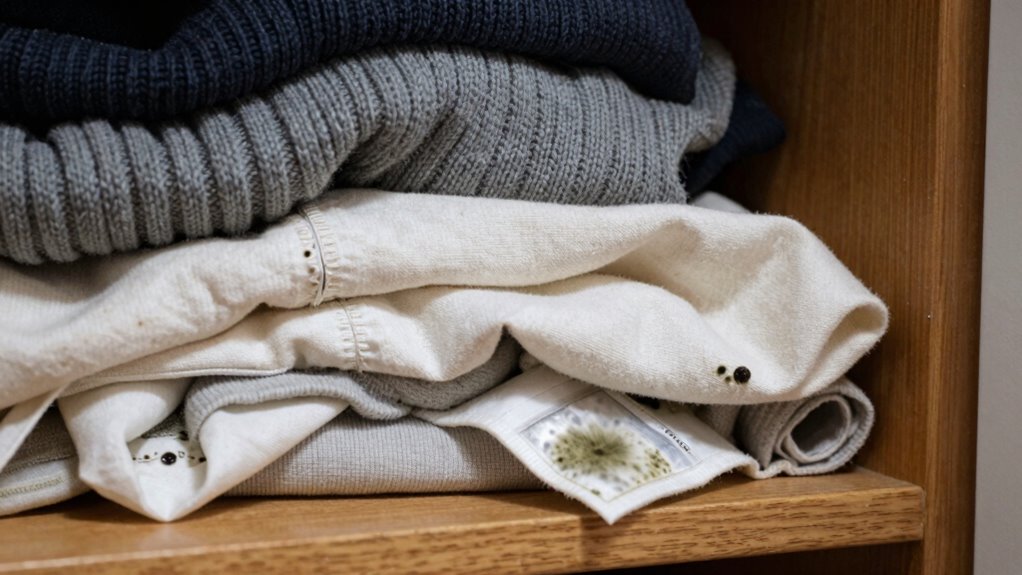

A common moisture trap in fabric stashes occurs when storage areas lack proper ventilation, causing humidity to linger and moisture to build up around your textiles. Poor airflow, combined with high humidity and storing fabrics in damp conditions or airtight containers without moisture absorbers, creates the perfect environment for mold growth. To prevent this, make certain your storage space is dry, well-ventilated, and uses breathable containers or moisture control methods—discover more tips to keep your fabrics mold-free.

Get business pricing on tools and workshop supplies
- Business-only prices and quantity discounts
- Tax-exempt purchasing
- Multiple users, one account, clear invoices
Key Takeaways
- Poor ventilation in storage areas traps humidity, creating a moisture-rich environment conducive to mold growth.
- Plastic containers or airtight bags without moisture control can trap moisture inside, promoting mold development.
- Storing damp or unwashed fabrics allows residual moisture to foster mold spores over time.
- Basements, sheds, or poorly ventilated spaces tend to have higher humidity, increasing the risk of moisture accumulation.
- Lack of regular inspection and moisture absorption measures enables hidden dampness to persist and mold to thrive.
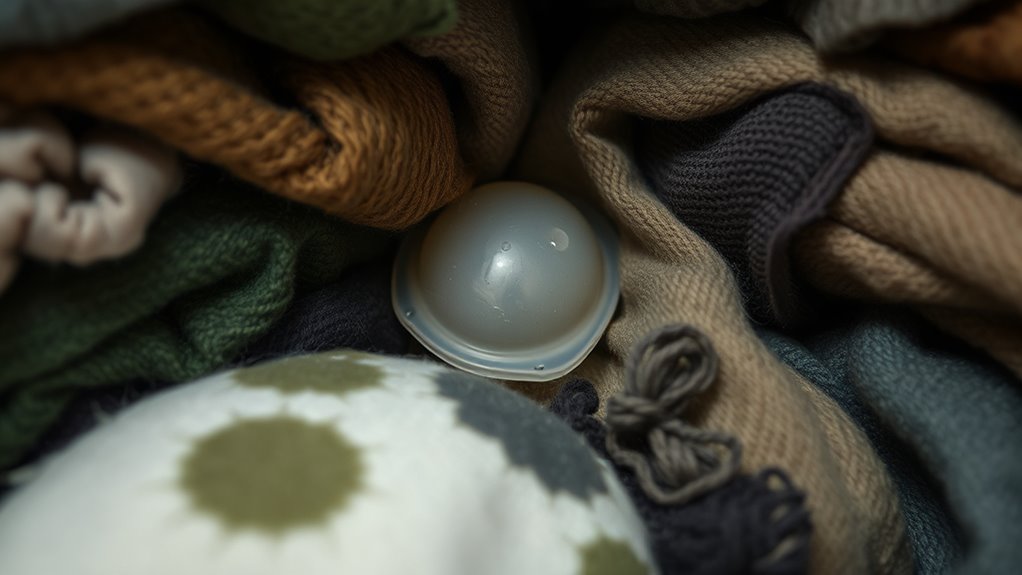
If you store fabric in damp or poorly ventilated areas, moisture can become trapped, creating the perfect environment for mold growth. This is often the result of inadequate humidity control and poor storage techniques. When humidity levels are high, moisture seeps into fabric fibers, providing ideal conditions for mold spores to settle and thrive. To prevent this, you need to focus on maintaining proper humidity control in your storage spaces. Using a dehumidifier can help keep the air dry, especially in basements, attics, or sheds where moisture tends to accumulate. Additionally, placing moisture absorbers like silica gel packs or charcoal bags inside storage containers can further reduce humidity and moisture buildup. Proper airflow also helps prevent moisture buildup, making ventilation a crucial factor in mold prevention.
Your storage techniques play a vital role in preventing mold. If you simply fold fabric and toss it into a box or closet without considering airflow, you risk trapping moisture inside. Instead, store fabrics in breathable containers such as cotton bins or muslin bags that allow air to circulate freely. Avoid plastic bags or airtight containers unless you include moisture control packets, as these can trap humidity and promote mold growth. Elevate your fabric stash off the ground on shelves or pallets to prevent contact with damp surfaces that can wick moisture into your textiles. Regularly check your storage areas for signs of dampness or mold, and make sure that the environment remains dry and well-ventilated.
Store fabrics in breathable containers, elevate off the ground, and regularly check for moisture to prevent mold growth.
Proper storage techniques also involve cleaning and preparing your fabrics before storage. Make sure your textiles are completely dry, as even a small amount of residual moisture can lead to mold development over time. Wash and dry fabrics thoroughly, then store them in a cool, dry place away from direct sunlight. Sunlight not only helps inhibit mold growth but also keeps fabrics fresh. If you’re storing valuable or delicate textiles long-term, consider adding a mold inhibitor spray designed for fabrics, but always test a small area first to prevent damage.
Finally, good ventilation is essential. If your storage area lacks windows or vents, consider installing a small fan or air circulation system. Fresh air circulation helps prevent stagnant, humid conditions that mold loves. By combining humidity control, smart storage techniques, and regular maintenance, you can considerably reduce the chances of mold forming in your fabric stash. Taking these steps shows you’re actively protecting your textiles and ensuring they stay clean, fresh, and mold-free for years to come.
moisture absorber packs for fabric storage
As an affiliate, we earn on qualifying purchases.
As an affiliate, we earn on qualifying purchases.
Frequently Asked Questions
How Can I Prevent Mold Growth in Fabric Storage Areas?
To prevent mold growth in fabric storage areas, make certain proper ventilation strategies are in place to reduce humidity. Use dehumidifiers or open windows regularly to keep the air dry. Additionally, apply mold-resistant coatings on storage surfaces and containers. Store fabrics in breathable, moisture-wicking bags or bins, and avoid overcrowding. These steps help keep your fabrics dry, discourage mold, and maintain a clean, safe storage environment.
Are Certain Fabrics More Prone to Mold Than Others?
Certain fabrics are more prone to mold than others, especially those with low breathability like silk or polyester, which trap moisture easily. To prevent mold, choose mold-resistant fabrics or ones with better breathability, like cotton or linen, that allow air circulation. Always guarantee your storage area is dry and well-ventilated. Properly storing fabrics in breathable containers helps reduce moisture buildup, keeping your textiles safe from mold growth.
What Are Natural Remedies to Eliminate Mold From Fabric?
When it comes to banishing mold from fabric, you’re in the driver’s seat. You can make DIY sprays with white vinegar or baking soda to kill mold spores naturally. Add a few drops of essential oils like tea tree or lavender for a fresh scent and extra mold-fighting power. Spray the affected area, let it sit, then wash as usual. This simple approach keeps your fabrics safe and mold-free.
How Long Does Mold Removal Typically Take?
Mold removal usually takes a few hours to a day, depending on the extent of the mold and your cleaning techniques. You’ll start by inspecting the fabric, then use natural remedies like vinegar or baking soda in your mold removal process. Be sure to thoroughly dry the fabric afterward, as moisture traps can cause mold to return. Patience and proper cleaning techniques guarantee effective mold removal and help prevent future growth.
Can Humidity Levels Be Permanently Controlled to Avoid Mold?
Controlling humidity levels can be like battling an unstoppable force of nature, but it’s possible to keep mold at bay with consistent humidity control. Use a dehumidifier or air conditioner to maintain indoor humidity below 60%, and guarantee proper ventilation. Regularly monitor humidity levels with a hygrometer. That way, you create an environment that discourages mold growth, making mold prevention almost permanent in your space.
As an affiliate, we earn on qualifying purchases.
Conclusion
To keep your fabric stash mold-free, avoid creating moisture traps by storing fabrics properly. Did you know that over 60% of fabric storage problems stem from poor ventilation and humidity? By ensuring your storage area stays dry and well-ventilated, you can prevent mold growth and protect your textiles. Staying mindful of moisture levels isn’t just smart—it’s essential for preserving your fabric collection and enjoying your sewing projects for years to come.
dehumidifier for basement storage
As an affiliate, we earn on qualifying purchases.
As an affiliate, we earn on qualifying purchases.
mold prevention spray for textiles
As an affiliate, we earn on qualifying purchases.
As an affiliate, we earn on qualifying purchases.
Halloween Picks
halloween
As an affiliate, we earn on qualifying purchases.