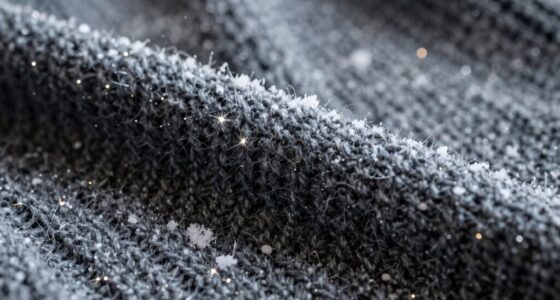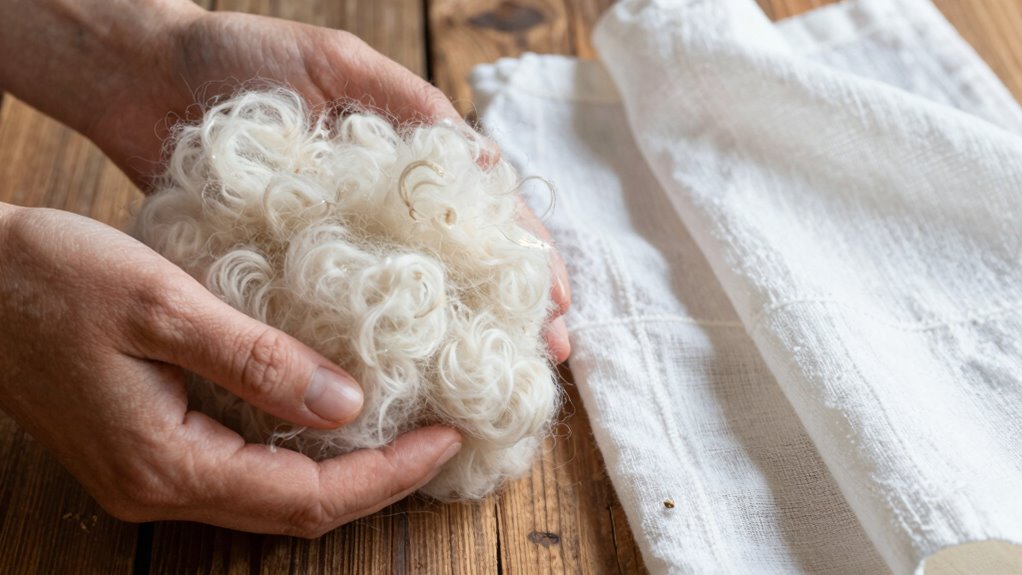

To care for natural fibers like wool, cotton, and linen, always check the care label first. Use cold or lukewarm water and eco-friendly detergents to wash these fabrics gently, avoiding harsh chemicals. Lay wool flat or hang in shaded areas to dry, and store them in a cool, dry place to prevent damage. Proper care helps your garments last longer, and there’s plenty more advice to keep your fibers in top shape.
Key Takeaways
- Always check care labels and wash wool, cotton, and linen with eco-friendly detergents in cold or lukewarm water.
- Hand wash wool or use a gentle cycle to prevent shrinking and maintain insulation.
- Dry natural fibers by laying flat or hanging in shaded areas; avoid sun exposure to prevent color fading.
- Store wool folded in a cool, dry place and avoid wringing or twisting fabrics to preserve shape.
- Avoid harsh chemicals like bleach and opt for eco-friendly stain removers to extend fiber lifespan and protect dyes.
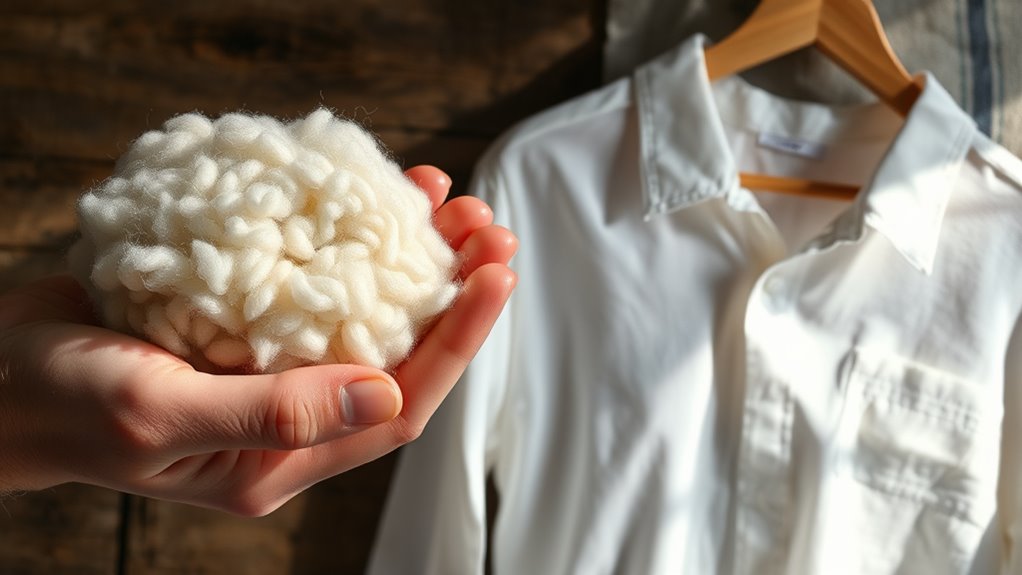
Have you ever wondered how to keep your natural fiber items looking their best? Maintaining fabrics like wool, cotton, and linen isn’t just about avoiding stains; it’s about respecting their delicate nature and ensuring they last for years. One of the best ways to do this is by choosing eco friendly dyes and supporting sustainable sourcing. When you pick dyes made from natural, plant-based ingredients, you reduce your environmental impact and help preserve ecosystems. These eco friendly dyes are gentler on your fabrics and skin, making your garments safer and more eco-conscious. Sustainable sourcing, on the other hand, guarantees that the fibers you use come from responsible farms and producers who prioritize environmental health, fair labor practices, and conservation. When you opt for products with transparent sourcing, you’re not only caring for your wardrobe but also supporting ethical practices worldwide.
Choosing natural dyes and sustainable sourcing helps protect the environment and extends your wardrobe’s lifespan.
To start, always read the care labels on your natural fiber clothing. Wool, for instance, requires gentle handling to maintain its insulating properties and prevent shrinking. When washing wool, opt for cold water and a mild, eco-friendly detergent—preferably one free from harsh chemicals and synthetic fragrances. Using eco friendly detergents helps protect both your fabric and the environment. Hand washing is often the safest choice, but if you use a machine, select a gentle cycle. Avoid hot water, which can cause wool to shrink or felt. For cotton and linen, washing in cold or lukewarm water is best to preserve their fibers’ integrity. Again, choose eco friendly detergents to minimize chemical runoff and pollution. Additionally, proper storage techniques can significantly extend the life of your natural fibers and keep them looking their best.
Drying is equally important. Never wring out natural fibers vigorously, as this can distort their shape. Instead, gently press out excess water and lay your items flat on a clean towel or hang them to dry in a shaded area. Sun-drying can fade colors over time, especially if your fabrics are dyed with natural or eco friendly dyes. When it’s time to store your natural fiber garments, keep them in a cool, dry place, preferably folded rather than hung for wool to prevent stretching.
Lastly, be mindful of your cleaning products and laundry habits. Avoid bleach and harsh stain removers—they can weaken fibers and damage dyes. Instead, look for eco-friendly stain removers that are gentle yet effective. Regularly caring for your natural fibers with these eco-conscious practices will extend their lifespan and keep them looking vibrant. Remember, every small step you take—like choosing sustainable sourcing and eco friendly dyes—not only preserves your favorite pieces but also contributes positively to the planet.
Amazon Product B0FFT5NDG2
As an affiliate, we earn on qualifying purchases.
Frequently Asked Questions
How Often Should I Wash Natural Fiber Clothing?
You should wash natural fiber clothing like wool, cotton, and linen based on use and care tips. Generally, washing frequency depends on how often you wear them and how dirty they get. For everyday wear, wash every 1-2 wears, but if they’re only slightly soiled, air them out instead. Always follow care tips to prevent damage, and avoid over-washing to keep fibers fresh and intact.
Can Natural Fibers Be Machine Dried Safely?
You can machine dry natural fibers, but you need to be cautious about dryer safety. Use a low heat setting to prevent shrinking or damage, and avoid over-drying. It’s best to skip fabric softeners, as they can leave residues that affect breathability and softness. Always check the care label first, and consider air drying for delicate or heavily soiled items to keep your natural fibers in great shape.
What’s the Best Way to Remove Stains From Wool?
Ever wonder how to handle stubborn stains on wool? To remove stains effectively, gently dab the area with a mixture of cool water and mild wool-safe detergent. Avoid rubbing, which can damage fibers. Use soft cloths and patience, and consider specific wool cleaning techniques for tough spots. Would you risk ruining your precious wool by using harsh chemicals? Stick to gentle, natural stain removal methods for best results.
How Do I Prevent Shrinking of Cotton and Linen?
To prevent fiber shrinkage and fabric stretching in cotton and linen, always wash these fabrics in cold water and use a gentle cycle. Avoid high heat when drying, as it can cause shrinking. Lay the garments flat to dry or use a low heat setting in the dryer. Keep in mind that excessive agitation can also lead to fiber shrinkage, so handle your fabrics gently to maintain their shape.
Are Natural Fibers More Eco-Friendly Than Synthetic Options?
Yes, natural fibers are generally more eco-friendly than synthetic options because they have a lower environmental impact and are biodegradable. You can feel good about choosing fibers like wool, cotton, and linen, as they break down naturally and often require less energy to produce. By opting for natural fibers, you reduce pollution and support sustainable practices, making them a smarter choice for eco-conscious consumers.
Amazon Product B0CFY364MZ
As an affiliate, we earn on qualifying purchases.
Conclusion
By following these gentle guidelines, you’ll help your natural fibers maintain their timeless charm and soft elegance. With a touch of care and patience, you’ll guarantee your wool, cotton, and linen pieces continue to tell their quiet stories for years to come. Remember, these fibers flourish with a little tender attention—like old friends—whose comfort depends on your thoughtful stewardship. Embrace the ritual, and your wardrobe will reward you with enduring beauty and whispered whispers of tradition.
Amazon Product B0BRV36JJ4
As an affiliate, we earn on qualifying purchases.
Amazon Product B0FHKS8W5J
As an affiliate, we earn on qualifying purchases.