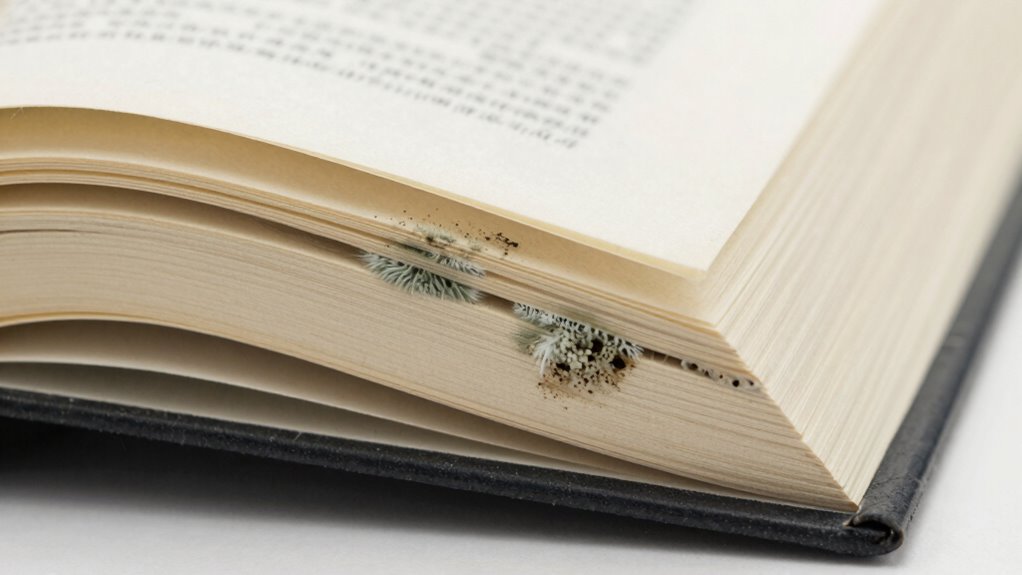
If you notice a musty smell, see visible mold spots, or detect dampness on your books, take immediate action. These signs indicate mold growth, which can damage pages and titles permanently. Check for high humidity, poor ventilation, or moisture exposure in your storage area. Gently clean surface mold with a soft brush and move affected books to a dry, well-ventilated space. Keep an eye on conditions to prevent future issues—more tips follow if you want to protect your collection.
Key Takeaways
- Look for musty odors, visible mold spots, or pages sticking together as early warning signs.
- Check for high humidity, moisture buildup, or dampness in storage areas.
- Immediately control moisture sources and reduce humidity with dehumidifiers or ventilation.
- Carefully clean surface mold with a soft brush and move books to dry, well-ventilated locations.
- Prevent future mold by maintaining proper storage conditions, using moisture absorbers, and monitoring humidity.
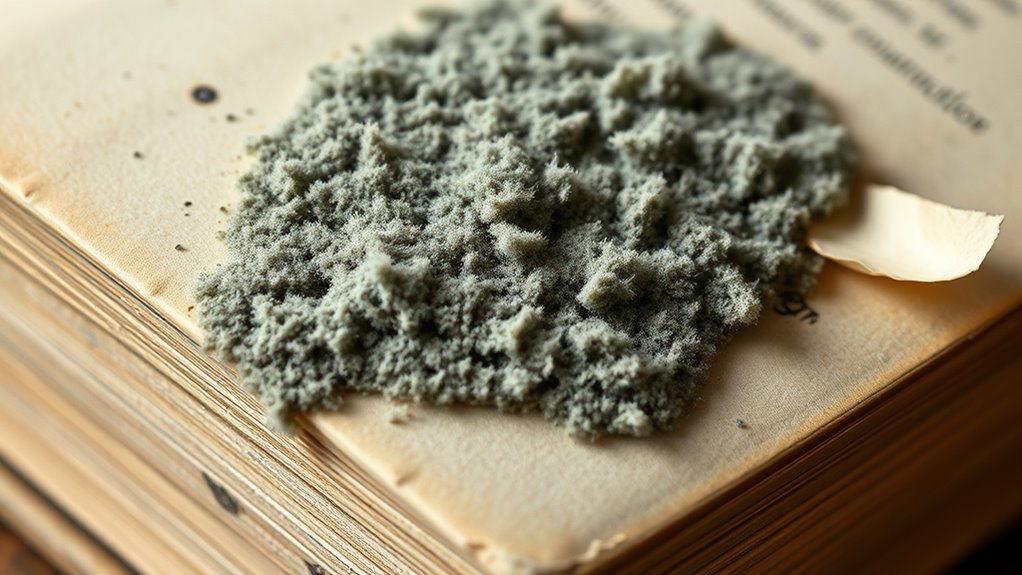
Books are vulnerable to mold growth when exposed to moisture, which can cause serious damage and health issues. One of the first signs you might notice is humidity issues in your storage area. If your space feels damp or feels like it retains moisture, mold is likely to thrive on your books. High humidity levels create the perfect environment for mold spores to settle and grow, especially if you store your books in basements, attics, or poorly ventilated closets. This moisture can be subtle at first, but over time, it leads to visible mold spots or a musty odor that’s hard to ignore.
Dampness and poor ventilation promote mold growth on books, causing damage and health risks.
The musty odor is often the earliest warning sign. If your books start to smell damp, stale, or earthy, it indicates mold growth is already underway. This odor isn’t just unpleasant; it’s a sign that spores are actively growing and releasing volatile organic compounds (VOCs). Ignoring this smell can result in further damage to your books and potential health risks for you and your family. You might also notice pages sticking together or a change in the texture of the paper, which are signs mold has started to eat away at the materials. Additionally, understanding mold growth conditions can help you better prevent infestations in your collection.
It’s important to act immediately when you detect these signs. First, identify and control the source of moisture. Use a dehumidifier if your space is overly humid, and ensure good ventilation to reduce moisture buildup. Moving your books to a cooler, dry location can help prevent further mold growth. Next, carefully inspect your collection for visible mold or signs of water damage. When cleaning, use a soft brush or cloth to gently remove mold from the surface. For heavily affected books, it’s best to consult a professional conservator to avoid damaging the pages further.
Prevention is key to avoiding future mold issues. Keep your storage area well-ventilated, utilize moisture absorbers like silica gel packs or activated charcoal, and regularly check for signs of humidity problems. Maintaining consistent temperature and humidity levels will help keep mold at bay. If you notice a persistent musty odor or ongoing humidity issues, it’s worth investing in proper climate control solutions. By staying vigilant and taking swift action, you can protect your books from mold damage and safeguard your health.
Frequently Asked Questions
Can Book Mold Cause Health Problems?
Book mold can indeed cause health problems, especially if you’re exposed frequently. The mold dangers pose health risk factors like allergies, respiratory issues, and asthma attacks. If you notice mold on your books, avoid handling them without protection, and clean or discard affected items promptly. Staying aware of mold dangers helps prevent long-term health issues, so always inspect your books and maintain a mold-free environment.
How Long Does It Take to Remove Mold From Books?
It takes anywhere from a few days to several weeks to remove mold from books, depending on mold severity. You need to use effective book drying techniques and mold removal tools to speed up the process. First, gently clean the mold with a soft brush or cloth, then dry the book thoroughly. Consistent monitoring and proper storage prevent future mold growth, ensuring your books stay clean and preserved.
Are All Mold Types Harmful or Just Some?
Not all mold species are harmful, but many can pose health risks, especially if environmental factors like humidity and poor ventilation promote their growth. Some mold types produce allergens or mycotoxins that can cause respiratory issues or allergic reactions. You should be cautious and identify mold species when possible. If you’re unsure, it’s best to consult a professional, as certain molds require specialized removal to guarantee safety.
What Are the Best Cleaning Methods for Moldy Books?
When it comes to mold removal from your books, a delicate touch is key—you don’t want to do more harm than good. Start with gentle book cleaning by vacuuming with a soft brush attachment, then lightly wipe with a cloth dampened with isopropyl alcohol. For stubborn mold, freeze the books briefly to halt growth. Remember, a stitch in time saves nine, so act quickly to preserve your collection.
How Can I Prevent Mold Growth on My Book Collection?
To prevent mold growth on your book collection, follow proper book storage tips by keeping books in a cool, dry, and well-ventilated area. Use mold-resistant materials, like acid-free boxes or covers, to provide an extra layer of protection. Avoid high humidity and direct sunlight, and regularly check your collection for signs of moisture or mold. These precautions help maintain your books’ condition and prevent mold from developing.
Conclusion
Remember, a stitch in time saves nine. If you notice mold or musty odors in your books, don’t ignore it—act quickly to prevent further damage. Keep your collection dry, ventilate the area, and clean affected books promptly. By staying vigilant and addressing issues early, you’ll preserve your cherished books for years to come. After all, an ounce of prevention beats a pound of cure, so stay proactive and protect your literary treasures today.