
TL;DR

Get business pricing on tools and workshop supplies
- Business-only prices and quantity discounts
- Tax-exempt purchasing
- Multiple users, one account, clear invoices
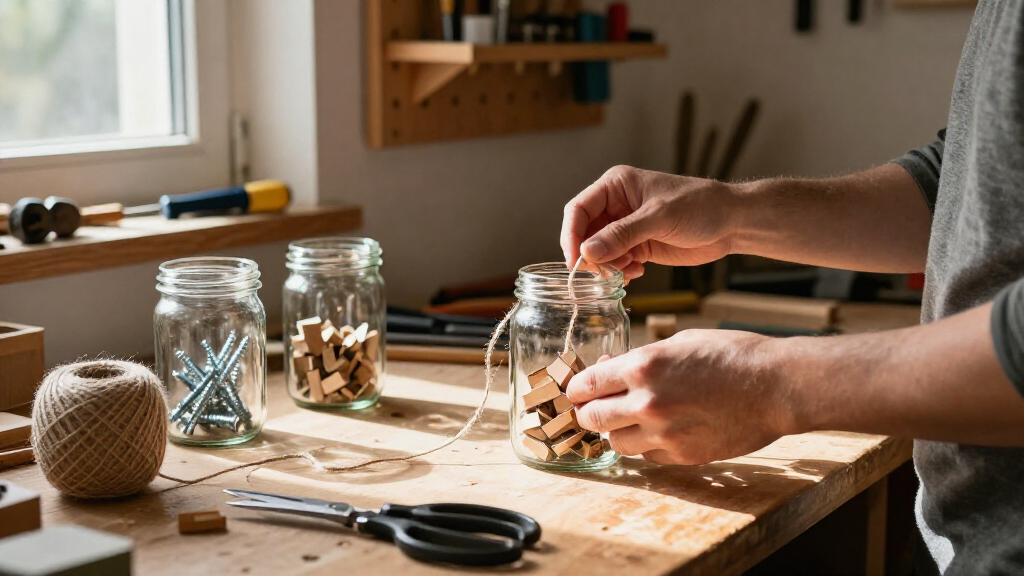
Hunker describes a DIY project that reuses old glass jars by wrapping them in jute twine to disguise labels and create rustic-looking storage containers. The guide recommends cleaning and drying jars first, then attaching twine with hot glue while keeping glue clear of the lid threads.
Hunker has outlined a do-it-yourself way to reuse old glass jars by wrapping them in jute twine, covering labels and logos while giving the containers a rustic appearance. The project uses clean, dry jars, twine and hot glue, and offers a low-cost option for organizing pantry or household items without displaying the original packaging.
The method starts with preparing the jar. Hunker advises peeling labels away slowly, then soaking the glass in soapy water to loosen leftover adhesive before scrubbing it off. For lingering odors, the report suggests leaving an equal mixture of vinegar and water in the jar overnight. The container should be fully dry before the twine is attached.
To cover the base, the instructions begin by gluing the end of the jute at the center of the jar’s bottom. The twine is then wound outward in a spiral and secured with hot glue as it is laid down. Once the spiral reaches the base’s edge, the wrapping can continue up the jar’s sides. A separate length can be started just below the lid, and another can be added to the lid itself if desired.
The report cautions against applying excess glue around the jar’s lid threads, since glue there could make the container difficult to open. The design can cover the whole jar or leave some glass visible. Hunker also suggests adding burlap-backed twine spirals or narrow twine stripes as decoration. The finished jars can hold household supplies or pantry items, while a battery-powered tea light offers another possible use as a centerpiece.
A Second Use for Household Jars
The project offers readers a way to reuse glass containers instead of discarding them and adapt their appearance for display. Covering brand marks and label residue may make jars more suitable for open shelves or countertops, where their contents and original packaging would otherwise remain visible. The jars can also be used in different rooms, depending on what they hold.
Its practical value is in the simple materials and flexible design: the report names jute twine and hot glue, with scrap burlap as an optional addition. Readers can decide how much of the glass to cover, which leaves a choice between concealing the jar and keeping its contents visible. The article presents this as a decorative household project, not as a tested claim about durability, food safety or long-term performance.
Popular right now

TCL QM64L 85-Inch QD-Mini LED 4K Smart Fire TV

Bose QuietComfort True Wireless Noise-Cancelling Earbuds, Black

De'Longhi Magnifica Evo Fully Automatic Espresso Machine with Manual Milk Frother, Silver
As an affiliate, we earn on qualifying purchases.
From Label Removal to Twine Wrap
The Hunker report frames twine wrapping as a way to address a common drawback of reusing jars: labels, expiration dates and company logos can make otherwise useful containers look unfinished. A natural-brown jute covering gives the outside a woven, basket-like appearance, according to the report, and can suit rustic or fall-themed decor.
The project has several possible finishes rather than one required pattern. A full wrap conceals more of the glass, while gaps preserve visibility. The suggested burlap detail is made by gluing flat twine spirals onto the fabric and trimming the fabric around them; narrow strips can instead create stripes. These are design options described by Hunker, not separate products or a newly announced commercial development.
““all you’ll need for adhering jute twine to the outsides of your glass jars is some hot glue and scrap burlap if you prefer.””
— Hunker
What the DIY Guide Does Not Test
The source describes a craft technique but does not report testing, costs, completion time or how long the twine and glue hold. It also does not specify a particular glue formulation, jar size or twine thickness. Results may vary with the materials and how they are applied; the report provides no performance comparison between full wraps and partial designs.
The guidance does not address whether decorated jars are suitable for food storage, washing, dishwashers or repeated exposure to moisture. It also does not assess the safety of putting a flame inside a twine-covered jar. Hunker’s suggested alternative is a battery-powered tea light; the source gives no instructions for using a real candle.
Preparing Jars Before Wrapping
Anyone following the method would first need to select a jar and remove its label and adhesive, then clean and dry the glass. The next step is to plan whether the design will cover the full surface or leave viewing gaps, before securing twine with hot glue from the base upward. Keeping the lid threads clear can help preserve the jar’s ability to open.
The report does not announce a follow-up project or a scheduled update. Its next steps are practical choices for the person doing the craft: decide whether to add burlap decoration, choose what the finished container will hold, and use a battery-powered light if repurposing it as a centerpiece.
Key Questions
What supplies are needed to cover a jar with twine?
Hunker lists jute twine and hot glue as the main supplies. Scrap burlap is optional for making decorative backing.
How should the jar be prepared?
Remove the label, soak and scrub away adhesive, and dry the jar before attaching twine. Hunker suggests an overnight soak with equal parts vinegar and water for lingering odors.
Where should the twine wrapping begin?
The instructions begin at the center of the jar’s bottom. Glue the twine end in place, wind it outward in a spiral, then continue up the sides.
How can the jar still be opened?
Avoid excess glue around the threads beneath the lid, which Hunker says could make opening the container difficult.
Can the finished jar be used as a candle holder?
Hunker suggests placing a battery-powered tea light inside as a centerpiece. The report does not provide instructions or safety testing for using a real flame.
Source: hunker.com