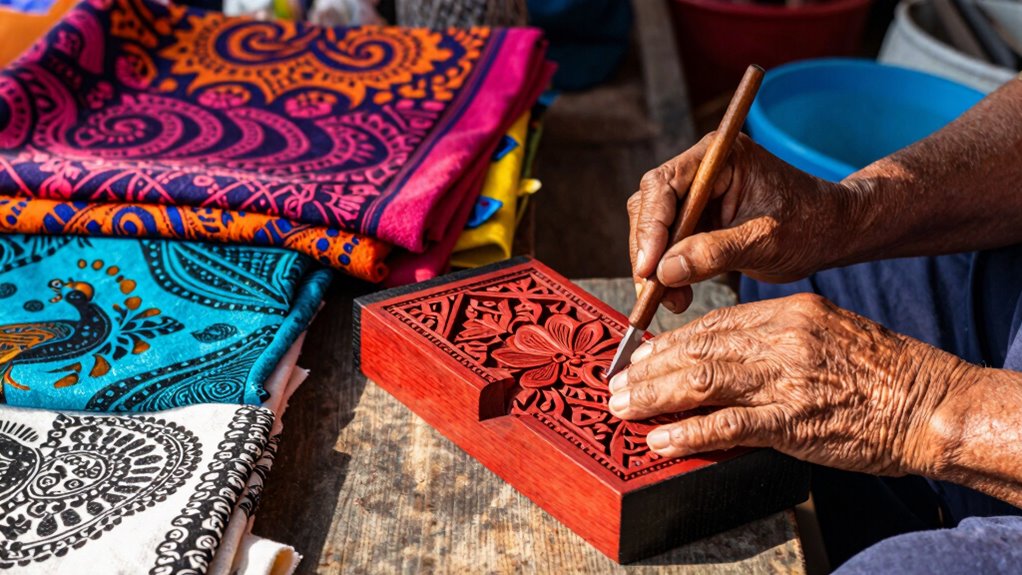

Block printing traditions have spread worldwide, blending regional motifs with cultural stories. In Asia, it began over a thousand years ago in China and then traveled along trade routes, influencing neighboring regions. African textiles showcase vibrant motifs symbolizing community and spiritual beliefs. European crafts evolved from utilitarian printing to decorative arts sharing patterns inspired by nature and mythology. Exploring how these designs move across cultures reveals a rich history of craftsmanship that continues to inspire modern innovations.

Get business pricing on tools and workshop supplies
- Business-only prices and quantity discounts
- Tax-exempt purchasing
- Multiple users, one account, clear invoices
Key Takeaways
- Block printing originated in China over 1,000 years ago and spread along trade routes like the Silk Road.
- Regional styles and motifs, such as African symbols and European nature-inspired designs, reflect local cultural narratives.
- Motifs travel across cultures through trade, migration, and cultural exchanges, blending traditional patterns worldwide.
- Techniques and motifs adapt over time, influenced by local materials, beliefs, and artistic innovations.
- Modern innovations, including digital tools and eco-friendly dyes, help preserve and evolve traditional block printing globally.
hand-carved wooden block printing stamps
As an affiliate, we earn on qualifying purchases.
As an affiliate, we earn on qualifying purchases.
The Origins and Evolution of Block Printing in Asia
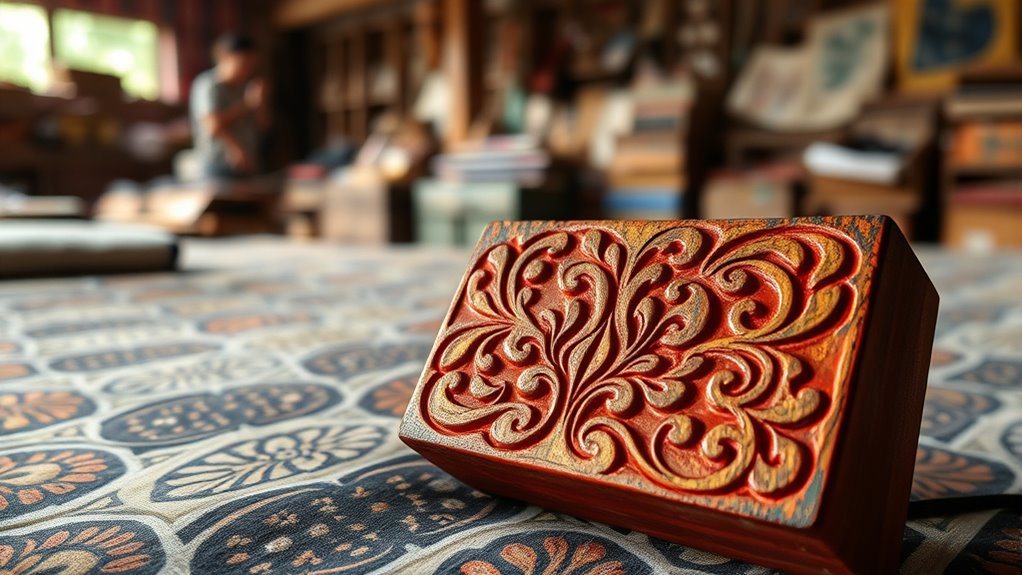
Although the earliest evidence of block printing in Asia dates back over a thousand years, its origins are believed to lie in China during the Tang Dynasty. This technique likely spread along the Silk Road, facilitating cultural exchange and trade across Asia and beyond. Dynastic influence played a significant role in refining and standardizing printing methods, as rulers sought to promote official texts and artistic expression. As trade routes expanded, artisans adapted motifs and techniques, blending local traditions with Chinese innovations. Over time, block printing evolved from simple patterns to intricate designs, influencing neighboring regions. The Silk Road’s connectivity helped transmit these artistic practices, making block printing a crucial part of Asia’s cultural and commercial history. This legacy laid the groundwork for later developments in textile and paper printing.
African textile block printing kits
As an affiliate, we earn on qualifying purchases.
As an affiliate, we earn on qualifying purchases.
African Textiles: Patterns and Symbolism in Block Printing
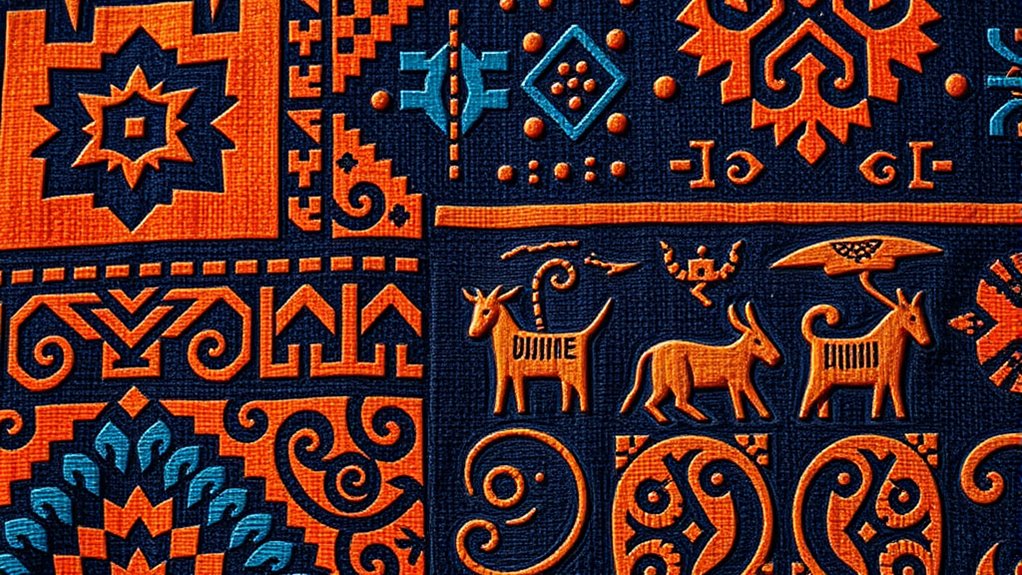
African textiles showcase a vibrant tapestry of patterns and symbolism, with block printing playing a pivotal role in their creation. You’ll notice that each motif carries symbolic meanings, often representing social status, spiritual beliefs, or community identity. The aesthetic styles vary across regions, from bold geometric shapes to intricate, flowing designs. When you explore these textiles, you see how artisans use colors and patterns to tell stories and convey cultural values. Block printing techniques allow for repeated motifs that enhance the visual impact and reinforce symbolism. This artistry isn’t just decorative—it’s a language that communicates tradition and identity. Understanding the color symbolism used in these textiles helps deepen appreciation for their cultural significance. By understanding these symbolic meanings, you gain insight into the rich cultural heritage embedded in African textiles, making each piece more than just fabric.
As an affiliate, we earn on qualifying purchases.
European Paper Arts: From Printing Blocks to Decorative Crafts
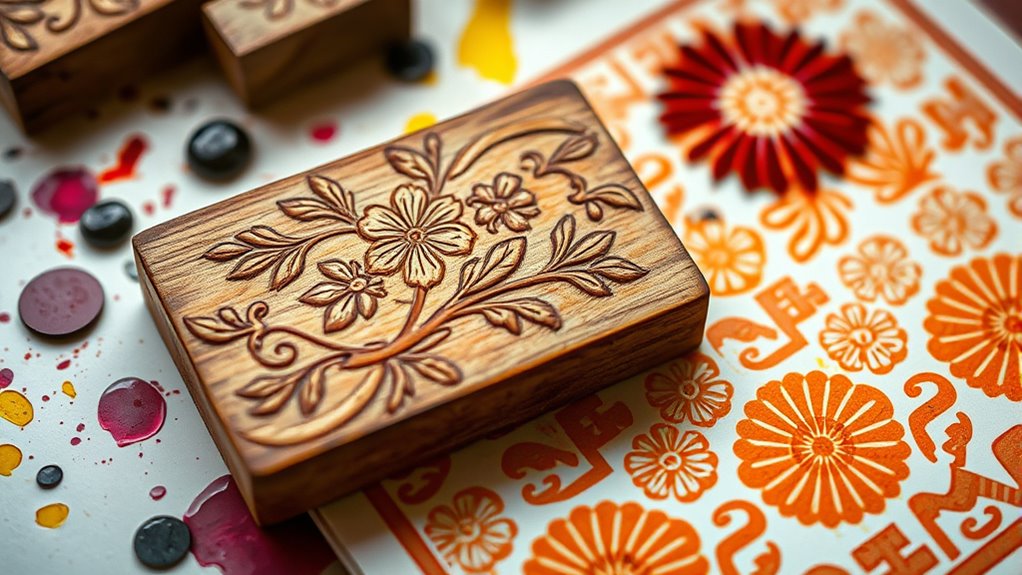
European paper arts have a rich history that bridges functional printing techniques and decorative crafts, showcasing the artistic potential of paper as a medium. You’ll find that European craftsmanship evolved from early printing blocks used for book illustrations to intricate decorative crafts like papier-mâché and handcrafted stationery. Artists and artisans applied decorative motifs inspired by nature, mythology, and architecture, transforming simple paper into elaborate art forms. These motifs often traveled across regions, influenced by trade and cultural exchanges, creating a shared visual language. You can observe how traditional printing blocks were adapted for decorative purposes, blending utility with artistry. This legacy of craftsmanship highlights Europe’s ability to turn everyday materials into expressive, enduring crafts that celebrate both functional and aesthetic qualities. Additionally, the cultural exchange facilitated the sharing of motifs and techniques, enriching the diversity of European paper arts and demonstrating how artistic motifs traveled and evolved through interconnected communities. The use of printing blocks not only supported mass production but also inspired a variety of decorative arts that spread across borders, fostering a rich tradition of visual storytelling.
traditional Asian block printing fabric
As an affiliate, we earn on qualifying purchases.
As an affiliate, we earn on qualifying purchases.
Motifs and Mythology: Stories Carried by Patterns Across Cultures
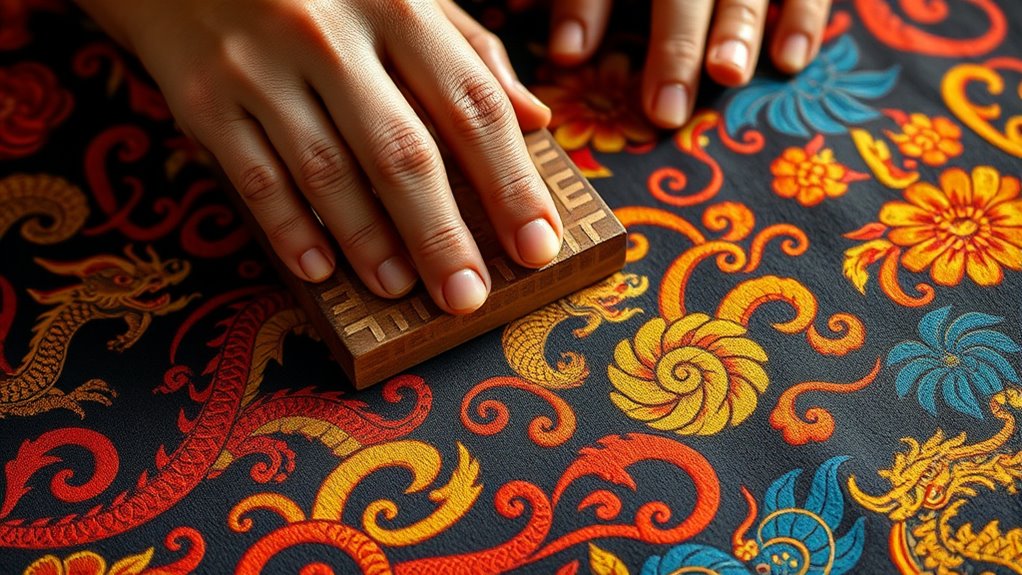
Patterns and motifs in traditional block printing often serve as more than decorative elements; they carry stories, beliefs, and cultural identities. You’ll notice how mythical symbols and storytelling motifs are woven into designs, revealing legends and spiritual meanings. These motifs act as visual narratives, connecting communities across generations. For example, you might see:
Traditional block printing weaves stories and beliefs into vibrant, symbolic designs across generations.
- Mythical creatures symbolizing protection or power
- Floral patterns representing fertility or renewal
- Geometric shapes embodying spiritual beliefs
Techniques and Materials: How Craftsmanship Shapes Designs

The craftsmanship behind traditional block printing deeply influences the final designs, as artisans carefully select techniques and materials to create distinctive patterns. Your choice of dye techniques, such as natural or chemical dyes, affects the vibrancy and durability of the print. Natural dyes, derived from plants or minerals, bring earthy tones and deepen over time, while chemical dyes offer brighter, more consistent colors. Material sourcing also plays a vital role; artisans select fabrics like cotton, silk, or linen based on their absorbency and texture, shaping how the dye bonds and the print appears. The quality of the fabric and the dyeing process directly impact the clarity and precision of the motifs. Ultimately, your mastery of these techniques and sourcing decisions define the uniqueness and artistry of each traditional block print.
The Global Influence of Traditional Motifs in Modern Design
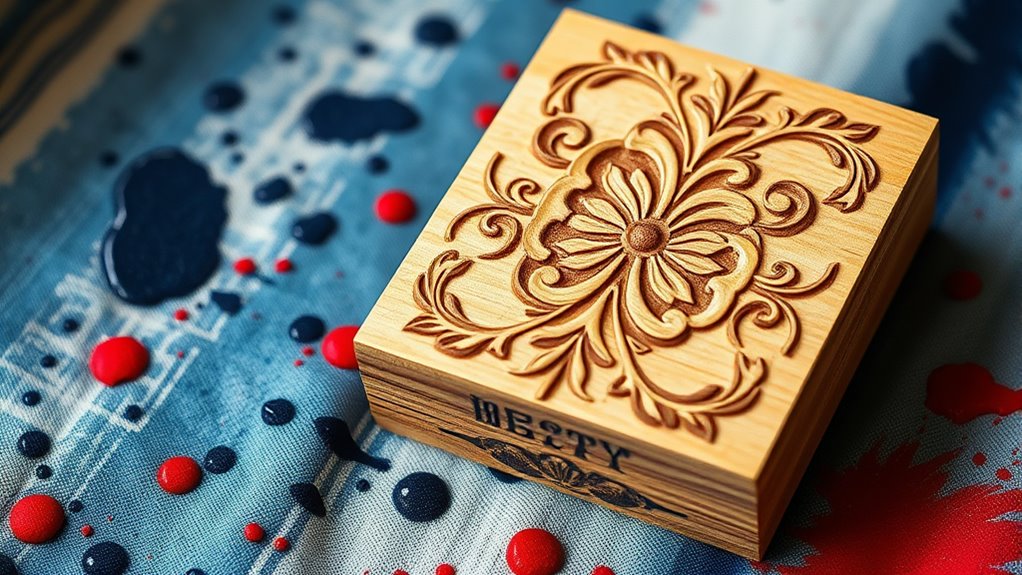
You’ll notice how traditional motifs carry deep cultural meanings that inspire modern designs worldwide. Artists and designers adapt these patterns, blending heritage with current trends to create fresh, meaningful visuals. As these motifs evolve, they continue to influence contemporary aesthetics and storytelling through textile art. Incorporating design techniques that respect cultural origins ensures authenticity and enriches the visual narrative.
Cultural Significance in Patterns
Traditional motifs in block printing carry deep cultural meanings that continue to influence modern design worldwide. These patterns often embody symbolic meanings and serve as visual storytelling, connecting communities to their heritage. When you see these motifs, you’re witnessing a form of cultural storytelling that preserves history and beliefs.
- They represent spiritual beliefs, like protection or fertility.
- They signify social status or community identity.
- They carry stories passed down through generations, maintaining cultural continuity.
Contemporary Adaptations and Trends
Have you noticed how traditional motifs from block printing now appear in contemporary design across fashion, home decor, and digital media? Digital innovation has made it easier to incorporate these patterns into everyday items, blending tradition with modern aesthetics. Designers often adapt motifs to create bold, fresh visuals that resonate globally. Many brands embrace sustainable practices by using eco-friendly inks, natural dyes, and biodegradable materials, ensuring that tradition aligns with environmental responsibility. This trend highlights how ancient art forms can evolve without losing their cultural roots. Additionally, tech-enabled printing techniques allow for more precise and accessible reproduction of traditional motifs, expanding their reach and influence. As a result, traditional motifs gain new life in contemporary settings, making them relevant and stylish today. Your awareness of these adaptations connects you to a broader movement that values heritage while prioritizing sustainability.
Preserving Heritage: Contemporary Uses and Revival of Block Printing
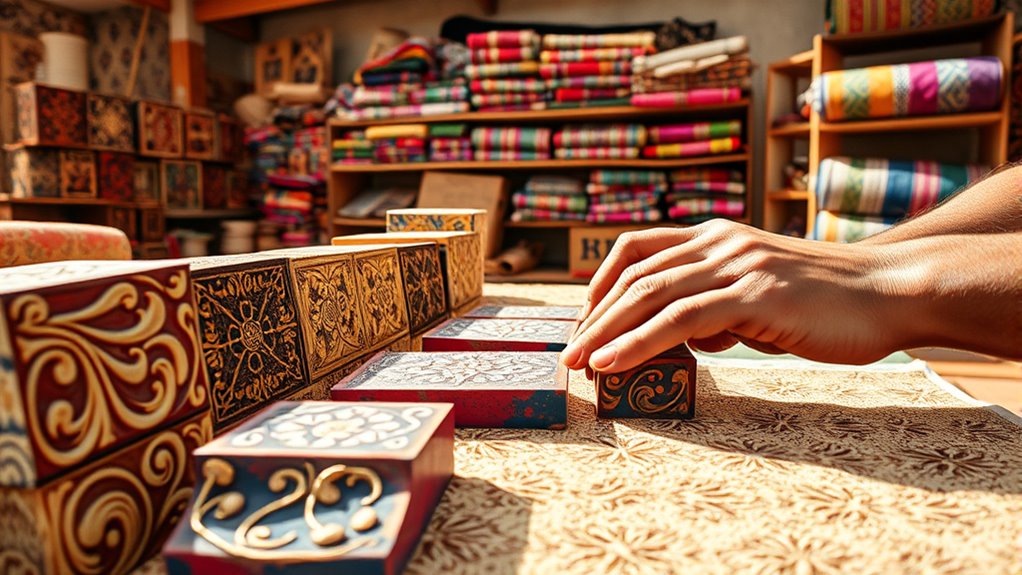
Despite the rapid pace of modern manufacturing, many artisans and designers are actively reviving block printing to preserve its rich cultural heritage. This modern revival emphasizes sustainable practices, ensuring artisans use eco-friendly dyes and locally sourced materials. By blending tradition with innovation, they create unique pieces that honor history while appealing to contemporary tastes. You’ll find these efforts reflected in small workshops and global fashion brands alike, emphasizing authenticity and environmental responsibility. Additionally, incorporating water-based dyes reduces environmental impact and supports eco-conscious production. This movement not only preserves age-old techniques but also enhances sustainability practices, ensuring that block printing remains relevant and sustainable for generations to come. Exploring the mechanics of traditional printing can inspire new methods to adapt these crafts for modern audiences, fostering both preservation and innovation. Incorporating visual and auditory cues from speech therapy techniques can inspire innovative ways to teach and preserve these traditional crafts, further supporting the cultural significance of this art form.
Frequently Asked Questions
How Do Different Cultures Influence Each Other’s Block Printing Motifs?
You see that different cultures influence each other’s block printing motifs through cultural exchange, where artisans share ideas and techniques. As motifs travel, they often undergo adaptation to fit local meanings and aesthetics. This process enriches the designs, blending traditional patterns with new influences, creating unique hybrid motifs. Your appreciation grows for how these exchanges preserve heritage while fostering innovation, reflecting a dynamic dialogue between cultures through shared artistic expression.
Are There Specific Symbols Universally Recognized in Block Printing Traditions?
Think of universal symbols like bridges connecting diverse cultures through shared motifs. In block printing, certain symbols—like the lotus, mandalas, or geometric patterns—are widely recognized across traditions. These shared motifs act as visual language, transcending borders and conveying common meanings. While specific symbols vary, their recurring presence highlights humanity’s universal desire for harmony, spirituality, and storytelling, making them instantly recognizable regardless of where you’re from.
How Has Digital Technology Impacted Traditional Block Printing Methods?
Digital technology has notably impacted traditional block printing methods through digital transformation and technological innovation. You now use digital tools to design intricate motifs more efficiently, reducing the time and effort needed for carving blocks. These innovations allow for precise replication and easy modifications, blending traditional craftsmanship with modern techniques. As a result, artists can experiment more freely while preserving the cultural essence of block printing, making it more accessible and adaptable in today’s digital age.
What Role Do Local Ecosystems Play in Shaping Materials Used in Block Printing?
Your local ecosystems directly influence the materials you use in block printing. They provide essential resources like plant-based dyes, which give your prints vibrant, natural colors, and natural fibers such as cotton or silk, shaping the texture and quality of your work. By sourcing sustainably from your environment, you guarantee your techniques remain eco-friendly and authentic, honoring traditional practices while supporting local biodiversity and community livelihoods.
Can Modern Block Printing Techniques Be Considered Authentic Traditional Practices?
Think of modern block printing techniques as a river merging with an ancient stream. While they incorporate new methods, they still carry the essence of authentic preservation. These adaptations blend tradition with innovation, allowing artisans to keep cultural motifs alive. So, yes, modern practices can be considered authentic, as long as they honor the core techniques and motifs, ensuring the spirit of the original craftsmanship flows through every print.
Conclusion
As you explore block printing’s rich history, you’ll see how ancient motifs travel like whispers across continents, blending tradition with innovation. Despite modern machines, the craftsmanship’s soul remains alive, reminding you that timeless artistry endures amid changing technologies. It’s a dance between preservation and progress, where patterns tell stories of cultures past and present. Embrace this vibrant heritage, knowing every print connects you to a world of stories etched in every motif.
Fall Picks
fall essentials
As an affiliate, we earn on qualifying purchases.