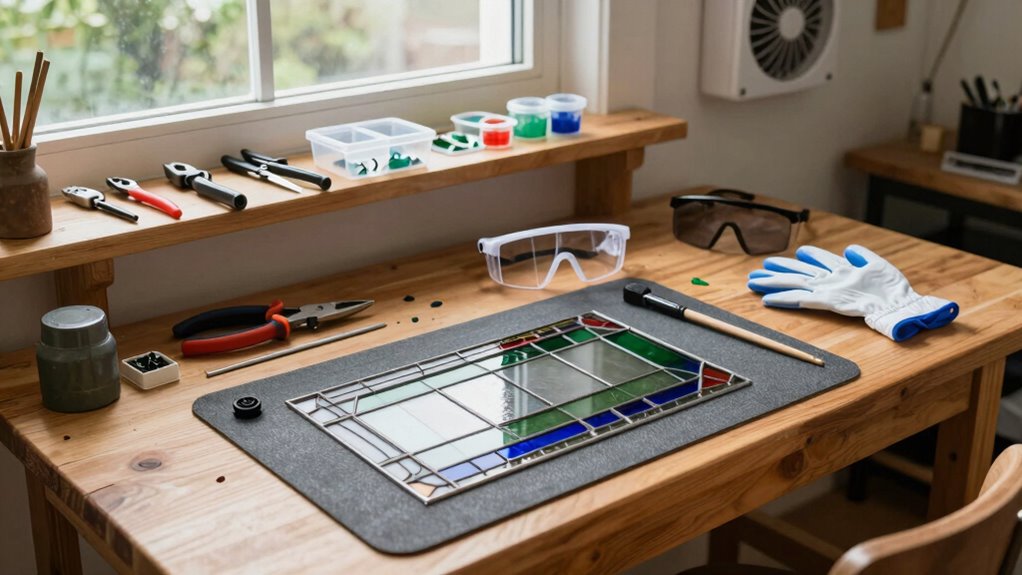

To plan a safer stained glass workspace at home, focus on proper ventilation by installing exhaust fans or working near open windows to reduce fumes and dust. Wear protective gear like safety glasses, gloves, and masks when handling sharp glass or chemicals. Keep your space organized and well-lit, with stable work surfaces away from flammable materials. Regular maintenance and safety training are key. If you want to know how to implement these tips effectively, keep exploring further.
Key Takeaways
- Ensure proper ventilation with exhaust fans or open windows to remove fumes and dust effectively.
- Equip your workspace with safety gear like goggles, gloves, and respirators, and inspect regularly.
- Organize tools and materials to prevent clutter, and use stable, heat-resistant work surfaces.
- Follow manufacturer safety instructions for all tools and chemicals, and handle hazardous materials carefully.
- Maintain routine safety training and equipment checks to stay aware of hazards and ensure proper safety practices.
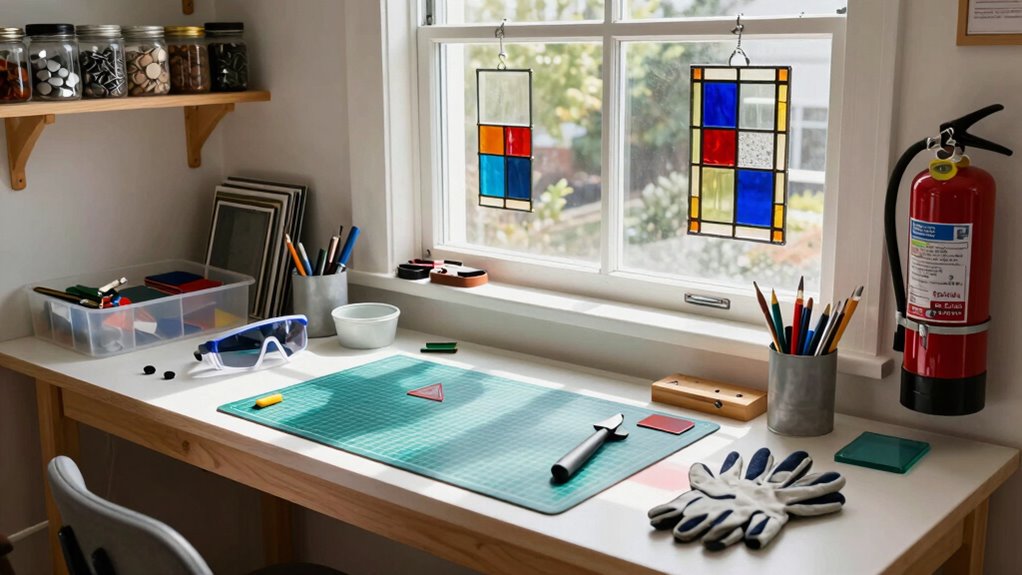
Creating a safe stained glass work area at home is essential for enjoying your craft without unnecessary risks. The first step is ensuring proper ventilation in your workspace. Cutting, grinding, and soldering glass produce fumes that can be harmful if inhaled regularly. Installing an exhaust fan or working near open windows helps keep the air fresh and reduces the buildup of toxic particles. You might also consider adding a dedicated ventilation system designed for craft studios, especially if you work with chemicals or solder for long periods. Good airflow not only protects your lungs but also keeps dust and fumes from settling, making your entire workspace healthier.
Proper ventilation is key for safe, healthy stained glass crafting at home.
Equally important is wearing the right protective gear. Safety glasses or goggles should be your first line of defense against flying glass shards or splinters. When cutting or grinding glass, tiny fragments can easily become airborne, risking eye injury. Gloves are also essential, particularly when handling sharp edges or working with chemicals like flux or patina solutions. Choose gloves that provide dexterity without sacrificing protection, and replace them if they become torn or worn. A dust mask or respirator is indispensable when working with fine glass dust or fumes from soldering. These masks filter out hazardous particles, preventing respiratory issues over time. Never skip protective gear, even when you think a task is quick or harmless; accidents happen quickly, and safety gear minimizes injuries.
Design your workspace with safety in mind. Keep a clean, clutter-free area to prevent accidental cuts or trips. Organize tools and materials so you can access everything easily without reaching over sharp objects. When setting up your station, make sure there’s enough space for ventilation equipment and that your work surface is stable and resistant to heat and moisture. Adequate lighting is also essential for precision and safety, helping you see fine details clearly and avoid mishandling glass. Keep flammable materials, such as rags or chemicals, away from heat sources like soldering irons or lamps. Additionally, understanding proper safety procedures can significantly reduce risks associated with working with glass and chemicals. It’s also helpful to stay informed about hazardous materials commonly used in stained glass work to ensure safe handling and storage. Incorporating safety training into your routine can further enhance your awareness and response to potential hazards. Remember that regular maintenance of your tools and safety equipment ensures they function correctly when needed.
Finally, educate yourself about safe practices. Read manufacturer instructions carefully for all tools and chemicals. Regularly inspect your protective gear for signs of wear, and replace items when necessary. By integrating proper ventilation, using protective gear consistently, and organizing your workspace thoughtfully, you create a safer environment where you can focus on your craft without worry. Safety isn’t just an afterthought; it’s the foundation that allows your stained glass projects to flourish while keeping you protected from preventable accidents.
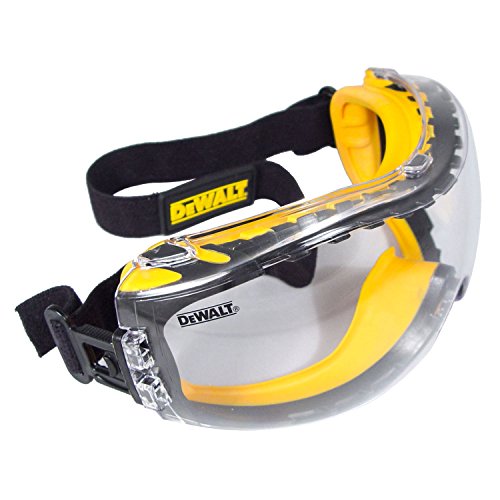
DEWALT DPG82-11 Concealer Clear Anti-Fog Dual Mold Safety Goggle, Clear Lens, 1 Pair
- Lens Coating: Hard coated for scratch resistance
- Anti-Fog Coating: Prevents lens fogging
- Comfort Fit: Dual injected rubber conforms to face
As an affiliate, we earn on qualifying purchases.
As an affiliate, we earn on qualifying purchases.
Frequently Asked Questions
What Are the Best Storage Solutions for Stained Glass Tools?
You should use clear, labeled storage containers for your stained glass tools, keeping glass cutting tools separate from lead framing supplies. A pegboard with hooks works well for hanging smaller tools, making them easily accessible. Consider a dedicated drawer for sharp objects and a sturdy toolbox for fragile glass pieces. This organization minimizes accidents and keeps your workspace safe, efficient, and tidy during your stained glass projects.
How to Ensure Proper Ventilation During Soldering?
Did you know that improper soldering ventilation can expose you to high levels of harmful fumes? To guarantee proper ventilation during soldering, install a reliable ventilation system and use fume extraction tools. These systems draw fumes away from your workspace, reducing health risks. Always position the fume extractor close to your work area, and consider working near open windows or using an exhaust fan to improve airflow and keep hazardous fumes out of your breathing zone.
Which Personal Protective Equipment Is Essential?
You should always wear protective gloves and safety goggles when working with stained glass. Gloves protect your hands from sharp glass edges and soldering fumes, while goggles shield your eyes from glass shards, UV light, and solder splashes. Always guarantee your PPE fits well and stays in place. Prioritizing these essentials minimizes injury risks, keeps you safe, and allows you to focus on creating beautiful stained glass art confidently.
How to Safely Dispose of Broken Glass Pieces?
Think of disposing of broken glass like carefully handling fragile treasure. You should carefully sweep up the shards with a broom and dustpan, avoiding direct contact. Place the pieces in a sturdy, puncture-proof container like a cardboard box or thick plastic container, sealing it tightly. Follow safety precautions such as wearing gloves and clearly labeling the container as “broken glass” to prevent injuries during disposal. Dispose of it according to local regulations.
What Are Effective Ways to Organize Small Glass Fragments?
You can organize small glass fragments by using a dedicated container with a tight lid, clearly labeled for safety. Keep a small brush and dustpan nearby for cleanup, and avoid using your hands directly. Make certain your workspace lighting is bright and well-distributed to see tiny shards clearly. When glass cutting, handle fragments carefully, and always dispose of them in a secure container to prevent accidents.
ventilation exhaust fan for craft studio
As an affiliate, we earn on qualifying purchases.
As an affiliate, we earn on qualifying purchases.
Conclusion
Now that you’ve set up your stained glass workspace with safety in mind, it’s ironic how the most beautiful creations often come from the chaos of safety precautions. While you might think safety measures slow down your artistic flow, they actually free you to focus on your craft without worry. Remember, a safer studio isn’t just about avoiding accidents; it’s about giving your creativity the freedom to shine—without any dangerous surprises.

Mask with Detachable Goggles for Mowing, Riding & Cutting
- Versatile Outdoor Protection: Suitable for mowing, riding, cutting, and more
- UV and Debris Shield: Protects face and eyes from debris and UV rays
- Anti-Fog HD Lens: Clear, anti-scratch, high-impact resistant lens
As an affiliate, we earn on qualifying purchases.
As an affiliate, we earn on qualifying purchases.
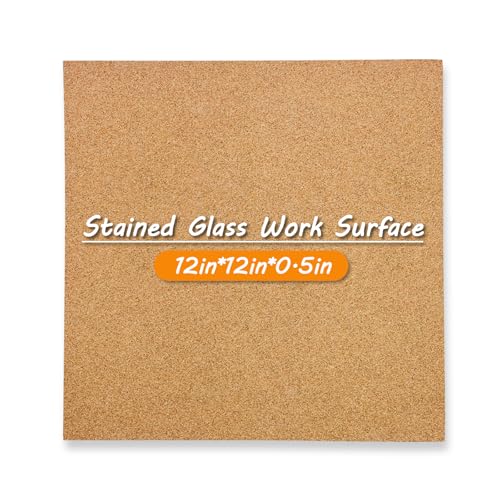
WINUSD Stained Glass Supplies Heat Resistant Work Surface Cutting Mat
- Heat Resistant Surface: Protects desktops from heat and scratches
- High-Quality Material: Made of 1/2 inch insulating, durable material
- Versatile Size: 12×12 inch rectangular work surface
As an affiliate, we earn on qualifying purchases.
As an affiliate, we earn on qualifying purchases.