When you start casting jewelry at home, you gain more control over your materials, techniques, and overall quality. You’ll learn to handle pure metals, refine impurities, and use specific casting methods that fit your style. This process also requires careful management of temperature and troubleshooting issues like warping or porosity. As you become more skilled, you’ll craft unique, high-quality pieces. To discover the key steps and tips for successful home casting, explore further.
Key Takeaways
- Increased control over design and customization of jewelry pieces.
- Greater need for strict safety measures and proper handling of materials.
- More hands-on experimentation with casting techniques and troubleshooting.
- Enhanced understanding of metal properties and cooling processes.
- Greater responsibility for maintaining a clean, well-ventilated workspace.
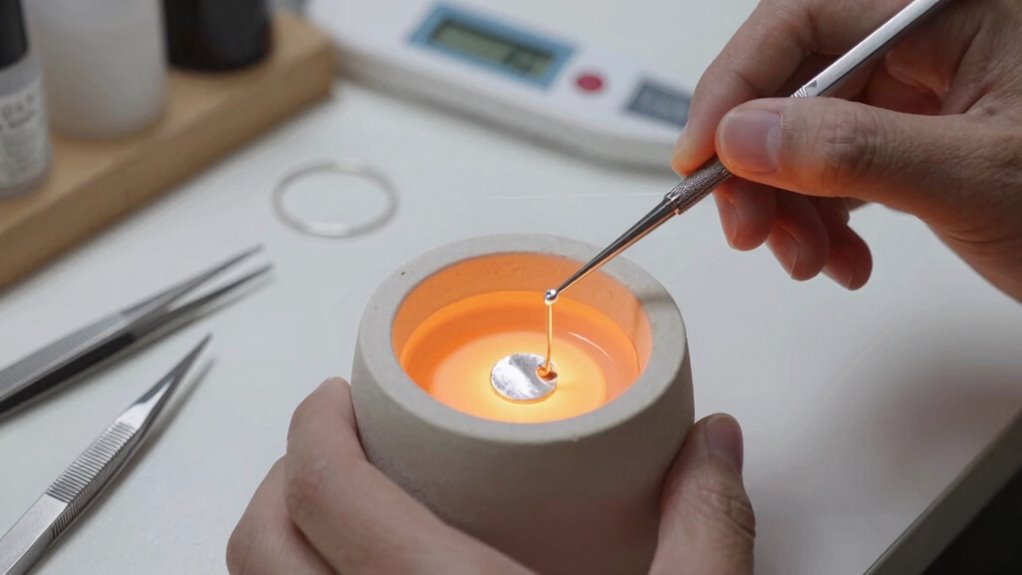
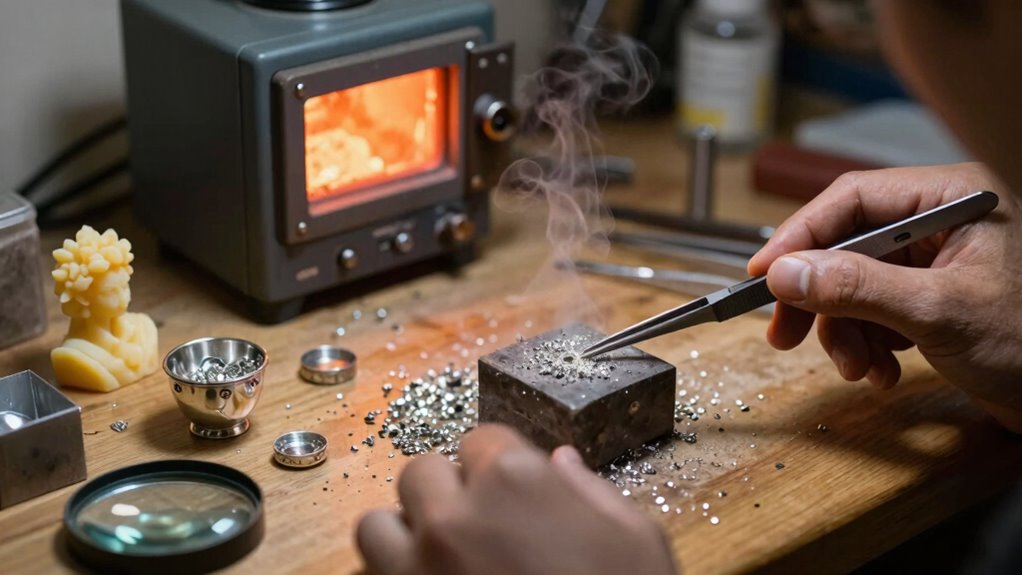
Before you start melting and casting metals, you must prioritize safety precautions. Working with high temperatures, molten metal, and potentially hazardous fumes requires careful planning. Always work in a well-ventilated area, wear protective gear like heat-resistant gloves, safety glasses, and a respirator if necessary. Keep a fire extinguisher nearby, and make sure your workspace is free of flammable materials. Handling chemicals and molten metal involves risks, so educate yourself on proper procedures and never skip safety steps. When it comes to metal purification, it’s essential to start with clean, high-quality raw materials. Impurities in your metal can lead to defects in your finished pieces, such as porosity or weak spots. You’ll need to melt the metal in a crucible, then skim off slag or impurities that float to the surface, ensuring that only pure metal is poured into your molds. Proper purification improves the overall quality and durability of your jewelry. Additionally, understanding metal properties helps you select the right metals for your projects and avoid issues during casting. Developing a solid knowledge of metal characteristics can help you troubleshoot common casting problems more effectively. Starting to cast at home also means you’ll need to learn about material selection and preparation. Different metals require different melting points and handling techniques, so understanding these basics helps you avoid mistakes. It’s also beneficial to familiarize yourself with casting techniques to ensure a successful process and a high-quality finish. You’ll also need to create or buy molds, and mastering the pouring process is essential to achieve a smooth, even surface. As you gain experience, you’ll notice how small adjustments in your technique can drastically improve the finish of your jewelry. Casting at home allows for experimentation, but it also demands patience and attention to detail. Developing a good understanding of metal cooling rates can further enhance your results by preventing common issues like cracking or warping. Additionally, paying close attention to temperature control during melting and pouring can significantly impact the outcome of your cast pieces.

Goody King Resin Jewelry Making Starter Kit – Resin Kits for Beginners with Molds and Resin Jewelry Making Supplies – Silicone Casting Mold, Tools Set Clear Epoxy for DIY Jewelry
- Complete Resin Jewelry Kit: Includes molds, resin, and tools
- All-in-One Package: Resin, hardener, tools, and accessories included
- User-Friendly for Beginners: Easy instructions and fast curing process
As an affiliate, we earn on qualifying purchases.
As an affiliate, we earn on qualifying purchases.
Frequently Asked Questions
What Safety Precautions Are Essential for Home Casting?
When casting jewelry at home, you must prioritize safety by wearing proper safety gear like gloves, goggles, and a mask to protect against heat, fumes, and molten metal splashes. Make sure good ventilation to prevent inhaling harmful fumes and to maintain air quality. Keep a fire extinguisher nearby and work in a well-ventilated area to avoid accumulation of dangerous gases, making your home casting process safer and more controlled.
How Do I Choose the Right Type of Metal for Beginners?
Choosing the right metal is like picking a loyal companion for your creative journey. For beginners, look for casting alloys with high metal purity, ensuring easier casting and fewer defects. Start with soft, forgiving metals like pewter or brass, which are beginner-friendly and budget-conscious. These metals help you learn casting techniques without frustration, allowing you to focus on honing your craft while enjoying the process of transforming raw materials into jewelry art.
Can I Cast Complex Designs at Home Easily?
You can cast complex designs at home, but it requires attention to design complexity and material compatibility. Start with simpler patterns to build your skills, then gradually try more intricate ones. Make sure your chosen materials are compatible with your casting process to prevent issues like cracking or warping. With patience and practice, you’ll improve your technique and handle more complex designs confidently, making your jewelry truly unique.
What Tools Are Necessary for DIY Jewelry Casting?
You’ll need basic tools like a torch, crucible, and mold for DIY jewelry casting—these are your magic wands. A good set of pliers, tweezers, and a polishing kit help with gemstone setting and finishing techniques. Don’t forget a kiln or small furnace for melting metals. With these tools, you can craft stunning pieces from start to finish, transforming raw materials into jewelry that truly shines.
How Do I Prevent Air Bubbles in My Castings?
To prevent air bubble formation in your castings, tap or vibrate the mold gently before pouring, which helps release trapped air. Use a syringe or small brush to remove bubbles from intricate details. Pour your metal slowly and steadily to minimize turbulence. These steps reduce casting surface defects caused by trapped air. Remember, taking your time and carefully preparing your mold guarantees a smooth, bubble-free finish, improving your overall jewelry quality.

Sand Casting Set with 10 Lbs Petrobond, Tongs, Graphite Crucible, Cast Iron Mold Frame, Parting Powder, Flux, Safety Gear Melt Metals
- Includes: Sand, mold frame, tongs, crucible, safety gear
- Versatile Casting: Duplicate objects from various metals
- Mold Flask Size: Sturdy cast iron, 4.75 x 3 x 2 inches
As an affiliate, we earn on qualifying purchases.
As an affiliate, we earn on qualifying purchases.
Conclusion
Starting to cast jewelry at home transforms your creative process, making craftsmanship more personal and immediate. You’ll gain new skills and a deeper appreciation for each piece you create, much like a blacksmith of old forging their legacy. Remember, even the greatest artisans had humble beginnings—so embrace the journey, learn from every pour, and cherish the magic of turning raw materials into treasured art. Now, go ahead—your atelier awaits.

HOMEIDOL Resin Jewelry Molds Pendant Trays Making Kit with 30Pcs 5 Styles Metal Pendant and 1 Pc Silicone Epoxy Jewelry Casting Molds for Pendant Crafting DIY Jewelry Gift Making
- Variety of Pendant Styles: 5 different shapes and colors
- Durable Materials: Metal trays with electroplating, flexible silicone molds
- Complete Jewelry Making Kit: Includes 31 pieces with multiple styles and shapes
As an affiliate, we earn on qualifying purchases.
As an affiliate, we earn on qualifying purchases.

vouiu 10-Piece Jewelry Pliers Set Jewelry Making Tools
- Suitable for Beading Projects: Ideal for fine hobby work and beading
- Complete Jewelry Pliers Set: Includes 10 different pliers for various tasks
- High Carbon Steel Construction: Durable and forged for strength
As an affiliate, we earn on qualifying purchases.
As an affiliate, we earn on qualifying purchases.