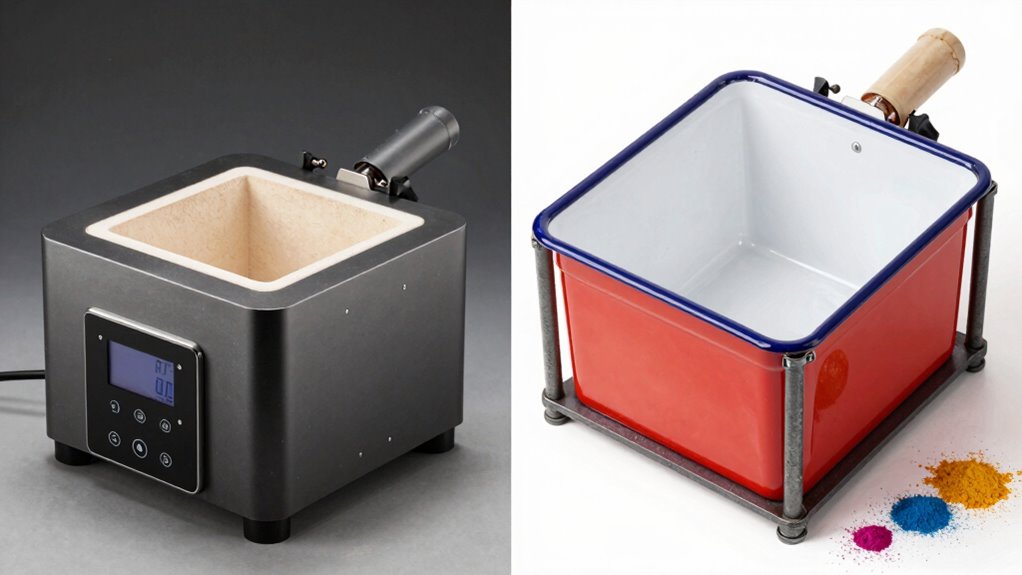

If you’re working with delicate metal clay jewelry, a metal clay kiln offers precise temperature control, quick firing, and energy efficiency, making it ideal. For glass fusing and high-heat projects, an enamel kiln handles higher temperatures and longer run times better. Consider your project scope, safety needs, and budget to choose the right kiln. Keep exploring to discover more details that can help you make the best choice for your work.

Get business pricing on tools and workshop supplies
- Business-only prices and quantity discounts
- Tax-exempt purchasing
- Multiple users, one account, clear invoices
Key Takeaways
- Choose a metal clay kiln for precise temperature control and quick firing of jewelry and metal projects.
- Opt for an enamel kiln when high temperatures and long firing times are needed for glass fusing or mixed media.
- Consider safety features—metal clay kilns operate at lower temps, while enamel kilns require extra precautions.
- Evaluate energy efficiency: metal clay kilns typically consume less power and are more cost-effective for frequent use.
- Match your project scale and material requirements to select the kiln type that ensures optimal results.
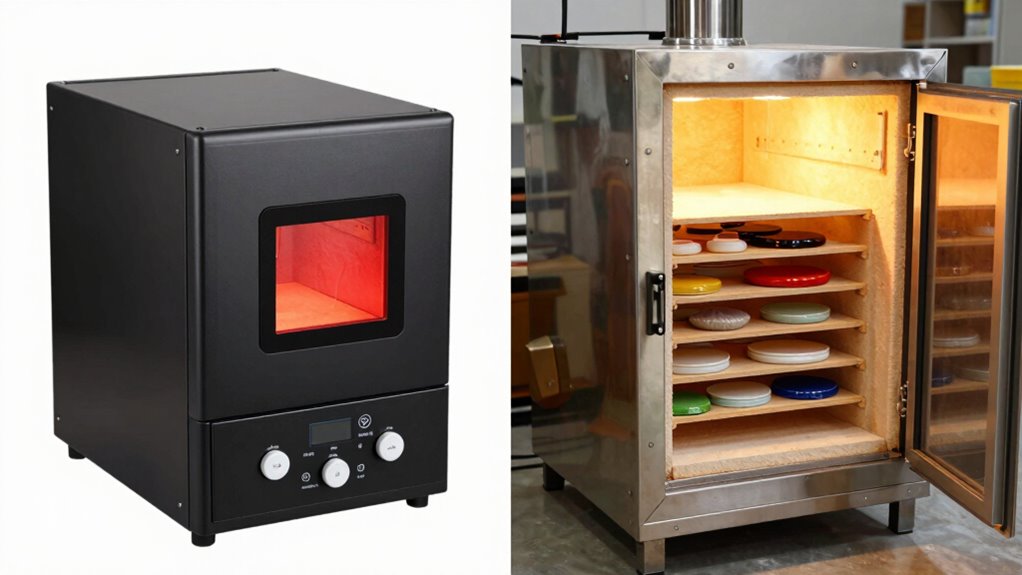
When choosing between a metal clay kiln and an enamel kiln, understanding their differences is essential for achieving the best results in your jewelry-making projects. Both types of kilns serve different purposes and come with unique features that can influence your work process, safety, and energy consumption. Metal clay kilns are specifically designed for firing precious metal clay, which requires precise temperature control and consistent heat distribution to ensure your pieces reach ideal density and finish. Enamel kilns, on the other hand, are built to handle the high temperatures needed for fusing glass powders onto metal surfaces, often involving longer firing times and higher heat stability.
Choosing the right kiln depends on your jewelry projects, safety, and energy efficiency needs.
One critical aspect to consider is fire safety. Metal clay kilns typically operate at lower temperatures compared to enamel kilns, reducing the risk of accidents caused by excessive heat. They often come with safety features like insulated chambers and automatic shut-off systems, making them suitable for smaller studios or beginner jewelers. Enamel kilns, however, reach higher temperatures and may require extra precautions, such as proper ventilation and heat-resistant gloves, to prevent burns or fire hazards. If safety is a primary concern, especially in a shared or less controlled environment, a metal clay kiln might offer more peace of mind. Additionally, fire safety is an important consideration for both studio setup and ongoing work. Proper ventilation is crucial when working with high-temperature kilns to ensure a safe environment.
Energy efficiency is another crucial factor. Metal clay kilns are generally more energy-efficient because they reach and maintain lower temperatures, consuming less power during firing cycles. Their insulation and smaller size contribute to reduced energy use, making them cost-effective options for frequent use. Enamel kilns, with their ability to sustain higher temperatures and longer firing durations, tend to consume more energy. If you plan to fire frequently or in larger batches, the energy costs might add up, making a metal clay kiln a more economical choice in the long run. Additionally, temperature control plays a vital role in both kiln types, affecting the quality and safety of your work. Advanced temperature regulation features in some kilns can help achieve precise results and prevent overheating. Choosing a kiln with reliable temperature monitoring can further optimize your firing process and protect your projects.
Your specific project needs also influence which kiln fits better. If you mainly work with metal clay and need quick, reliable firing, a dedicated metal clay kiln is ideal. It allows precise control over temperature and firing times, ensuring consistent results. If your work involves glass enameling or mixed-media jewelry that requires high-temperature fusing, then an enamel kiln is the better fit. Consider how much space you have, your budget, and safety protocols, as these factors will help you decide which kiln aligns with your workflow and safety standards.
Ultimately, choosing the right kiln depends on understanding your craft’s technical requirements and safety considerations. Both kiln types have their advantages, but knowing how they differ in fire safety and energy efficiency helps you make an informed decision that enhances your jewelry-making experience.
metal clay kiln for jewelry making
As an affiliate, we earn on qualifying purchases.
As an affiliate, we earn on qualifying purchases.
Frequently Asked Questions
Can Both Kilns Be Used for Firing Glass Projects?
Both kilns can be used for glass firing, but their compatibility depends on your specific projects. Metal clay kilns often reach lower temperatures, making them less suitable for certain glass techniques, while enamel kilns are designed for higher temperatures needed in glass firing. Check your kiln’s maximum temperature and heating capabilities to verify they suit your glass projects, guaranteeing proper kiln compatibility for safe and effective firing.
What Safety Precautions Are Necessary for Each Kiln Type?
Safety gear and proper ventilation are essential for both kilns. You should always wear heat-resistant gloves, safety glasses, and a mask to protect against fumes and heat. Make sure your workspace has good ventilation, especially when firing enamel, which releases fumes. Keep a fire extinguisher nearby, and never leave the kiln unattended. These precautions protect your health and prevent accidents, making your creative process safer and more enjoyable.
How Energy-Efficient Are Metal Clay and Enamel Kilns?
Metal clay and enamel kilns vary in energy efficiency. Metal clay kilns generally consume less energy because they operate at lower temperatures and heat up quickly, reducing overall energy consumption. Enamel kilns often require higher temperatures and longer firing times, increasing energy use. Both types impact the environment differently; choosing a well-insulated kiln can minimize environmental impact, making your work more sustainable and cost-effective.
What Are the Typical Costs for Maintenance and Repairs?
You’ll find that maintenance costs for metal clay and enamel kilns are generally comparable, with repairs needed about once every few years depending on usage. Metal clay kilns tend to have slightly higher repair frequency due to their electrical components, but overall, the cost comparison remains moderate. Expect to budget around $100 to $300 annually for repairs and maintenance, ensuring your kiln stays reliable for your creative projects.
Are There Specific Kiln Sizes Recommended for Beginners?
For beginners, choosing a kiln with beginner-friendly options like small to medium sizes, around 4-6 cubic feet, is ideal. Kiln size considerations are essential—you want one that’s manageable yet versatile enough to handle different projects. Smaller kilns are easier to learn on and more affordable, making them perfect for starting out. As you gain experience, you can consider larger kilns if your work requires more space or capacity.
As an affiliate, we earn on qualifying purchases.
Conclusion
Choosing between a metal clay kiln and an enamel kiln depends on your specific needs and projects. Remember, about 60% of jewelry artists report switching between both types for versatility, highlighting how their distinct features complement different techniques. If you want precision and delicate finishes, a metal clay kiln might be your best bet. However, if vibrant enamel colors excite you, then an enamel kiln could elevate your work. Ultimately, understanding these stats helps you make a smarter, more informed choice for your craft.
digital metal clay kiln with safety features
As an affiliate, we earn on qualifying purchases.
As an affiliate, we earn on qualifying purchases.
As an affiliate, we earn on qualifying purchases.
Fall Picks
fall essentials
As an affiliate, we earn on qualifying purchases.