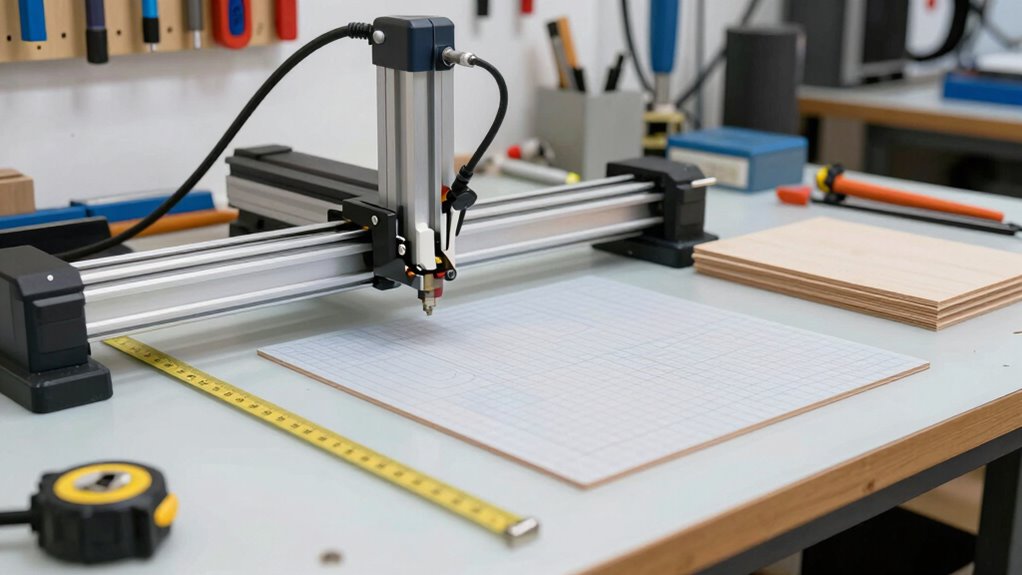

To judge the right work area size for a craft laser, consider the types of projects you plan to create—smaller for ornaments or larger for signs—and think about how much space you’ll need for handling and organizing materials easily. Factor in your budget, safety needs, and workspace organization to guarantee a safe and efficient environment. If you want to learn how to balance these factors effectively, keep exploring for more insights.
Key Takeaways
- Assess the maximum size of projects you plan to create regularly, ensuring the work area accommodates them comfortably.
- Consider future scalability for larger or multiple projects to determine if the workspace size remains sufficient over time.
- Balance the work area size with your budget, recognizing that larger spaces often involve higher costs and maintenance.
- Evaluate safety and ventilation needs associated with larger work areas, especially for materials emitting fumes or dust.
- Organize and plan your workspace layout to optimize efficiency and safety within the chosen work area size.
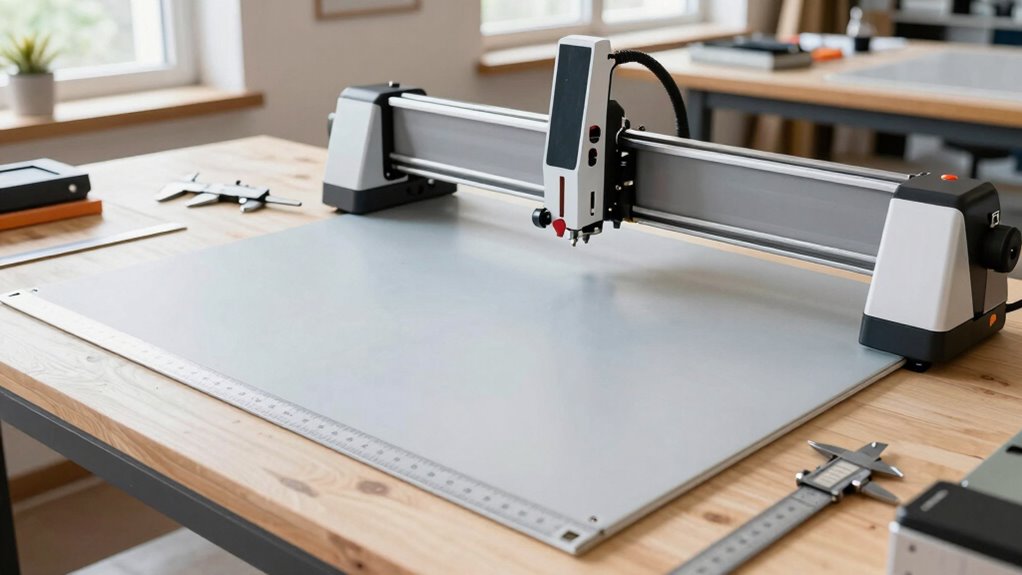
Choosing the right craft laser begins with understanding the work area size you need. This is a pivotal step because the size of the laser’s work area directly impacts what projects you can handle comfortably. If you underestimate it, you’ll find yourself limited in what you can create, forcing you to split larger projects into smaller parts, which can be time-consuming and frustrating. Conversely, selecting a laser with a larger work area than necessary might mean paying extra for space you’ll never fully utilize. To determine your ideal size, think about the types of projects you’ll be working on most frequently. Are you cutting small ornaments or crafting larger signs? Do you plan to work with multiple pieces at once? Answering these questions helps you gauge the dimensions you’ll need for your typical projects.
Beyond project size, you should also consider how the work area size influences your workflow. A larger space allows for more efficient handling of bigger or multiple items, reducing the need to reposition your materials constantly. However, a bigger work area often comes with a higher price tag and increased maintenance considerations. Keep in mind that a larger laser might require a more robust ventilation system to guarantee laser safety, especially when working with certain materials that emit fumes or dust. Material compatibility is another key factor—some materials are better suited for smaller, precise workspaces, while others require more room to operate safely and effectively. For instance, delicate materials like paper or thin wood might not need a large area, but thicker or more complex materials might demand extra space for proper handling and safety.
Laser safety is paramount, so you should also evaluate how the work area size influences safety protocols. A larger work area provides more room to set up safety barriers, ventilation, and protective gear, reducing the risk of accidents. It’s essential to guarantee your workspace allows for proper airflow and that you can maintain a safe environment during operation. Additionally, understanding the work area size and its relation to safety and efficiency is crucial for long-term satisfaction with your craft laser. Proper planning of your workspace can help prevent clutter, which is vital for both safety and workflow efficiency. Implementing effective organization strategies can further enhance your productivity and keep your workspace safe. Also, adequate space can improve your overall productivity by making it easier to organize tools and materials. Moreover, considering how the size of the work area affects your ability to scale up projects can help ensure your equipment remains versatile as your skills grow. Ultimately, choosing the right work area size involves balancing your project requirements, safety considerations, and budget constraints to guarantee you get a machine that fits your needs perfectly and keeps your workspace safe and efficient.
As an affiliate, we earn on qualifying purchases.
Frequently Asked Questions
Can Work Area Size Impact Laser Precision?
Yes, work area size can impact laser precision because larger areas may require more laser calibration, which can introduce slight inaccuracies. When working in bigger spaces, you need to guarantee the laser is properly calibrated for each section to maintain accuracy. Safety considerations also come into play, as a larger work area increases the risk of accidental exposure. Regular calibration and strict safety protocols help preserve precision and ensure safe operation.
How Does Work Area Size Affect Project Complexity?
Think of your work area as a canvas; a larger size lets you tackle more complex projects with greater material flexibility. It enables you to work on bigger, intricate designs without safety concerns about overcrowding or accidents. A bigger work area provides room for error, encouraging experimentation. However, always consider safety considerations, ensuring your workspace remains manageable and safe while pushing the boundaries of your project complexity.
Is Larger Work Area Always Better for Crafts?
A larger work area isn’t always better for crafts, as it can limit material flexibility and pose safety considerations. Bigger machines may handle bigger projects, but they can also be harder to control and require more space. Think about the size of your typical projects and workspace. If you mainly work with small, intricate designs, a smaller, more manageable work area might suit you best, balancing safety and material versatility.
Can Work Area Size Limit Material Types?
Yes, work area size can limit material types because larger spaces may restrict the thickness or size of materials you can safely process. You’ll want to take into account material compatibility, ensuring your chosen laser can handle specific materials without risk. Safety considerations also come into play, as larger work areas might require more ventilation or safety measures for certain materials. Always match your work area to your projects to avoid restrictions and safety issues.
How to Measure Work Area for Specific Projects?
To measure your work area accurately, start by sketching your project dimensions on paper, then add extra space for material flexibility and easy maneuvering. Use a ruler or tape measure for precise measurements. Keep cost considerations in mind—larger work areas often mean higher prices. Carefully balancing project size with budget guarantees you select a craft laser that meets your needs without overspending, making every cut count.
laser cutter safety ventilation system
As an affiliate, we earn on qualifying purchases.
As an affiliate, we earn on qualifying purchases.
Conclusion
Remember, measuring twice and cutting once applies perfectly here. Before buying your craft laser, guarantee the work area matches your project needs, so you don’t end up limited or overwhelmed. Think about the size of your typical projects and future ambitions. As the saying goes, “A stitch in time saves nine.” Taking the time now to choose the right size will save you frustration and money later, helping your creative journey run smoothly.
As an affiliate, we earn on qualifying purchases.
As an affiliate, we earn on qualifying purchases.