To build a safer home screen printing setup, prioritize ventilation by installing exhaust fans and opening windows to disperse fumes, and use an air purifier with HEPA filters for added air quality. Always wear protective gear like gloves, masks, and goggles to shield yourself from chemicals. Keep your workspace organized, clean, and well-lit, and store chemicals properly in labeled containers. Focusing on these safety measures helps protect your health and prolong your equipment’s life—continue further to learn more tips.
Key Takeaways
- Ensure proper ventilation with exhaust fans and open windows to disperse fumes during and after printing.
- Use personal protective equipment like gloves, masks, and goggles to prevent chemical exposure.
- Organize chemicals and inks in labeled, sealed containers, and store them away from clutter.
- Regularly clean the workspace to prevent ink residue, dust buildup, and chemical spills.
- Educate yourself on chemical safety protocols and maintain safety equipment to ensure ongoing protection.
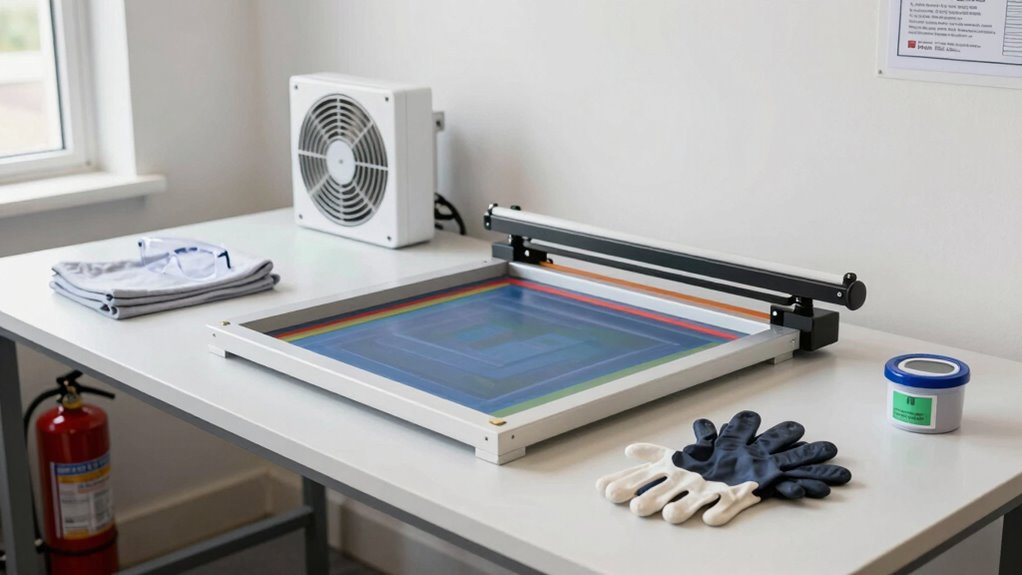
Creating a safe home screen printing setup is essential to protect yourself and your space from potential hazards. Screen printing involves chemicals, inks, and equipment that can pose health risks if not handled properly. To minimize these risks, start by investing in the right safety gear. Wear gloves to protect your skin from inks and cleaning solvents, and use masks or respirators to avoid inhaling fumes, especially if you’re working with solvent-based inks. Safety goggles are also a must to shield your eyes from splashes or accidental splatters. Having these safety gear items within easy reach ensures you’re prepared before starting each session and helps establish a safety-first mindset.
Invest in safety gear—gloves, masks, and goggles—to protect yourself during screen printing.
Equally important is implementing proper ventilation systems in your workspace. Without adequate airflow, fumes from inks, cleaning agents, and solvents can accumulate, creating a health hazard over time. If you’re working in a small room or garage, consider installing an exhaust fan or a dedicated ventilation system that pulls fumes outside. Opening windows during and after printing sessions can also help disperse airborne chemicals. For more effective air quality management, you might invest in an air purifier with a HEPA filter, which can trap airborne particles and improve overall air safety. Proper ventilation not only protects your lungs but also keeps your workspace fresher and more comfortable, encouraging longer, safer printing sessions. Additionally, regular maintenance of your ventilation system ensures it functions effectively and continues to provide a safe environment.
Additionally, organize your workspace to reduce clutter and prevent accidental spills. Keep chemicals and inks stored in clearly labeled, sealed containers away from heat sources or open flames. Make sure your workspace is well-lit so you can handle equipment and chemicals with precision. Regularly clean your area to prevent buildup of ink residue and dust, which can become airborne and pose inhalation risks. Establishing a routine for cleaning and maintenance helps keep hazards at bay and prolongs the life of your equipment. Incorporating proper storage practices can further minimize the risk of chemical exposure and spills.
Finally, educate yourself on the proper handling and disposal of chemicals used in screen printing. Follow manufacturer instructions carefully, and never mix chemicals unless specified. Have a designated area for waste disposal, and be sure to dispose of hazardous materials according to local regulations. By combining safety gear, effective ventilation, organization, and knowledge, you can create a home screen printing setup that’s not only productive but also safe for you and your environment. Being aware of chemical safety protocols is crucial to maintaining a safe workspace.
home screen printing safety gear
As an affiliate, we earn on qualifying purchases.
As an affiliate, we earn on qualifying purchases.
Frequently Asked Questions
What Are the Best Ventilation Methods for Screen Printing Areas?
To optimize airflow and guarantee ventilation safety in your screen printing area, you should install exhaust fans and open windows to create effective airflow circulation. Use ceiling or portable fans to enhance air movement, and consider air purifiers with HEPA filters to remove fumes. Regularly maintain your ventilation system, keep it unobstructed, and position fans to direct fumes away from your workspace, ensuring a safer environment for your printing activities.
How Can I Prevent Ink Spills and Accidents?
Did you know that most ink spills happen due to hurried setups? To prevent ink spill accidents, you should organize your workspace with designated areas for inks and tools, and always handle containers carefully. Use spill-proof lids and keep cleanup supplies nearby. Properly labeling and storing inks reduces confusion, aiding in ink spill prevention and accident avoidance. These habits guarantee a safer, more efficient screen printing environment.
What Personal Protective Equipment Is Essential?
You need to wear essential personal protective equipment and safety gear to stay safe during screen printing. This includes gloves to protect your skin from inks and chemicals, safety goggles to shield your eyes from splashes, and a mask or respirator if you’re working with fumes or powders. Wearing the right safety gear minimizes risks, keeps you safe from accidental spills, and guarantees a cleaner, more controlled workspace.
How to Safely Store Chemicals and Cleaning Agents?
Did you know improper chemical storage causes over 20% of home-related accidents? To store chemicals safely, use dedicated, well-ventilated cabinets away from heat sources. Make certain all containers are tightly sealed and labeled with clear safety labels. Regularly check for leaks or damage. Proper chemical storage minimizes risks, protects your health, and keeps your workspace safe, so always follow safety labeling guidelines and store chemicals out of children’s reach.
Are There Specific Fire Safety Precautions for Screen Printing?
Yes, you should take specific fire safety precautions for screen printing. Install fire alarm systems and make certain they’re functional and regularly tested. Keep emergency exits clear and easily accessible at all times. Use fire-resistant materials where possible, and avoid overloading electrical outlets. Have a fire extinguisher nearby, and train yourself on how to use it. These steps help protect you and your workspace from potential fire hazards.
exhaust fan for workshop
As an affiliate, we earn on qualifying purchases.
As an affiliate, we earn on qualifying purchases.
Conclusion
By taking these safety steps, you’ll create a home screen printing setup that’s as secure as a fortress. Remember, safety isn’t just a checklist—it’s the foundation of your creative process. Stay attentive, follow proper procedures, and use protective gear like a vigilant guard. With your workspace protected like a treasure chest, you can focus on designing beautiful prints without worry, knowing you’ve built a safer environment that’s as sturdy as a well-crafted bridge.
HEPA air purifier for fumes
As an affiliate, we earn on qualifying purchases.
As an affiliate, we earn on qualifying purchases.
chemical storage containers for inks
As an affiliate, we earn on qualifying purchases.
As an affiliate, we earn on qualifying purchases.