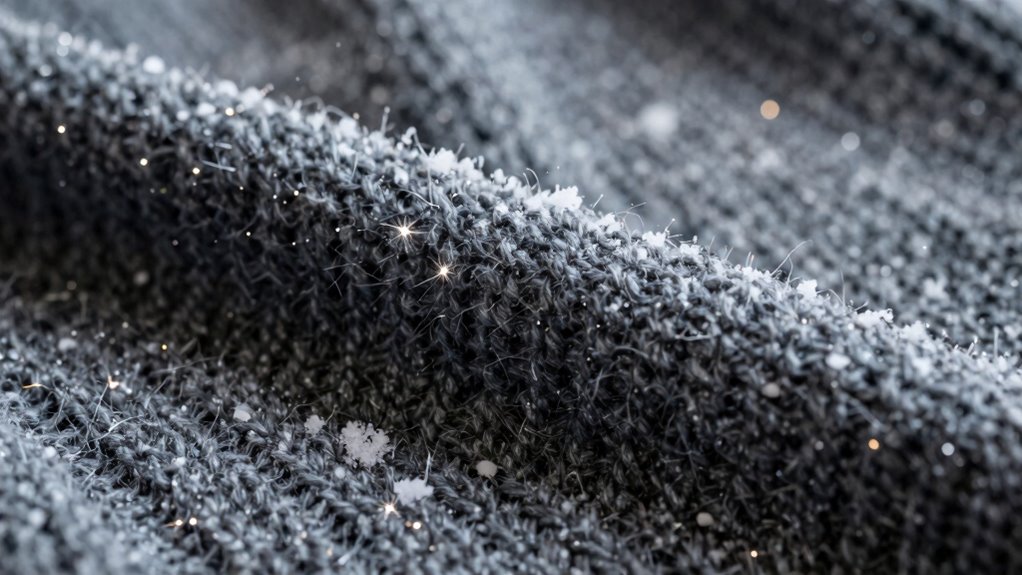

To prevent static damage in winter, start by using fabric softeners or dryer sheets to reduce static cling. Avoid over-drying clothes and try removing them while slightly damp. Increase indoor humidity with a humidifier or place damp cloths or ice cubes in the dryer. Wearing natural fibers like cotton also helps. Touch grounded metal objects before handling clothes to discharge static. Keep exploring other tips to keep your fabrics static-free all season.

Get business pricing on tools and workshop supplies
- Business-only prices and quantity discounts
- Tax-exempt purchasing
- Multiple users, one account, clear invoices
Key Takeaways
- Use fabric softeners or dryer sheets to neutralize static buildup and keep fabrics soft.
- Avoid over-drying clothes; remove them slightly damp or add moisture during drying.
- Increase indoor humidity with humidifiers or place damp cloths/ice cubes in the dryer.
- Wear natural fibers like cotton or wool, which generate less static than synthetics.
- Discharge static safely by touching grounded objects before handling clothes.

As winter’s dry air and indoor heating increase static cling, your fabrics can become more prone to static buildup and damage. The lack of moisture in the air causes electrons to transfer more easily between fabrics, resulting in static electricity that makes clothes cling, spark, or even give you small shocks. To combat this, using fabric softeners is one of your best options. Fabric softeners work by coating fibers with a thin layer of chemicals that reduce static buildup, making clothes softer and more comfortable to wear. When added to the wash cycle or used as dryer sheets, they help neutralize static electricity, preventing those annoying clingy moments. Remember not to overuse fabric softeners, as excessive buildup can reduce fabric breathability and cause dullness over time.
Using fabric softeners reduces static cling and keeps clothes soft during dry winter months.
Another effective way to minimize static is to tweak your laundry routine. Avoid over-drying clothes, as overdried fabrics tend to generate more static. Use lower heat settings in the dryer, or better yet, remove clothes while they’re still slightly damp and let them air dry. This helps retain a bit of moisture, which naturally reduces static electricity. Adding a damp cloth or a few ice cubes to the dryer can also help create a more humid environment inside, diminishing static cling. If your clothes come out staticky, lightly spraying them with a mixture of water and fabric softener can help eliminate static charges before you wear them.
You can also take preventative measures outside of laundry. Using dryer sheets during drying cycles not only adds a fresh scent but also reduces static electricity. For added moisture, consider placing a humidifier in your living space. Increased humidity levels make the air less dry, which means less static buildup on your fabrics. When dressing, opt for natural fibers like cotton or wool, which tend to generate less static compared to synthetic materials such as polyester or nylon. Wearing natural-fiber clothing can make a noticeable difference in reducing static cling.
Finally, touching grounded objects before handling your clothes can discharge any built-up static electricity safely. For example, touching a metal doorknob or a piece of furniture can help release static charges from your body, preventing shocks and reducing cling. By combining these strategies—using fabric softeners, adjusting your laundry habits, increasing humidity, and choosing the right fabrics—you’ll effectively tame static electricity and keep your clothes looking and feeling their best throughout the winter months.
fabric softeners for static reduction
As an affiliate, we earn on qualifying purchases.
As an affiliate, we earn on qualifying purchases.
Frequently Asked Questions
Can Static Buildup Damage My Clothing Over Time?
Static buildup can cause fabric damage over time, especially if it leads to frequent friction and pulling. As static accumulates, it weakens fibers, making clothes more prone to tears, pilling, or thinning. To prevent this, you should use fabric softeners, anti-static sprays, or dryer sheets. Taking these steps helps reduce static buildup and keeps your clothing fibers stronger, extending the life of your garments and maintaining their appearance.
Are Certain Fabrics More Prone to Static in Winter?
Ever notice some fabrics spark more static in winter? Yes, synthetic fibers like polyester and nylon are more prone to static buildup. To reduce this, consider fabric treatment sprays and proper wardrobe storage, which help control static. Natural fibers like cotton and wool typically resist static better. By understanding fabric types, you can prevent static issues and keep your clothes looking fresh and comfortable all season long.
Does Using Fabric Softener Help Reduce Static?
Yes, using fabric softener helps reduce static. Fabric softener benefits include smoothing fibers and adding moisture, which cuts down on static buildup. To maximize static reduction techniques, add fabric softener during laundry or use dryer sheets in the dryer. These methods help keep your clothes soft, static-free, and comfortable, especially during winter when static tends to increase. Give it a try to maintain your fabrics in top condition.
Can Indoor Heating Increase Static Electricity in Clothes?
Indoor heating acts like a silent wizard, drying out your indoor air and turning your clothes into static-charged enemies. When indoor humidity drops, your clothing insulation struggles to keep moisture in, making fabrics more prone to static buildup. To fight this, use a humidifier or hang damp towels, which helps maintain moisture levels. Keep your clothes softer and static-free by adding a bit of moisture to your environment.
Is Static More Common in Synthetic or Natural Fibers?
Synthetic fibers have a higher static propensity compared to natural fibers. When you wear clothes made from polyester, nylon, or acrylic, you’re more likely to experience static buildup because these fiber types easily generate and hold static electricity. Natural fibers like cotton, wool, and silk tend to resist static, making them less prone to static issues. To reduce static, consider mixing fiber types or using anti-static sprays.
As an affiliate, we earn on qualifying purchases.
Conclusion
Don’t let static cling get the best of you this winter. With a few simple tricks, you can keep your fabrics looking fresh and feeling comfortable all season long. Remember, a stitch in time saves nine—tackle static early before it becomes a bigger mess. Stay proactive, and your wardrobe will thank you. Keep these tips in mind, and you’ll be able to handle those static surprises with ease. Stay warm, stay static-free!
As an affiliate, we earn on qualifying purchases.
natural fiber clothing for less static
As an affiliate, we earn on qualifying purchases.
As an affiliate, we earn on qualifying purchases.
Columbus Day / Indigenous Peoples' Day Picks
long weekend sales
As an affiliate, we earn on qualifying purchases.