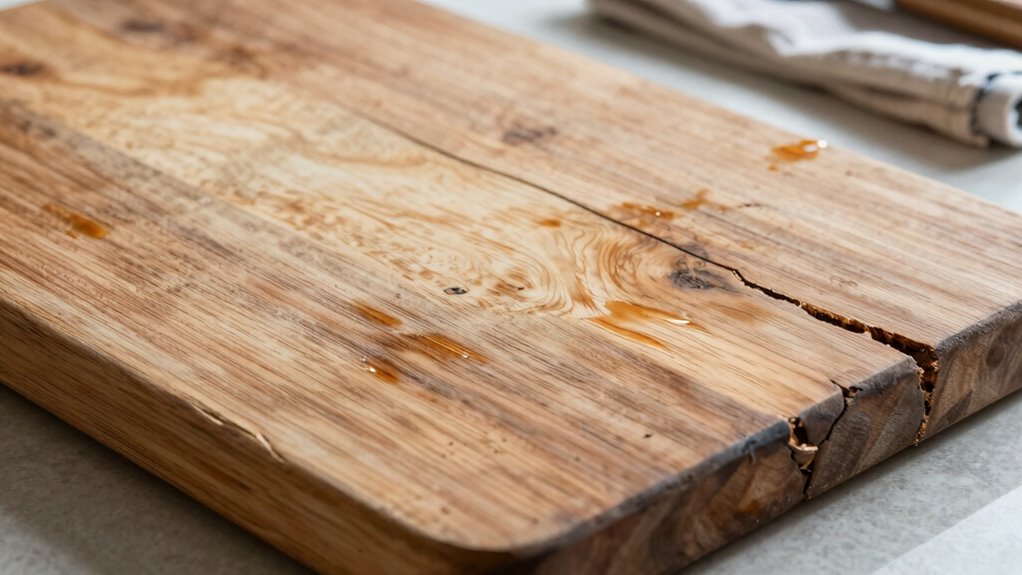

Your cutting board warps when moisture causes the wood fibers to swell unevenly, leading to bends or bows. Water absorption from washing, rinsing, or food moisture can accelerate this process, especially if the board stays wet for a long time. To prevent warping, dry the board thoroughly after use, store it in a dry area, and regularly apply protective oils. Keep these tips in mind, and you’ll avoid long-term damage and keep your board flat.
Key Takeaways
- Excess moisture absorption causes wood fibers to swell unevenly, leading to warping.
- Proper drying, storage, and avoiding prolonged wetness help prevent moisture-related warping.
- Choosing dense hardwoods and quality wood reduces the risk of uneven expansion.
- Regular maintenance with food-safe oils creates a moisture-resistant barrier on the surface.
- Keeping the board in a dry, well-ventilated environment prevents humidity fluctuations that cause warping.
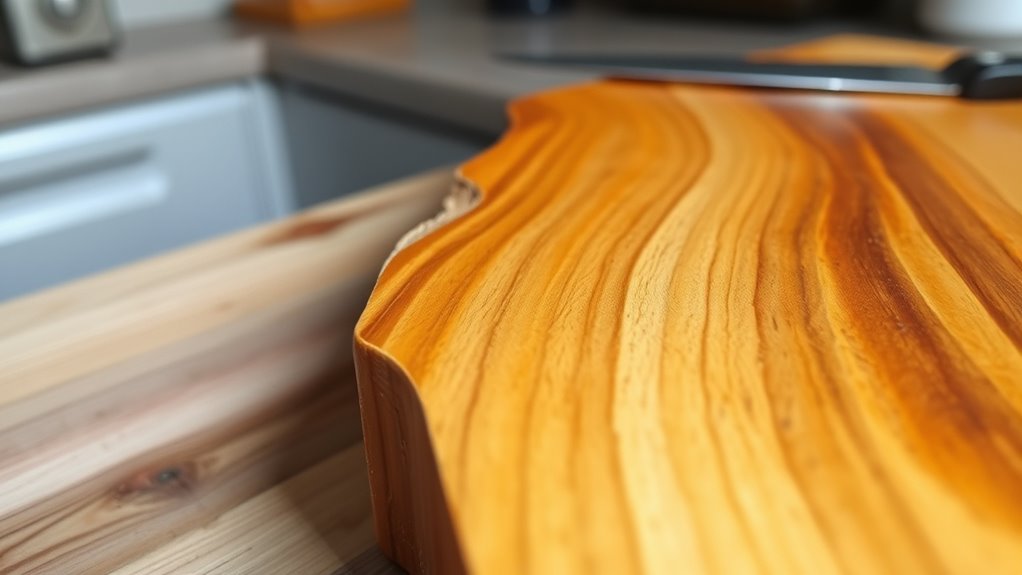
A warped cutting board can be frustrating, but understanding why it happens can help you prevent it. One of the main reasons for warping is wood swelling caused by moisture absorption. When you use your cutting board, especially if it’s made of wood, it’s constantly exposed to water, whether from washing, rinsing, or even the moisture from food. Wood is porous, so it absorbs water easily, and when it does, the fibers expand. This expansion isn’t uniform across the entire board, leading to warping or bending over time. If you leave your cutting board wet or don’t dry it properly, this process accelerates, making warping more likely. The key is managing moisture so that the wood doesn’t take in too much water or stay wet for extended periods. Proper maintenance, such as regular oiling, can help reinforce the wood’s moisture resistance.
Warping occurs when wood absorbs water unevenly, causing fibers to swell and the board to bend over time.
To prevent warping caused by wood swelling, you need to control how much moisture your cutting board absorbs. First, always wash your board with warm, soapy water and dry it immediately with a towel. Avoid soaking it in water or leaving it wet for long stretches. After washing, stand it upright or place it on a drying rack to allow air circulation, which helps it dry evenly. Applying a food-safe mineral oil or beeswax finish regularly creates a protective barrier that reduces moisture absorption. This coating helps keep the wood stable and less prone to swelling.
Another way to prevent warping is to choose the right type of wood for your cutting board. Hardwoods like maple or walnut are less susceptible to warping because their dense fibers resist moisture penetration better than softer woods. When selecting or making your cutting board, opt for a quality piece with tight grain patterns, which also reduces the chances of uneven expansion and contraction.
Proper storage plays a vital role as well. Keep your cutting board in a dry, well-ventilated area, away from direct sunlight or heat sources, which can cause the wood to dry out and crack or swell unevenly. Avoid placing it near dishwashers or humidifiers, as these can create fluctuations in moisture levels that lead to warping.
In essence, preventing warping hinges on managing moisture. By controlling how much water your cutting board absorbs, drying it thoroughly after each use, applying protective finishes, and storing it properly, you can considerably extend its life and keep it flat and functional. Understanding the relationship between wood swelling and moisture absorption empowers you to take simple, effective steps to keep your cutting board in top shape.
Frequently Asked Questions
Can Dishwasher Cleaning Cause My Cutting Board to Warp?
Yes, dishwasher cleaning can cause your cutting board to warp. The intense heat and prolonged exposure to water can lead to dishwasher damage, making the wood expand. This expansion weakens the fibers and causes warping over time. To prevent this, avoid putting your wooden cutting board in the dishwasher. Instead, hand wash it with mild soap and water, then dry it thoroughly to maintain its shape and durability.
Does Using Hot Water Contribute to Warping?
You might be surprised, but hot water can actually contribute to warping your cutting board. When you use hot water frequently, it causes the wood or plastic to expand and contract unevenly, leading to warping over time. To prevent this, stick to lukewarm water for cleaning and drying thoroughly. Proper warping prevention guarantees your board stays flat and durable, saving you from the hassle of replacing it prematurely.
How Does Humidity Affect Cutting Board Warping?
Humidity fluctuations cause your cutting board to warp because they lead to wood expansion and contraction. When the air is humid, the wood absorbs moisture, making it swell. Conversely, in dry conditions, the wood loses moisture and shrinks. These constant changes strain the wood fibers, resulting in warping over time. To prevent this, keep your cutting board in a stable environment with consistent humidity levels, avoiding drastic fluctuations.
Can Certain Types of Wood Resist Warping Better?
Yes, certain wood types resist warping better. Hardwoods like maple, cherry, and walnut are more stable because of their dense grain structure. When selecting wood, focus on grain orientation; flat-sawn boards with vertical grain tend to warp less than quarter-sawn ones. Proper wood selection and paying attention to grain orientation help you prevent warping, ensuring your cutting board stays flat and durable over time.
Is It Normal for a Cutting Board to Warp Over Time?
Yes, it’s normal for a cutting board to warp over time. You’ll notice wood expansion and moisture absorption cause the wood fibers to swell unevenly, leading to warping. To prevent this, avoid exposing your board to excessive moisture, dry it thoroughly after cleaning, and store it in a stable environment. Proper maintenance helps minimize wood expansion and reduces the chances of warping, keeping your board flat and durable.
Conclusion
So, now that you know the secret behind your warped cutting board, maybe it’s time to thank your kitchen for the surprise. Who knew that a little water and the wrong wood could turn your culinary haven into a warped wonderland? But don’t worry—just follow the tips, and your cutting board will stay flat, not warped, so you can keep pretending you’re a gourmet chef, not a victim of your own kitchen chaos.