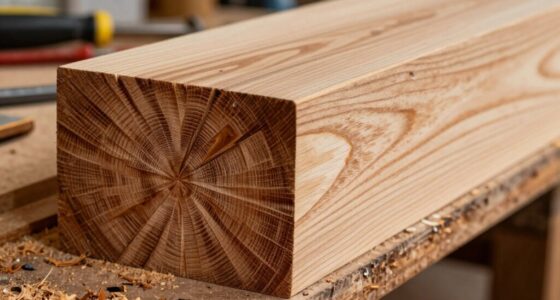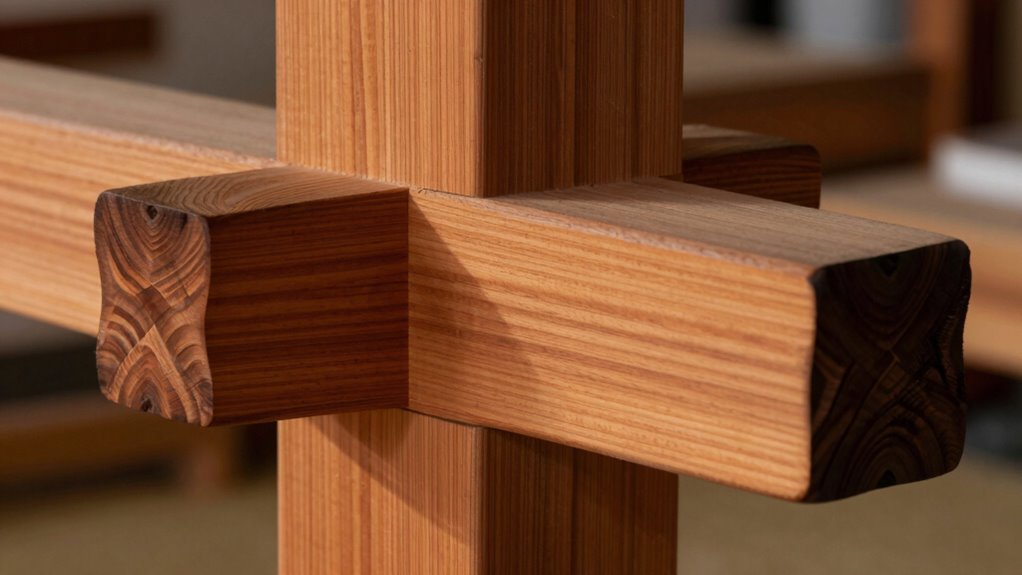

Japanese joinery became legendary because it combines strength, beauty, and precision without using nails or screws. Skilled artisans select high-quality woods and craft interlocking joints like mortise and tenon or dovetail with hand tools. These joints resist forces and last for centuries, showcasing craftsmanship that emphasizes both durability and aesthetic harmony. Keep exploring to discover how these timeless techniques continue to influence architecture and woodworking worldwide.
Key Takeaways
- Japanese joinery achieves strong, durable connections without nails or screws through precise craftsmanship and interlocking techniques.
- The use of high-quality, carefully selected hardwoods ensures longevity and resistance to warping or cracking.
- Techniques like mortise and tenon and dovetail joints provide exceptional structural strength and aesthetic harmony.
- Handcrafted joints emphasize skill and understanding of wood behavior, resulting in lasting, visually appealing structures.
- The combination of material mastery and traditional methods has established Japanese joinery as a legendary standard in woodworking.
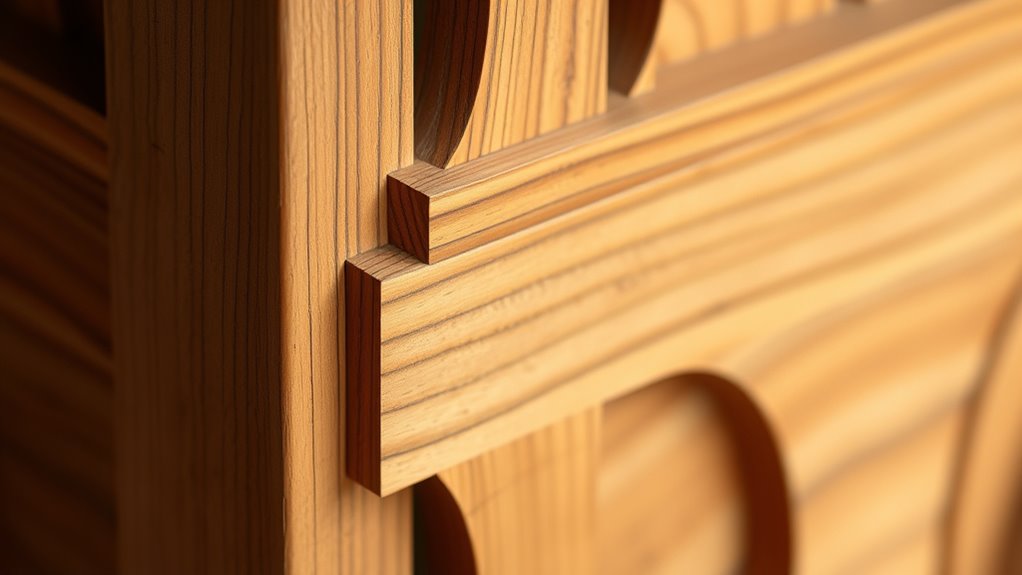
Have you ever wondered how traditional Japanese furniture and architecture achieve such seamless, durable joints without nails or screws? The secret lies in the mastery of traditional techniques combined with careful material selection. Japanese joinery is a testament to centuries of craftsmanship, where artisans have perfected methods that rely solely on interlocking wooden components. These techniques have been passed down through generations, creating joints that are both strong and aesthetically pleasing. The foundation of this craftsmanship starts with choosing the right materials—typically high-quality, well-aged hardwoods like cedar, cypress, or pine. These woods offer the perfect balance of strength, flexibility, and workability, allowing artisans to carve intricate joints that fit together seamlessly. The selection process is meticulous; the wood must have the right grain orientation and moisture content to guarantee stability over time. Proper material choice prevents warping, cracking, or loosening, which are common issues in lesser-quality wood. Once the material is selected, artisans employ traditional techniques such as mortise and tenon, dovetail, and scarf joints, each designed for specific structural needs. These joints are crafted with precision, often using hand tools like chisels, saws, and planes, rather than modern fasteners. The beauty of these joints is that they rely on the inherent strength of the wood and the skillful fit of each component. For example, the mortise and tenon joint is a staple in Japanese architecture, where a protruding tenon fits snugly into a mortise hole, creating a joint that resists pulling apart under load. The dovetail joint, on the other hand, provides excellent resistance to lateral forces, making it ideal for furniture like cabinets and chests. The craftsmanship involved requires not only technical skill but also an intuitive understanding of how different woods behave. This knowledge guarantees that each joint remains secure over decades, even centuries, of use. The material selection process is vital because it influences the longevity and integrity of the entire structure. Artisans often select wood that has been properly seasoned and dried to reduce internal stresses. This careful selection and preparation enable the joints to perform their function flawlessly, maintaining the harmony and resilience that make Japanese woodworking legendary. Additionally, understanding wood behavior helps artisans anticipate and compensate for natural movements over time. Through a combination of traditional techniques and thoughtful material choices, Japanese joinery achieves a level of precision and durability that continues to inspire architects and woodworkers worldwide.
Japanese woodworking hand tools
As an affiliate, we earn on qualifying purchases.
As an affiliate, we earn on qualifying purchases.
Frequently Asked Questions
How Are Japanese Wooden Joints Different From Western Woodworking Techniques?
You’ll notice Japanese wooden joints differ from Western techniques through their emphasis on craftsmanship and cultural significance. Japanese joints use intricate interlocking methods without nails, enhancing construction durability. This approach reflects a deep respect for tradition and nature, ensuring longevity and flexibility. Unlike Western methods, which often rely on metal fasteners, Japanese joints showcase skill and harmony with the wood, making them both functional and culturally meaningful.
What Tools Are Essential for Creating Traditional Japanese Joinery?
You’ll need sharp hand tools and precision measuring instruments to craft these legendary joints. Think chisels, saws, and planes that demand delicate finesse, like sculpting with surgical instruments. A fine square or marking gauge guarantees perfect fitting, because one slip could turn a masterpiece into a tangled mess. So, grab your tools, measure twice, cut once, and channel your inner Japanese master—precision is the secret to their legendary craftsmanship.
Can Japanese Joinery Be Adapted for Modern Furniture Design?
Yes, you can adapt Japanese joinery for modern furniture design by blending traditional techniques with fusion techniques. This approach allows you to create contemporary applications that retain the elegance and strength of Japanese joints while adding innovative elements. By experimenting with materials and integrating traditional joinery methods, you can craft unique furniture pieces that honor craftsmanship and meet modern aesthetic and functional demands.
How Long Does It Typically Take to Master Japanese Joinery Skills?
Mastering Japanese joinery skills isn’t a swift journey; it’s more like nurturing a delicate bloom. You’ll need to practice patience and commit to consistent skill development, which typically takes several years of dedicated work. With each project, you refine your techniques, gradually transforming raw timber into art. While the timeline varies, perseverance guarantees your craftsmanship deepens, revealing the true beauty of these legendary joints.
Are There Specific Types of Wood Preferred for Japanese Joinery Projects?
You should choose woods with a moderate wood density and low moisture content for Japanese joinery projects. Hardwoods like cedar, cypress, and Japanese pine are preferred because their stable fibers resist warping and splitting. These woods also have the right moisture content, guaranteeing precise joints and durability. By selecting the right wood, you make your craftsmanship easier, produce cleaner cuts, and ensure your joints last for generations.
Japanese joinery woodworking kit
As an affiliate, we earn on qualifying purchases.
As an affiliate, we earn on qualifying purchases.
Conclusion
Japanese joinery techniques have stood the test of time because of their precision and strength. Did you know that some traditional joints can hold up to 10 times their own weight without nails or screws? This incredible durability showcases craftsmanship at its finest. As you explore these ancient methods, remember that their simplicity and resilience continue to inspire modern woodworking. Embracing these techniques not only connects you to history but also elevates your craft to legendary status.
dovetail joint woodworking tools
As an affiliate, we earn on qualifying purchases.
As an affiliate, we earn on qualifying purchases.
mortise and tenon woodworking set
As an affiliate, we earn on qualifying purchases.
As an affiliate, we earn on qualifying purchases.