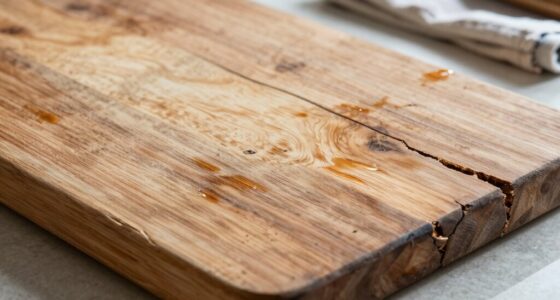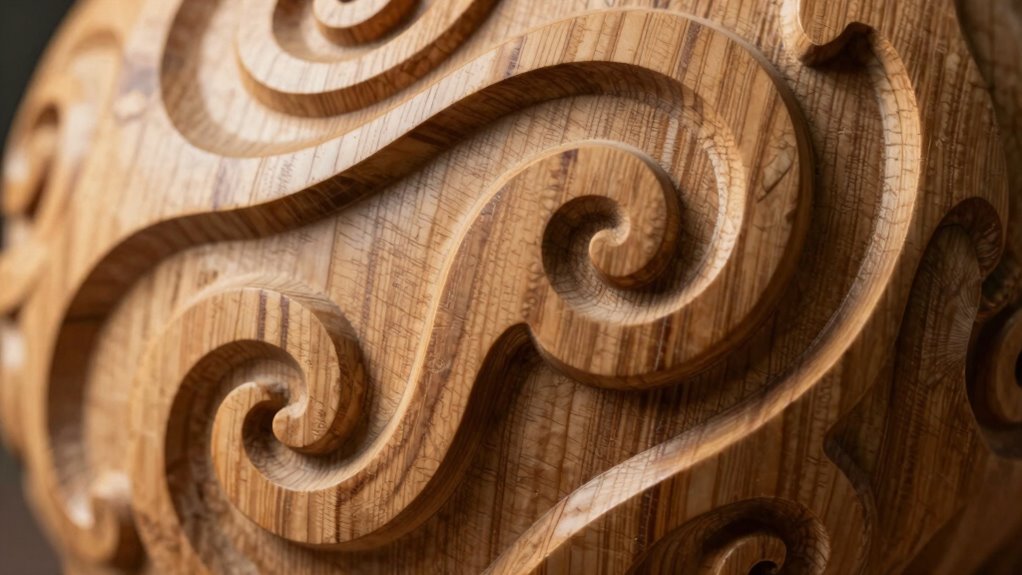

To carve details that don’t break, always pay attention to the wood’s grain direction. Carve with the grain for cleaner cuts and stronger features, and avoid cutting against it, which can cause splintering and weaken your work. Use sharp tools suited for the project and plan your cuts carefully, working gradually. Respecting the grain helps your details stay intact over time. Keep these tips in mind, and you’ll discover more secrets to durable carving as you go along.
Key Takeaways
- Always analyze the wood’s grain direction before carving to plan cuts that follow or support the natural flow.
- Use sharp, appropriately shaped tools to match the grain, reducing stress and preventing splits.
- Carve gradually with small, controlled cuts, respecting the grain to maintain detail integrity.
- Avoid carving against the grain, as it increases tearing, splintering, and weakens the finished detail.
- Plan and execute your carving with grain awareness to ensure durability and longevity of intricate features.

When it comes to carving intricate details, durability is key to ensuring your work withstands time and use. One of the most important factors in achieving this is understanding the grain direction of your wood. Grain direction influences how the wood responds to carving tools and how well the details hold over time. You need to pay close attention to whether the grain runs parallel or perpendicular to your intended cuts. Carving against the grain can cause splintering or tearing, weakening the finished piece and making it more prone to breaking. Conversely, carving with the grain allows for cleaner cuts and reduces the risk of damaging the material. Before starting, always examine the surface carefully, running your hand or a pencil along the wood to identify the grain flow. This awareness helps you plan your cuts, ensuring each detail is carved in a way that maximizes strength.
Tool selection is equally critical in maintaining the integrity of your carved details. Not all tools are suited for every task, especially when working with delicate or intricate features. Sharp, well-maintained chisels and gouges give you more control and produce cleaner cuts that don’t stress the wood unnecessarily. For fine details, choose smaller, precision tools that allow you to work carefully without exerting excessive force. When working with harder woods, select tools with sturdy blades designed to withstand tougher material without bending or dulling quickly. Using the right tool for the job not only improves your accuracy but also reduces the risk of accidental breakage. Remember, dull tools tend to slip and cause unintended damage, so keeping your tools sharp is essential. Additionally, consider the shape of your tools: curved gouges can help follow the grain more naturally, reducing stress on the wood and preventing splits.
Combining an awareness of grain direction with appropriate tool selection creates a synergy that enhances both the quality and durability of your carving. Always plan your cuts carefully, thinking about how the grain will support or oppose the detail you’re creating. Work gradually, removing small amounts of material at a time rather than forcing deep cuts in a single pass. This approach minimizes stress on the wood and preserves the integrity of your design. When you respect the grain and choose your tools wisely, your carved details will not only look refined but will also stand the test of time, resisting breaking or splintering. Ultimately, understanding and applying these principles helps you craft intricate, lasting pieces that showcase your skill and attention to detail.
Frequently Asked Questions
How Does Grain Direction Influence Carving Tool Selection?
You should consider grain orientation when selecting your carving tools because it affects how the wood responds to cuts. Tools compatible with the grain direction will produce cleaner, smoother results and reduce tear-out. Always examine the grain pattern and choose tools that match its orientation, ensuring your cuts follow the grain’s flow. This approach helps prevent splitting or chipping, making your carving process more efficient and the final piece more precise.
Can Grain-Aware Design Be Applied to All Wood Types?
Yes, you can apply grain-aware design to all wood types, but you need to take into account grain variation and wood treatment. Different woods have unique grain patterns, which affect how you carve and finish your project. Adjust your techniques accordingly, especially for woods with unpredictable grain, to prevent breaking or chipping. Proper wood treatment can also enhance workability, making grain-aware design more effective across various wood species.
What Are Common Mistakes That Lead to Grain Breakage?
You often risk grain breakage when you ignore grain orientation and wood stability. Common mistakes include carving against the grain, applying excessive force, or rushing the process. These errors cause unexpected splits and weaken your piece. By paying close attention to grain direction and understanding wood stability, you can prevent breaks. It’s like a dance—synchronize your tools with the wood’s natural flow for a smoother, safer carving experience.
How Can I Repair a Carved Detail That Has Broken Along Grain Lines?
To repair a carved detail that’s broken along grain lines, start by cleaning the damaged area. Apply a suitable wood glue, then use a small clamp or weight to hold the pieces firmly. For added strength, incorporate grain repair techniques like inserting small wood splinters or dowels aligned with the grain. Finish with sanding and touch-up paint or stain. This method guarantees proper detail reinforcement while respecting the grain direction.
Are There Specific Tools Optimized for Grain-Aware Carving?
You should seek tools specifically designed for grain-aware carving that prioritize tool ergonomics, ensuring smooth cuts along grain orientation. These tools often feature curved blades or specialized edges that glide effortlessly, reducing breakage risk. Using the right tools not only aligns with the grain but also minimizes strain on your hand, allowing precise control. This combination enhances your ability to carve detailed features without compromising the integrity of your work, making every cut count.
Conclusion
By understanding the grain-aware design rule, you guarantee your carvings stay strong, your details stay intact, and your craftsmanship stays impressive. Embrace careful planning, respect the grain, and apply precise techniques. Avoid rushing, ignore shortcuts, and neglect the grain at your peril. When you prioritize these principles, you create pieces that last, impress, and withstand time. Carving with awareness isn’t just about skill; it’s about making every detail count—without breaking the beauty you work so hard to achieve.